
Federal Crimes Lawyer in Omaha, Nebraska
Most criminal cases in Omaha are prosecuted in Nebraska state court.
Federal criminal cases are different.
Different investigators. Different prosecutors. Different procedures. Different sentencing guidelines. And often, far more serious consequences.
If you’ve learned that a federal agency is investigating you, or you’ve already been indicted in the United States District Court for the District of Nebraska, you need experienced legal representation immediately.
At Miltenberger Law Offices, we represent individuals facing complex federal criminal investigations and prosecutions throughout Omaha and across Nebraska. Our firm defends clients accused of federal drug crimes, firearms offenses, conspiracy, trafficking, white-collar crimes, and other serious violations of federal law.
If you believe you’re under investigation, or you’ve already been charged, call (402) 217-2267 or contact us online to speak with an experienced Omaha federal criminal defense attorney.
Because when the federal government brings charges, the stakes change dramatically.
What Makes a Federal Criminal Case Different?
Many people assume a federal criminal case is simply a more serious version of a state prosecution. It isn’t.
Federal cases operate under an entirely different court system, different procedural rules, and different sentencing practices than criminal cases prosecuted in Nebraska state courts.
Instead of county prosecutors, federal cases are handled by Assistant United States Attorneys (AUSAs). Instead of local police conducting most investigations, cases are often built by federal agencies over months, or even years, before charges are filed.
Federal investigations frequently involve:
- Long-term surveillance
- Search warrants
- Wiretaps
- GPS tracking
- Financial investigations
- Cell phone analysis
- Confidential informants
- Controlled purchases
- Grand jury subpoenas
Because federal prosecutors typically spend significant time building their cases before making an arrest, early legal representation is often critical.

Common Federal Crimes We Defend in Omaha
Federal criminal jurisdiction extends to a wide range of offenses. At Miltenberger Law, we represent clients accused of numerous federal crimes, particularly those involving drugs and firearms.
Federal Drug Crimes
Drug offenses account for many federal criminal prosecutions in the Omaha area and across Nebraska.
Unlike simple possession cases prosecuted in state court, federal drug charges often involve allegations of:
- Possession with intent to distribute
- Drug trafficking
- Manufacturing controlled substances
- Drug conspiracy
- Interstate transportation of narcotics
- Distribution networks
- Large-scale fentanyl investigations
- Methamphetamine trafficking
Federal drug cases commonly involve the DEA, FBI, Homeland Security Investigations, or multi-agency task forces working together.
Many begin as investigations along Interstate 80 before expanding into larger conspiracy cases.
Federal Firearms & Weapons Charges
Federal firearm prosecutions frequently arise after state arrests.
Common allegations include:
- Felon in possession of a firearm
- Possession of a firearm during drug trafficking
- Firearm trafficking
- Straw purchases
- Possession of machine guns
- Possession of destructive devices
- Silencers and suppressor violations
- Ghost gun investigations
Federal firearm offenses are often prosecuted under 18 U.S.C. § 922 and 18 U.S.C. § 924, both of which carry significant penalties.
Federal Drug Conspiracy
One of the most commonly misunderstood federal charges is conspiracy.
Under 21 U.S.C. § 846, prosecutors may allege that an individual agreed with one or more people to distribute or traffic controlled substances.
Importantly, prosecutors do not necessarily have to prove you physically possessed the drugs.
Instead, conspiracy cases often rely on:
- Phone records
- Text messages
- Financial records
- Travel history
- Confidential informants
- Electronic surveillance
These cases are often highly complex and require careful analysis of the government’s evidence.
Why Drug and Weapons Cases Often Become Federal Cases
Not every drug or firearm arrest stays in Nebraska state court.
Certain circumstances make federal prosecution more likely.
Examples include:
- Large drug quantities, including cutting agents
- Interstate transportation
- Drug trafficking organizations
- Multi-state investigations
- Firearms allegedly connected to drug offenses
- Repeat offenders
- Federal task force investigations
- Cases involving multiple defendants
Many investigations that begin with a seemingly routine traffic stop eventually grow into larger federal prosecutions.
Why Federal Drug and Firearm Cases Often Go Hand-in-Hand in Nebraska
Federal prosecutors frequently charge drug and firearm offenses together.
Why?
Because they often believe the presence of a firearm makes an alleged drug trafficking operation more dangerous and deserving of enhanced penalties.
For example, a person accused of trafficking fentanyl, methamphetamine, cocaine, or heroin may also face allegations that they possessed a firearm “in furtherance of” the drug offense. Even if the firearm was never discharged, or never left a vehicle or residence, the government may argue it was intended to protect drugs, money, or other participants in the alleged operation.
Federal prosecutors commonly rely on 18 U.S.C. § 924(c), which creates separate criminal penalties for possessing, carrying, or using a firearm during certain drug trafficking crimes or crimes of violence.
These allegations can dramatically increase a person’s potential exposure to prison time.
Federal investigations involving both drugs and firearms often include:
- Searches of homes and vehicles
- Execution of federal search warrants
- Confidential informants
- Controlled drug purchases
- Cell phone and GPS analysis
- Financial investigations
- Firearm tracing by the ATF
If your case involves allegations of both controlled substances and firearms, it’s important to work with an Omaha federal crimes defense attorney who understands how these investigations are built, and how to challenge them.
Federal Agencies That Investigate Criminal Cases
Federal investigations may involve one or several agencies working together.
- Federal Bureau of Investigation (FBI)
- Drug Enforcement Administration (DEA)
- Bureau of Alcohol, Tobacco, Firearms and Explosives (ATF)
- Homeland Security Investigations (HSI)
- Internal Revenue Service Criminal Investigation (IRS-CI)
- United States Postal Inspection Service (USPIS)
- United States Secret Service
- United States Marshals Service
If one of these agencies contacts you, it is generally advisable to speak with an Omaha federal crimes defense attorney before answering questions or consenting to an interview.
The Federal Criminal Process in Nebraska
Federal criminal cases rarely begin with an arrest.
More often, they begin months, or even years, before charges are ever filed.
Federal investigators typically spend significant time gathering evidence before seeking an indictment. By the time someone learns they are the target of an investigation, prosecutors may already have collected search warrant evidence, financial records, witness statements, electronic communications, and surveillance.
Although every case is different, many federal prosecutions follow a similar path.
Federal Investigation
Federal agencies such as the FBI, DEA, ATF, Homeland Security Investigations (HSI), or IRS Criminal Investigation begin collecting evidence.
This stage may include:
- Search warrants
- Subpoenas
- Controlled purchases
- Confidential informants
- Electronic surveillance
- Financial investigations
- Cell phone and computer analysis
Many people don’t realize they’re under investigation until federal agents contact them or execute a search warrant.
Grand Jury Proceedings
Unlike many state prosecutions, federal felony charges are commonly initiated through a grand jury.
A federal grand jury reviews evidence presented by prosecutors to determine whether probable cause exists to issue an indictment.
Grand jury proceedings are generally conducted in secret, meaning potential defendants often have no idea the process is taking place.
Indictment
If the grand jury finds probable cause, it returns an indictment formally charging the defendant with one or more federal offenses.
An indictment is not a conviction.
It simply allows the prosecution to move forward.
Initial Appearance and Arraignment
After an arrest or voluntary surrender, the defendant appears before a federal magistrate judge.
The court advises the defendant of the charges, discusses release conditions, and schedules future proceedings.
Detention Hearing
Unlike many state criminal cases, pretrial detention is frequently contested in federal court.
Federal prosecutors may argue that a defendant should remain in custody pending trial because of alleged flight risk or danger to the community.
An experienced federal crimes defense lawyer in Omaha can present evidence supporting pretrial release.
Discovery and Pretrial Motions
Both sides begin exchanging evidence.
Defense counsel carefully reviews search warrants, surveillance, forensic testing, laboratory reports, electronic evidence, witness statements, and law enforcement reports.
When appropriate, attorneys may file motions challenging illegally obtained evidence or constitutional violations.
Trial or Resolution
Some federal cases proceed to trial.
Others resolve through negotiated plea agreements.
Every decision should be based upon the evidence, potential penalties, and the client’s individual goals—not fear or pressure.
Sentencing
If a defendant is convicted or pleads guilty, sentencing follows.
Federal sentencing often involves advisory sentencing guidelines, mandatory minimum penalties, and numerous enhancement provisions that can dramatically affect the ultimate sentence.
What Is a Federal Target Letter?
Receiving a target letter from the United States Department of Justice can be alarming.
For many people, it’s the first indication that they are the focus of a federal criminal investigation. A federal target letter generally advises that prosecutors believe there is substantial evidence linking the recipient to a federal crime and that criminal charges may be forthcoming.
Although every investigation is different, a target letter may:
- Identify the federal offense under investigation
- Advise the recipient of certain legal rights
- Invite the recipient to contact the prosecutor
- Encourage voluntary cooperation
Receiving a target letter does not automatically mean an indictment has been issued.
However, it should always be taken seriously.
If you receive a federal target letter, resist the urge to explain your side of the story directly to investigators or prosecutors. Statements made without legal representation may later be used against you.
Instead, contact an experienced federal crimes defense attorney in Omaha as soon as possible to evaluate your options and determine the best course of action.
Federal Sentencing Can Be Significantly More Severe Than State Court
One of the biggest differences between state and federal criminal cases is sentencing.
Federal courts apply the United States Sentencing Guidelines, which consider numerous factors beyond the offense itself.
Potential considerations include:
- Drug quantity
- Type of controlled substance
- Firearm involvement
- Criminal history
- Leadership role in an alleged conspiracy
- Number of alleged victims
- Acceptance of responsibility
- Obstruction of justice allegations
Some federal offenses also carry mandatory minimum prison sentences that limit a judge’s sentencing discretion.
Understanding these issues early can be critical when developing an effective defense strategy.
Federal Drug Mandatory Minimum Sentences Under 21 U.S.C. § 841
Federal drug trafficking penalties are largely determined by the type of controlled substance and the quantity involved. Once certain statutory thresholds are met, prosecutors may seek mandatory minimum prison sentences that significantly limit a judge’s sentencing discretion.
| Controlled Substance | 5-Year Mandatory Minimum | 10-Year Mandatory Minimum | Maximum Sentence | Federal Statute |
|---|---|---|---|---|
| Methamphetamine (Actual) | 5 grams | 50 grams | 40 Years / Life | 21 U.S.C. § 841(b)(1)(A)-(B) |
| Methamphetamine (Mixture) | 50 grams | 500 grams | 40 Years / Life | 21 U.S.C. § 841(b)(1)(A)-(B) |
| Heroin | 100 grams | 1 kilogram | 40 Years / Life | 21 U.S.C. § 841(b)(1)(A)-(B) |
| Cocaine (Powder) | 500 grams | 5 kilograms | 40 Years / Life | 21 U.S.C. § 841(b)(1)(A)-(B) |
| Crack Cocaine | 28 grams | 280 grams | 40 Years / Life | 21 U.S.C. § 841(b)(1)(A)-(B) |
| Fentanyl | 40 grams | 400 grams | 40 Years / Life | 21 U.S.C. § 841(b)(1)(A)-(B) |
| LSD | 1 gram | 10 grams | 40 Years / Life | 21 U.S.C. § 841(b)(1)(A)-(B) |
| PCP (Actual) | 10 grams | 100 grams | 40 Years / Life | 21 U.S.C. § 841(b)(1)(A)-(B) |
| PCP (Mixture) | 100 grams | 1 kilogram | 40 Years / Life | 21 U.S.C. § 841(b)(1)(A)-(B) |
| Marijuana | 100 kilograms or 100 plants | 1,000 kilograms or 1,000 plants | 40 Years / Life | 21 U.S.C. § 841(b)(1)(A)-(B) |
Important: These thresholds apply to many federal trafficking, distribution, manufacturing, and possession with intent to distribute offenses. Mandatory minimum sentences may be increased by prior qualifying convictions, firearm enhancements, or if death or serious bodily injury results. Conversely, some defendants may qualify for relief through the federal “Safety Valve” or by providing substantial assistance to the government. Every federal case is different.
What Is the Difference Between a 5-Year and 10-Year Mandatory Minimum?
Under federal law, drug quantity often determines which sentencing range applies. Cases falling under 21 U.S.C. § 841(b)(1)(B) generally carry a mandatory minimum sentence of 5 years and a maximum sentence of 40 years. Larger drug quantities charged under 21 U.S.C. § 841(b)(1)(A) increase the mandatory minimum to 10 years and raise the maximum possible penalty to life imprisonment. Additional sentencing enhancements may apply if firearms were involved, the defendant has qualifying prior convictions, or the offense resulted in death or serious bodily injury.
Can Federal Criminal Charges Be Dismissed?
Although federal prosecutors typically spend considerable time building their cases before filing charges, dismissal is possible under the right circumstances.
Every investigation should be carefully reviewed for weaknesses in both the evidence and the government’s procedures.
Potential issues may include:
- Illegal searches or seizures
- Fourth Amendment violations
- Invalid search warrants
- Insufficient evidence
- Mistaken identity
- Improper identification procedures
- Problems with confidential informants
- Chain of custody issues
- Laboratory testing errors
- Constitutional violations
Federal prosecutors still carry the burden of proving every element of every charge beyond a reasonable doubt.
That burden never shifts to the defendant.
Common Defenses to Federal Drug and Weapons Charges
Every federal case in Omaha and across Nebraska is different.
However, certain defenses arise regularly in federal prosecutions involving drugs and firearms, including:
Illegal Search and Seizure
Federal agents must comply with the Fourth Amendment when conducting searches and seizures. Evidence obtained unlawfully may be subject to suppression.
Whether the case involves a vehicle stop, a search warrant executed at a home or business, or the seizure of electronic devices, the legality of law enforcement’s actions can significantly affect what evidence may ultimately be presented in court.
Lack of Possession
Simply because drugs or firearms were discovered nearby does not automatically establish legal possession.
This issue commonly arises in shared homes, borrowed vehicles, hotel rooms, storage units, and situations involving multiple occupants. Prosecutors must still prove that the accused knowingly exercised possession or control over the alleged contraband.
No Knowledge
Federal prosecutors frequently must prove the defendant knowingly possessed the alleged contraband.
If an individual was unaware that drugs, firearms, or other illegal items were present, that lack of knowledge may become a significant issue at trial. Mere proximity to contraband is not always enough to establish criminal liability.
Lack of Intent
Drug trafficking and conspiracy cases often require proof of intent that extends beyond mere possession.
The government must present evidence showing that the defendant intended to distribute controlled substances or knowingly participated in a criminal agreement. Simply possessing drugs or communicating with another individual does not automatically establish intent to traffic or conspire.
Insufficient Evidence
Not every investigation produces reliable evidence.
Witness credibility, forensic testing, surveillance, and electronic communications should all be carefully scrutinized.
Federal prosecutors bear the burden of proving every element of the charged offense beyond a reasonable doubt. If the evidence is incomplete, inconsistent, or unreliable, the defense may challenge whether the government has met that burden.
Entrapment
In limited circumstances, government conduct during undercover investigations may create an entrapment defense.
This defense may arise when law enforcement officers or confidential informants induce someone to commit a crime they were not otherwise predisposed to commit. Although entrapment is relatively uncommon, it can be an important defense in certain federal drug and undercover investigations.
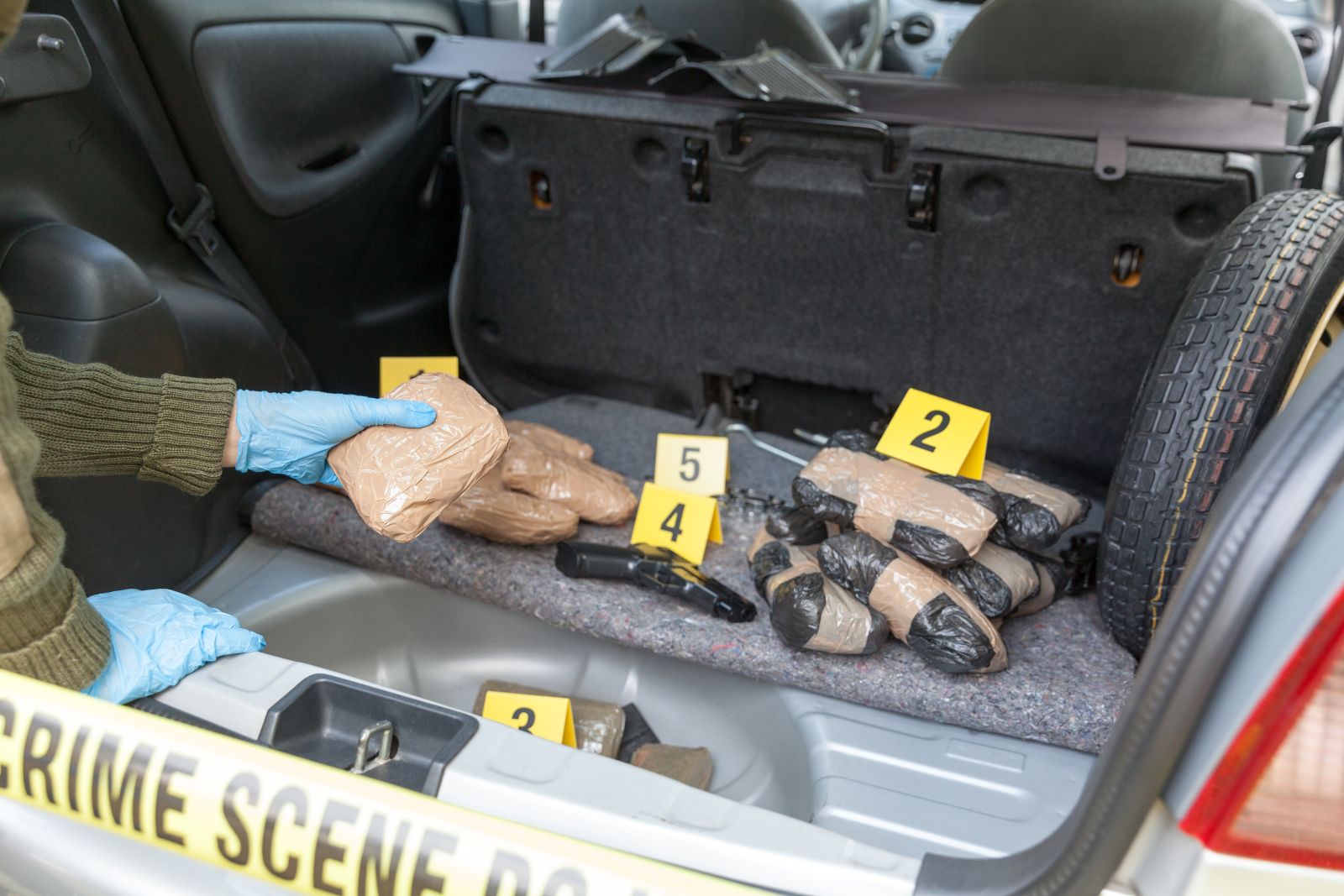
Many Interstate 80 Drug Stops Lead to Federal Investigations
Nebraska’s location in the center of the country makes Interstate 80 one of the most popular transportation corridors in the United States.
Federal and state law enforcement agencies routinely patrol this corridor looking for evidence of interstate drug trafficking and other federal offenses.
Many investigations begin with what appears to be a routine traffic stop before expanding into allegations involving:
- Drug trafficking
- Federal conspiracy
- Firearm offenses
- Money laundering
- Interstate transportation of controlled substances
If your case began during a vehicle stop, you may also find our page on Interstate 80 Drug Stops in Nebraska helpful.
Federal Criminal Defense Resources in Omaha, Nebraska
- United States District Court – District of Nebraska: Official information regarding Nebraska’s federal courts, judges, procedures, local rules, and court schedules.
- U.S. Department of Justice – Criminal Division: Learn more about federal criminal laws, prosecutions, and enforcement priorities.
- Drug Enforcement Administration (DEA): Information regarding federal drug investigations, controlled substances, and drug trafficking enforcement.
- Bureau of Alcohol, Tobacco, Firearms and Explosives (ATF): Learn about federal firearm laws, explosives regulations, and ATF investigations.
- FBI Omaha Field Office: Information regarding the FBI’s investigative responsibilities throughout Nebraska.
- United States Sentencing Commission: Review the Federal Sentencing Guidelines and sentencing resources.
Frequently Asked Questions About Federal Crimes in Omaha
What makes a crime federal in Omaha and across Nebraska?
Federal jurisdiction often exists when an offense involves interstate activity, such as between Nebraska and Iowa, federal property, federal agencies, federal laws, or large-scale criminal investigations.
Are federal charges more serious than state charges in Nebraska?
Often, yes. Federal prosecutions frequently involve more extensive investigations, stricter sentencing guidelines, and mandatory minimum penalties.
What is a federal indictment?
A federal indictment is a formal charging document issued by a grand jury after finding probable cause that a federal offense occurred.
Should I talk to federal agents in Nebraska?
Before speaking with federal investigators, it’s generally wise to consult an experienced Omaha federal criminal defense attorney. Statements made during interviews may later be used as evidence.
Can I be charged in both state and federal court?
In certain circumstances, yes. Separate sovereigns may pursue charges based on the same underlying conduct.
Do all federal drug cases involve mandatory minimum sentences?
No. Mandatory minimum penalties depend upon the specific statute, alleged drug type, quantity, prior convictions, and other circumstances.
Why Choose Miltenberger Law to Defend a Federal Crime in Omaha?
Federal criminal cases demand preparation, strategy, and attention to detail.
Our firm carefully examines every aspect of the government’s investigation—from the legality of searches and seizures to the credibility of witnesses, forensic evidence, electronic communications, and constitutional issues.
Whether your case involves an FBI investigation, a DEA drug conspiracy, an ATF firearms prosecution, or a federal indictment arising from an Interstate 80 traffic stop, we work to protect your rights at every stage of the process.
Because when the federal government is involved, there is no substitute for thorough preparation and an aggressive defense.
Speak With an Omaha Federal Crimes Lawyer Today
If you have been arrested, indicted, served with a grand jury subpoena, or believe you are the target of a federal criminal investigation, don’t wait to seek legal advice.
Federal investigators often spend months building a case before making an arrest. The earlier you involve experienced counsel, the sooner you can begin protecting your rights and preparing your defense.
Call (402) 217-2267 right away or contact Miltenberger Law Offices online to schedule a confidential consultation with an experienced federal crimes lawyer serving Omaha and clients across Nebraska.