
Leading Criminal Defense Lawyers in Omaha
Being arrested or investigated in Omaha can turn your life upside down in a matter of minutes. You may be facing jail time, steep fines, a permanent criminal record, and consequences that reach far beyond the courtroom—your job, professional licenses, housing, family, and future opportunities. If you’re searching for a criminal defense lawyer in Omaha or anywhere else across Nebraska, the most important step you can take right now is getting experienced legal counsel involved early, before you speak to police, accept a plea, or miss critical deadlines.
At Miltenberger Law Offices, we provide aggressive, strategic criminal defense for people charged in the greater Omaha area. Our attorneys defend clients in cases ranging from DUI and drug charges to assault, domestic violence, theft, weapons offenses, probation violations, and serious felonies. We understand how local prosecutors build cases, how law enforcement investigates arrests, and what it takes to challenge the evidence—because in criminal court, details matter, and the smallest procedural mistake can change everything.
Our approach is simple: move fast, control the narrative, and fight for the best possible outcome. That means protecting your constitutional rights from the start, investigating the facts independently, identifying weaknesses in the state’s evidence, and pushing for dismissals or reductions whenever possible. When a case can’t be resolved on favorable terms, we prepare relentlessly for trial—because prosecutors negotiate differently when they know you have a defense team that’s ready to win in court.
If you or someone you love is facing criminal charges in Omaha, don’t wait and hope it “works itself out.” The state has resources, time, and momentum on its side—your defense should too. Call (402) 217-2267 or contact us online to schedule a free, confidential consultation with an experienced Omaha criminal defense attorney and get a clear plan for what happens next, what’s at stake, and how we can fight to protect your freedom and your future.

Omaha Criminal Defense Practice Areas
DUI | Drug Possession | Possession with Intent to Distribute | Interstate 80 Drug Stops | Weapons and Firearms Charges | Assaults | Disorderly Conduct | Domestic Violence | Federal Crimes | Felonies | Homicide / Manslaughter | Juvenile Crimes | Misdemeanors | Murder | Orders of Protection | Probation Violations | Property Crimes | Diversions | Theft | Violent Crimes | Fraud

Cody spent over 7 years working the Felony DUI Unit for the Nebraska Attorney’s Office where he handled hundreds of Felony DUI cases. Cody was responsible for prosecuting Felony DUIs, DUI assault, DUI Motor Vehicle Homicides, DUI Serious Bodily Injury cases, Manslaughters resulting from DUIs, and all other DUI related matters. Cody has successfully handled jury trials on all types of DUI related matters. Cody knows the law, he knows the issues, and can provide you the most competent DUI Advice and defense available.

Drug Possession charges are some of the most commonly prosecuted crimes in the Omaha area and across Nebraska. Cody has extensive experience in handling drug related crimes. Cody has spent his entire career learning, preparing and applying the law regarding search and seizure, the essential knowledge to defending Drug Possession cases. Drug cases are won or lost at the suppression level, if law enforcement conducted an illegal stop or an illegal search the evidence should be thrown out AND your case should be dismissed. Cody will review your case thoroughly and provide you the best option on your Drug Possession charge.

A possession with intent to distribute charge isn’t just about what was found—it’s about what the state claims it means. Prosecutors often try to prove “intent” using circumstantial evidence like the amount of a substance, baggies, scales, cash, or phone communications, even when there’s no actual sale. The key is acting fast to investigate the stop, attack the legality of any search, and dismantle the assumptions the state is using to elevate the charge. With Cody’s background as a former Deputy County Attorney, our team knows exactly how these cases are built—and how to exploit the weaknesses for better outcomes. If you’re facing a PWID charge in Omaha, contact Miltenberger Law Offices immediately.
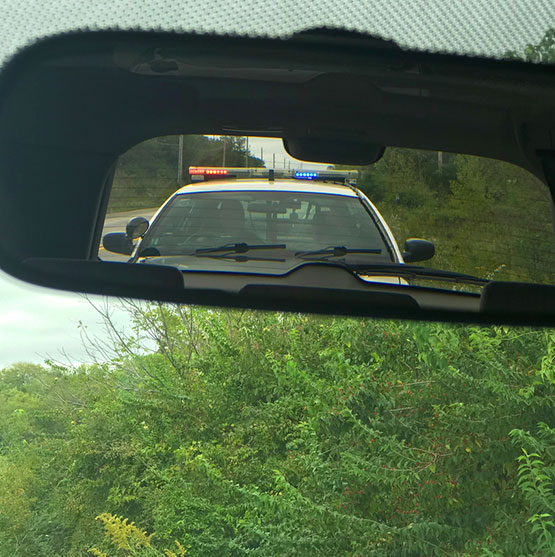
An drug stop charge on Interstate 80 isn’t just about what police say they found—it’s about whether they had the legal right to stop you, hold you, question you, and search you in the first place. Many I-80 cases hinge on traffic-stop pretexts, extended detentions, K-9 deployments, and consent searches that can be challenged. The key is moving quickly to secure video, analyze the timeline, and attack any constitutional violations before the state locks in its narrative. With Cody’s background as a former Deputy County Attorney, our team knows how these interstate interdiction cases are built—and how to exploit weaknesses for dismissals, reductions, or suppressed evidence. If you’re facing an I-80 drug stop charge near Omaha or anywhere else in Nebraska, contact Miltenberger Law Offices immediately or call (402) 217-2267 .

Firearm charges frequently rise or fall on search-and-seizure issues. Just like drug cases, weapons arrests often involve contested traffic stops, consent searches, vehicle searches, and questions about whether an officer had a legal reason to detain you, question you, or expand the stop. These cases are complex, and one procedural mistake can make a major difference in the outcome. At Miltenberger Law Offices, we defend clients facing gun charges in Omaha or elsewhere across Nebraska by digging into the details: why you were stopped, what the officer claimed to observe, how the search was conducted, and whether your rights were violated at any point.

Assault cases are some of the most frequently filed cases in Omaha and throughout Nebraska. Whether it is dispute between family members, between significant others, road rage or a bar fight, these charges are filed everyday. There are always at least two sides to every story, and the truth often lies somewhere in between. The key to success in assault cases is speaking with witnesses as soon as possible. From his stint as the Deputy County Attorney, Cody understands how the prosecuting team builds its case and how to exploit the inherent weaknesses to get excellent results. If you’ve been charged with assault in the Omaha area, contact our team of experienced attorneys.

Disorderly conduct cases are frequently filed misdemeanors in Omaha and across Nebraska. Disorderly conduct charges often arise during emotionally charged situations. A disagreement outside a downtown Omaha bar. An argument at a sporting event. A neighborhood dispute. A traffic stop that escalates. A domestic disturbance where police arrive after emotions have already boiled over. Whether you’re facing a misdemeanor citation or disorderly conduct has been added to more serious criminal allegations, we’ll carefully evaluate the facts, protect your constitutional rights, and fight for the best possible outcome.

Domestic violence is not a single charge in every situation. Instead, domestic violence cases in Nebraska may involve several different criminal offenses depending on the relationship between the parties, the alleged conduct, the injuries involved, and whether prior convictions exist. Many Omaha domestic violence cases are charged under Nebraska’s domestic assault statute, Nebraska Revised Statute § 28-323. Nebraska law defines domestic assault in varying degrees based on whether the allegation involves bodily injury, threats of imminent injury, a dangerous instrument, or serious bodily injury.
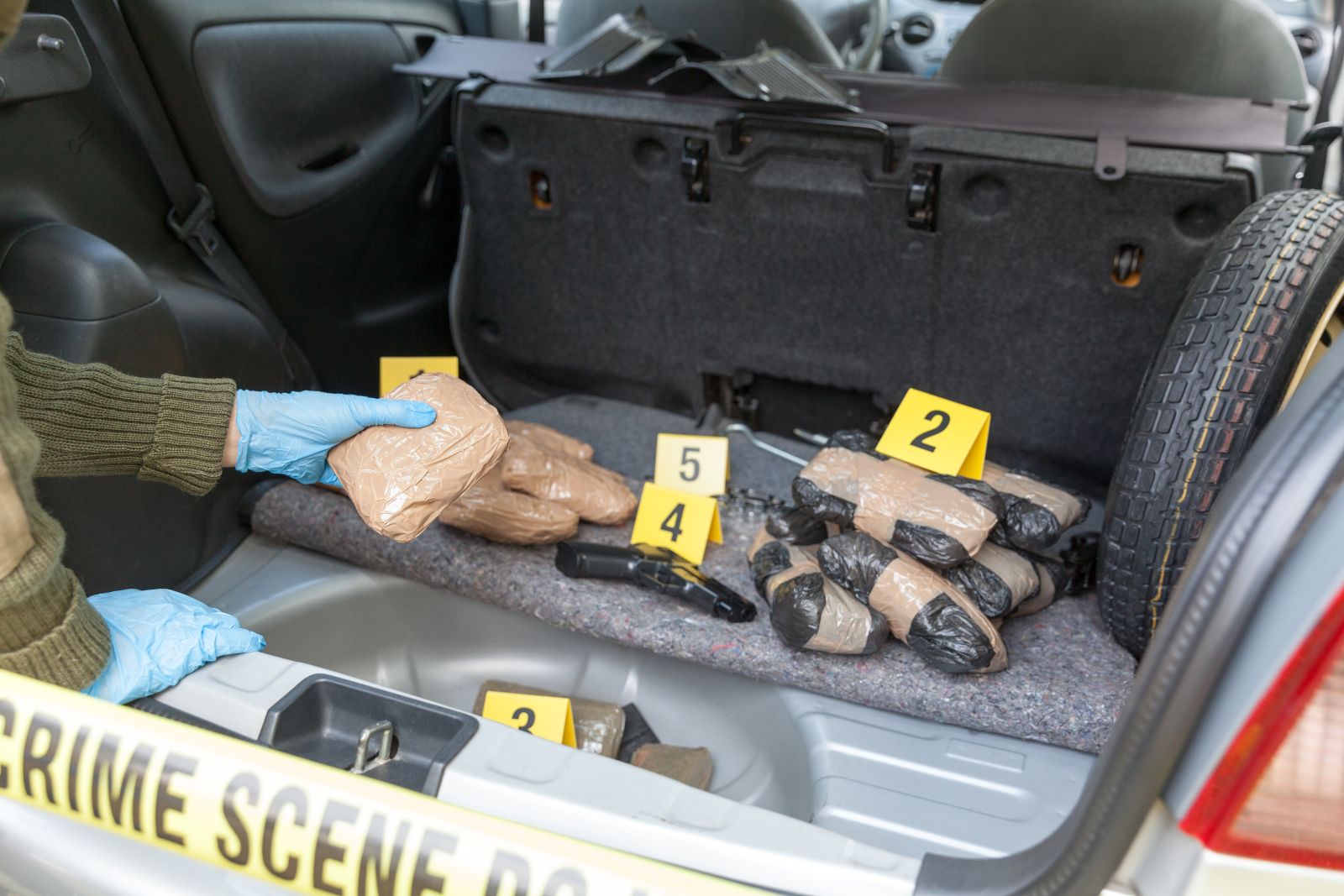
Many people assume a federal criminal case is simply a more serious version of a state prosecution. It isn’t. Federal cases operate under an entirely different court system, different procedural rules, and different sentencing practices than criminal cases prosecuted in Nebraska state courts. Instead of county prosecutors, federal cases are handled by Assistant United States Attorneys (AUSAs). Instead of local police conducting most investigations, cases are often built by federal agencies over months, or even years, before charges are filed.
In Nebraska, criminal offenses are generally divided into two categories: misdemeanors and felonies. While misdemeanors typically involve shorter jail sentences and less severe penalties, felonies carry the possibility of imprisonment in the Nebraska Department of Correctional Services and can create lifelong consequences long after a sentence has been completed. Under Nebraska Revised Statute § 28-105, there are 10 classes of felonies, ranging from Class IV (least severe) to Class I (the death penalty).

Nebraska law recognizes several homicide-related offenses. Some involve allegations of intentional killings. Others involve sudden quarrels. And some arise from fatal motor vehicle collisions where prosecutors believe a traffic violation or other unlawful conduct caused another person’s death. Although these offenses all fall under the broad category of criminal homicide, they carry very different legal elements, potential penalties, and defense strategies. The Miltenberger Law criminal defense attorneys have decades of proven experience protecting the innocence of Omaha and Nebraska residents.

Juvenile cases are different from adult criminal cases. Different courts. Different procedures. Different goals. In Nebraska, juvenile courts generally have jurisdiction over children under the age of 18 who are accused of violating criminal laws. Rather than focusing exclusively on punishment, juvenile courts often emphasize rehabilitation, education, counseling, supervision, and helping young people avoid future involvement with the justice system. That does not mean the consequences are insignificant. A juvenile accused of breaking the law may still face detention, probation, counseling requirements, restitution, community service, substance abuse treatment, electronic monitoring, or placement outside the home. For more serious offenses, prosecutors may seek to have the juvenile prosecuted as an adult. The earlier an experienced juvenile defense attorney in Omaha becomes involved, the more opportunities there may be to protect your child’s rights and future.
Under Nebraska Revised Statutes § 28-106, a misdemeanor is a criminal offense that is generally less serious than a felony. But it is still a crime. That distinction matters. A traffic ticket may be handled as a civil or administrative matter in some situations. A misdemeanor can result in an arrest, criminal prosecution, jail sentence, and conviction appearing on your record. Nebraska divides misdemeanors into several classifications based on the maximum punishment allowed by law, including Class I, Class II, Class III, Class IIIA, Class IV, Class V, and Class W misdemeanors for DUI and implied-consent offenses. The classification tells you the maximum statutory punishment. It does not tell you what will happen in your particular case.

Not every homicide is murder. And not every death results in criminal charges. Homicide is a broad term describing one person causing the death of another. Murder is a specific form of criminal homicide that requires prosecutors to prove particular elements under Nebraska law. Depending on the circumstances, a death investigation may lead to allegations involving First-Degree Murder (Nebraska Revised Statutes § 28-303), Felony Murder, Second-Degree Murder (Neb. Rev. Stat. § 28-304), Homicide (Neb. Rev. Stat. § 28-302), Manslaughter (Neb. Rev. Stat. § 28-305), or Motor Vehicle Homicide (Neb. Rev. Stat. § 28-306). When someone is accused of murder, the prosecution must prove more than the fact that another person died. It must prove the specific type of murder alleged beyond a reasonable doubt.

An ex parte protection order is a temporary order issued before the respondent receives notice or appears in court. At this stage, the judge generally reviews only the petition and affidavit submitted by the person requesting protection, known as the petitioner. Under Nebraska Revised Statute § 26-109, a judge may issue a domestic abuse protection order before a hearing if the petition claims the person is in immediate danger. A harassment or sexual assault protection order may be issued when the judge believes waiting for a hearing could lead to serious harm or loss. Once served, you generally have 10 business days to request a show-cause hearing. If you do not request one in time, the temporary order may become final, typically for a year, without the judge hearing your evidence.

Probation allows some individuals convicted of criminal offenses to serve their sentences in the community instead of spending time in jail or prison. Rather than immediate incarceration, the court places the individual under supervision for a specified period while requiring compliance with numerous conditions designed to promote rehabilitation, accountability, and public safety. Probation is not the same as having your case dismissed or avoiding punishment. It is a court-ordered sentence that comes with strict rules. Depending on the offense and the circumstances of the case, a person on probation may be required to regularly report to a probation officer, maintain employment, complete counseling or treatment programs, submit to drug or alcohol testing, perform community service, pay fines or restitution, and comply with numerous other conditions.

Property crimes generally involve allegations that someone took, damaged, entered, used, retained, or interfered with property without legal authority. Some cases revolve around physical evidence, such as merchandise found in a vehicle or damage captured on a security camera. Others depend heavily on intent. A person may have possessed property that turned out to be stolen without knowing where it came from. Someone may have entered a building but never intended to steal anything. Those details can help shape your defense strategy. Nebraska law divides property offenses into several categories, each with its own elements and possible penalties.

Under Nebraska Revised Statute § 29-3601, prosecutors are allowed to offer diversion programs to criminal defendants, as long as the defendant participates voluntarily; they’ve spoken to criminal defense counsel before making their decision; the decision is made after an arrest but before sentencing; and the diversion program results in a dismissal of charges after the defendant has successfully completed the program. In plain terms, diversion gives an eligible person time to complete certain requirements instead of moving directly toward a conviction.

Nebraska handles theft differently from many other states. Instead of having several different laws for different types of theft crimes, nnder Nebraska Revised Statute § 28-510, crimes traditionally known as larceny, embezzlement, false pretenses, extortion, blackmail, fraudulent conversion, and receiving stolen property are consolidated into the single offense of theft. The specifics of your case still matter. Shoplifting merchandise, keeping money entrusted to you, using deception to obtain property, and possessing something you believe was stolen involve different allegations and potential defenses. Nebraska law simply allows each of those situations to be prosecuted as a form of theft.

“Violent crime” is not the name of one specific offense under Nebraska law. It is a broad category that includes charges involving physical injury, threats, force, restraint, weapons, or death. One incident can lead to several separate charges. An argument involving a firearm, for example, could result in assault and use of a deadly weapon allegations. Prosecutors must still prove every part of each offense.

Fraud is not one single criminal offense in Omaha or elsewhere in Nebraska. Rather, it describes a wide variety of crimes involving deception, false representations, or dishonest conduct intended to obtain money, property, services, or another benefit. Some fraud cases involve only a few hundred dollars. Others involve thousands. Some accusations arise between complete strangers. Others involve family members, employers, coworkers, business partners, or former romantic partners. Regardless of the circumstances, prosecutors generally must prove more than simply showing that money changed hands or someone suffered a financial loss.