
Weapons & Firearms Charges Lawyer in Omaha, Nebraska
Nebraska has a long tradition of responsible firearm and weapon ownership.
Many people legally own firearms for hunting. For personal protection. For sport shooting. Or simply because it’s part of their way of life.
Unfortunately, lawful gun ownership does not prevent criminal charges in Omaha and across Nebraska. A misunderstanding during a traffic stop. Carrying a firearm into a prohibited location. Possessing a weapon after a prior conviction. Allegedly using a firearm during another offense. Any of these situations can lead to serious state or federal weapons charges.
At Miltenberger Law Offices, we represent individuals charged with firearm and weapons offenses throughout Omaha, Douglas County, and across Nebraska. Whether you’re accused of unlawfully possessing a firearm, carrying a concealed weapon, committing a weapons offense during another alleged crime, or facing federal firearms charges, we carefully examine the evidence and aggressively protect your constitutional rights.
If you’ve been arrested or believe you’re under investigation for a weapons/firearms offense, call (402) 217-2267 or contact us online to speak with an experienced Omaha criminal defense attorney.
Because owning a firearm is legal. Being accused of violating Nebraska’s weapons laws is something entirely different.
What Are Weapons Charges in Omaha?
Weapons charges encompass far more than shootings or violent crimes.
Many cases involve nothing more than possession of a firearm under circumstances prosecutors believe violated state or federal law.
Depending on the facts, weapons charges may involve allegations concerning:
- Possession by prohibited persons
- Concealed firearms
- Firearms possessed during another alleged offense
- Possession of prohibited weapons
- Illegal transfers
- Firearms in prohibited locations
- Machine guns or destructive devices
- Juvenile firearm offenses
Some offenses are misdemeanors. Others carry mandatory prison sentences. Some can even be prosecuted in federal court. That’s why understanding exactly what you’re accused of, and what prosecutors must actually prove, is critical.
Owning a Gun Is Legal in Omaha and Across Nebraska. Being Charged With a Gun Crime Is Something Else Entirely.
Nebraska is a firearm-friendly state. Thousands of Nebraskans legally own firearms. Many legally carry handguns. Many hunt. Many keep firearms in their homes for personal protection.
But lawful gun ownership does not create immunity from Nebraska’s criminal laws. Firearm charges often arise because of where a weapon was carried, who possessed it, whether another alleged offense occurred, or whether prosecutors believe state or federal restrictions applied.
One does not automatically equal the other.
That’s an important distinction.
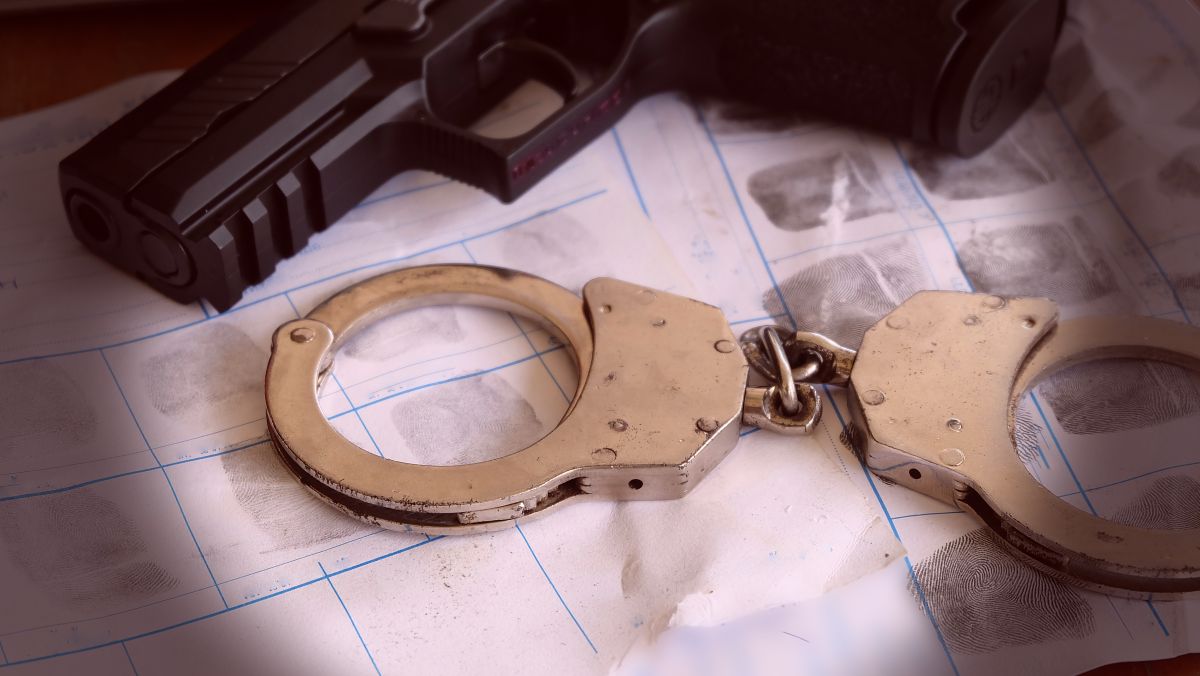
Common Weapons & Firearms Charges We Defend in Omaha, NE
Miltenberger Law represents clients charged with a wide variety of Nebraska weapons offenses, including:
Possession of a Firearm by a Prohibited Person
Not everyone is legally permitted to possess a firearm in Nebraska.
Under Nebraska Revised Statute § 28-1206, certain individuals are prohibited from possessing firearms or other deadly weapons. Depending on the circumstances, violating this law may result in serious felony charges and lengthy prison sentences.
These cases commonly arise after:
- Drug-related investigations
- Assaults or domestic disturbance investigations
- Routine traffic stops
- Search warrant executions
- Probation or parole searches
The biggest issues in these cases involve questions regarding constructive possession, ownership, access, and knowledge. Simply because a firearm was found inside a vehicle or residence does not automatically mean every person present illegally possessed it.
Prosecutors must still prove that the accused knowingly possessed or exercised control over the firearm. That can become far more complicated when multiple people occupy the vehicle, the firearm belonged to someone else, or the weapon was discovered in a shared area.
The classification of this offense depends on the weapon involved: possession of a non-firearm deadly weapon by a prohibited person is a Class III felony, while possession of a firearm is a Class ID felony for a first offense and a Class IB felony for subsequent offenses.
Defending these cases often requires carefully examining how the firearm was discovered, whether law enforcement conducted a lawful search, and whether the government can actually establish knowing possession beyond a reasonable doubt.
Minor or Prohibited Person Carrying a Concealed Weapon
Neb. Rev. Stat. § 28-1202 addresses carrying concealed weapons under circumstances prohibited by law.
Although Nebraska has adopted permitless concealed carry for many adults, this statute continues to apply in numerous situations involving prohibited possessors, minors, and other exceptions.
Whether someone lawfully possessed or carried a concealed weapon often depends upon the specific facts surrounding the arrest.
Carrying a Concealed Handgun in a Prohibited Location
Permitless carry does not mean you can carry everywhere.
Neb. Rev. Stat. § 28-1202.01 identifies numerous locations where concealed firearms remain prohibited.
Examples may include:
- Courthouses
- Jails
- Schools
- Hospitals
- Banks / Financial Institutions
- Certain government buildings
- Polling places
- Posted private property
- Other locations identified by statute
Many otherwise law-abiding firearm owners are surprised to learn these restrictions still exist. Nebraska law classifies this act as a Class I misdemeanor when committed for the first time, escalating to a Class IV felony for any second or subsequent offense.
Carrying a Concealed Weapon Under the Influence
Nebraska law prohibits carrying a concealed handgun while consuming alcohol or while impaired by alcohol or certain controlled substances. Under Neb. Rev. Stat. § 28-1202.02, a first offense is generally classified as a Class III misdemeanor, while second and subsequent offenses may be charged as a Class I misdemeanor.
Carrying a Concealed Handgun Without Identification
Individuals lawfully carrying a concealed handgun are generally required to have proper identification readily available. Under Neb. Rev. Stat. § 28-1202.03, carrying a concealed handgun without an acceptable identification document, such as a driver’s license or passport, may result in a Class III misdemeanor for a first offense and a Class I misdemeanor for any subsequent offense.
Failure to Inform Law Enforcement About a Concealed Handgun
Under Neb. Rev. Stat. § 28-1202.04, individuals carrying a concealed handgun are generally required to immediately notify law enforcement officers or emergency services personnel during an official encounter that they are armed. Failing to provide that notification is typically a Class III misdemeanor for a first offense, may be charged as a Class I misdemeanor for a second offense, and can rise to a Class IV felony for a third or subsequent violation.
Unlawful Discharge of a Firearm
Nebraska law treats the unlawful discharge of a firearm as an extremely serious offense. Under Neb. Rev. Stat. § 28-1212.02, intentionally firing a weapon at an occupied building, inhabited home, occupied motor vehicle, or inhabited motor home is generally prosecuted as a Class ID felony.
For purposes of the statute, an “inhabited” location is one being used as a residence, while “occupied” means another person is physically inside the building or vehicle when the firearm is discharged.
Possession of a Deadly Weapon During the Commission of a Felony
Under Neb. Rev. Stat. § 28-1205, prosecutors may pursue additional penalties when a firearm or other deadly weapon is allegedly possessed during the commission of certain felony offenses.
The classification of this offense in Nebraska varies: using a deadly weapon other than a firearm to commit a felony is a Class II felony, while using a firearm in the commission of a felony is categorized as a Class IC felony.
Possession of a Defaced Firearm
Nebraska law also prohibits the knowing possession, receipt, sale, or lease of a firearm with an altered, defaced, removed, or destroyed serial number. As provided in Neb. Rev. Stat. § 28-1207, this offense is typically charged as a Class III felony, unless the firearm is being lawfully surrendered or delivered to a law enforcement agency.
Defacing a Firearm
Nebraska law makes it a felony to intentionally tamper with a firearm’s identifying markings. According to Neb. Rev. Stat. § 28-1208, knowingly removing, altering, defacing, covering, or destroying a firearm’s serial number or manufacturer’s identification mark is typically prosecuted as a Class III felony.
Possession of a Stolen Firearm
Nebraska law makes it a serious felony to knowingly possess or handle a stolen firearm. According to Neb. Rev. Stat. § 28-1212.03, a person may face a Class IIA felony for receiving, keeping, possessing, or disposing of a firearm they know—or have reason to believe—was stolen. The law generally exempts individuals whose sole intent is to return the firearm to its rightful owner or otherwise surrender it lawfully.
Unlawful Transfer of a Firearm to a Juvenile
Nebraska law places significant restrictions on transferring firearms to minors. According to Neb. Rev. Stat. § 28-1204.01, knowingly selling, lending, giving, or otherwise transferring possession of a firearm to a juvenile may result in a Class III felony. Certain exceptions apply for family transfers, lawful sporting activities, and supervised educational programs.
In addition to criminal penalties, juvenile weapon allegations may affect:
- School discipline
- Future educational opportunities
- Scholarships
- Military service
- Employment
- Future firearm rights
Early legal intervention is especially important in juvenile weapons cases.
Unlawful Possession of a Firearm at a School
Nebraska law strictly regulates where firearms may be carried, including educational settings. Under Neb. Rev. Stat. § 28-1204.04, possessing a firearm in a school building, on school grounds, inside a school vehicle, or at a school-sponsored activity is generally a Class IV felony. While the statute includes certain exceptions, violations can result in serious criminal penalties.
Unlawful Possession of Machine Guns, Explosives, and Other Prohibited Weapons
Nebraska law makes it a criminal offense to possess or store certain explosive compounds, devices, or mixtures without the required permit from the Nebraska State Patrol. According to Neb. Rev. Stat. § 28-1215 and § 28-1216, the severity of the offense depends on whether the individual was legally eligible to obtain a permit. Those who are ineligible may face a Class IV felony, while otherwise eligible individuals who simply lacked the required permit may be charged with a Class I misdemeanor.Because these allegations frequently overlap with federal law, they may involve both state and federal investigators.
Many Omaha Weapons Charges Begin With a Routine Traffic Stop
Not every weapons case in Omaha and across Nebraska begins with an armed robbery investigation or a violent crime.
In fact, many firearm charges start with something far less dramatic. A speeding ticket. A broken taillight. Following another vehicle too closely. Failing to signal.
What begins as an ordinary traffic stop can quickly become a criminal investigation if law enforcement discovers a firearm inside the vehicle.
Officers may begin asking questions such as:
- Who owns the firearm?
- Is it loaded?
- Where was it found?
- Do you have any prior felony convictions?
- Is anyone else in the vehicle prohibited from possessing firearms?
- Was the firearm used during another alleged offense?
Depending on the answers, and the surrounding circumstances, a routine traffic stop may result in misdemeanor charges, felony weapons charges, or even a federal investigation.
Many of these cases also involve allegations of:
- Drug possession
- Possession with intent to distribute
- DUI
- Outstanding warrants
- Prohibited possession
- Possession of a firearm during the commission of a felony
It’s important to remember that simply finding a firearm inside a vehicle does not automatically prove who possessed it.
That issue becomes especially important when:
- Multiple people were inside the vehicle
- The vehicle was borrowed
- The firearm belonged to someone else
- The firearm was discovered in the trunk or another shared area
- Passengers had equal access to the weapon
Ownership and possession are not always the same thing.
Neither are knowledge and possession.
Those distinctions frequently become some of the most important issues in a Nebraska weapons prosecution.
In addition, many traffic-stop firearm cases raise significant constitutional questions, including:
- Was the vehicle lawfully stopped?
- Did officers have legal authority to search the vehicle?
- Was consent actually given?
- Did the search exceed the scope of the traffic stop?
The answers to those questions can significantly affect whether evidence may ultimately be used in court.
If your case began during a traffic stop on Interstate 80 or another Nebraska highway, you may also want to review our page on Interstate 80 Drug Stops in Nebraska, which discusses many of the constitutional issues that frequently arise during vehicle searches and roadside investigations.
Because sometimes the most important part of a weapons case isn’t the firearm itself.
It’s whether law enforcement had the legal right to find it in the first place.
Can Police Search Your Vehicle If They Think There’s a Gun Inside?
The answer is one of the most common—and most misunderstood—questions in Nebraska weapons cases.
Like many legal questions, it depends.
The Fourth Amendment to the United States Constitution protects individuals from unreasonable searches and seizures. That protection doesn’t disappear simply because a firearm may be involved.
Whether officers may lawfully search your vehicle depends on the specific circumstances surrounding the stop.
Examples may include:
- Whether you voluntarily consented to the search
- Whether officers had probable cause
- Whether a firearm was in plain view
- Whether officers had a valid search warrant
- Whether another recognized exception to the warrant requirement applied
Many people mistakenly believe they must automatically consent to a vehicle search simply because an officer asks.
That isn’t necessarily true.
Likewise, many people assume officers can search any vehicle simply because someone mentions a firearm.
That isn’t necessarily true either.
Every traffic stop presents its own legal issues, and the circumstances surrounding the search often become one of the most important parts of the defense.
Questions that frequently arise include:
- Was the original traffic stop lawful?
- Did officers improperly extend the stop?
- Was consent actually voluntary?
- Did officers exceed the scope of the search?
- Did probable cause actually exist?
If the search violated your constitutional rights, the court may determine that certain evidence should be excluded from trial.
That’s why the legality of the search is often just as important as what officers claim they found.
Federal Firearms Charges in Omaha, Nebraska
Not every weapons case remains in Nebraska state court.
Some investigations quickly become federal prosecutions.
Federal firearms charges often arise when allegations involve:
- Interstate transportation of firearms
- Possession of firearms by prohibited persons
- Firearms connected to alleged drug trafficking
- Machine guns or destructive devices
- Possession of firearms during certain federal offenses
- Large-scale firearms investigations
- ATF investigations
Federal prosecutors frequently rely upon statutes such as 18 U.S.C. § 922 and 18 U.S.C. § 924, which govern unlawful firearm possession, prohibited persons, firearm trafficking, and sentencing enhancements.
Federal court operates under different procedures, sentencing guidelines, and evidentiary rules than Nebraska state court.
Simply put…
It’s not the place where you want to “see what happens.”
Weapons & Firearm Resources in Omaha, Nebraska
- City Laws at a Glance (Neb. Open Carry): This resource summarizes local firearm regulations throughout Nebraska while providing convenient access to many of the state’s weapons statutes. It’s a useful starting point for understanding how state law and certain local rules may affect lawful firearm carry.
- Firearm Prohibitions in Nebraska: Learn more about Nebraska laws governing who may legally possess firearms, state and federal firearm restrictions, and background check requirements. This resource offers a comprehensive overview of Nebraska’s firearm possession laws and the legal limitations that may apply in certain situations.
- Nebraska Firearms Owners Association: NFOA serves as a statewide advocacy organization for Nebraska firearm owners by promoting responsible firearm ownership, educating the public about Nebraska gun laws, and participating in legislative efforts involving Second Amendment rights. The organization also offers educational resources, events, and updates on proposed firearm legislation.
- Background Check Requirements: Visit the Nebraska State Patrol to learn how firearm background checks are conducted in Nebraska, including information about NICS, state procedures, and the legal requirements that help determine whether someone may lawfully purchase or possess a firearm.

Common Defenses to Omaha, NE Weapons Charges
Every weapon case in Omaha is different.
However, certain legal defenses arise frequently in firearm prosecutions. Our Omaha weapons and firearm charges attorneys have experience using the following defenses:
Illegal Search and Seizure
If law enforcement violated your constitutional rights while searching your vehicle, home, or personal property in Omaha or anywhere else in Nebraska, evidence may be subject to suppression.
Lack of Possession
Simply because a firearm was found nearby does not automatically mean it legally belonged to, or was possessed by, you.
This issue commonly arises in shared homes, borrowed vehicles, rental cars, and situations involving multiple occupants.
Lack of Knowledge
Prosecutors frequently must prove that you knowingly possessed the firearm.
If you were unaware the firearm was present, that fact may become an important part of your defense.
Mistaken Identity
Eyewitnesses sometimes make mistakes, especially during stressful or rapidly unfolding events.
Video evidence, forensic evidence, and independent witnesses may tell a very different story.
Self-Defense
Some weapons cases arise after individuals lawfully defend themselves or another person.
Whether self-defense applies depends upon the facts surrounding the incident and the applicable Nebraska statutes.
Insufficient Evidence
The government bears the burden of proof.
You are not required to prove your innocence.
Prosecutors must prove every element of the offense beyond a reasonable doubt.
That’s a much higher standard than many people realize.
Nebraska Weapons & Firearms Penalties
The potential penalties for weapons offenses vary depending on the specific charge, prior criminal history, and the circumstances surrounding the alleged offense.
| Weapons Offense | Nebraska Statute | Classification | Potential Penalty |
|---|---|---|---|
| Possession of a Firearm by a Prohibited Person | § 28-1206 | Class ID Felony (1st firearm offense) Class IB Felony (subsequent firearm offenses) Class III Felony (other deadly weapons) |
Substantial prison exposure depending on the weapon involved and prior convictions. |
| Minor or Prohibited Person Carrying a Concealed Weapon | § 28-1202 | Varies | Depends on the facts of the case and the individual’s eligibility to carry. |
| Carrying a Concealed Handgun in a Prohibited Location | § 28-1202.01 | Class I Misdemeanor (1st) Class IV Felony (2nd+) |
Enhanced penalties for repeat offenses. |
| Carrying a Concealed Handgun While Under the Influence | § 28-1202.02 | Class III Misdemeanor (1st) Class I Misdemeanor (2nd+) |
Higher penalties apply for subsequent convictions. |
| Carrying a Concealed Handgun Without Identification | § 28-1202.03 | Class III Misdemeanor (1st) Class I Misdemeanor (2nd+) |
Repeat violations carry increased penalties. |
| Failure to Inform Law Enforcement About a Concealed Handgun | § 28-1202.04 | Class III Misdemeanor (1st) Class I Misdemeanor (2nd) Class IV Felony (3rd+) |
Penalties increase significantly for repeat offenses. |
| Unlawful Transfer of a Firearm to a Juvenile | § 28-1204.01 | Class III Felony | Felony conviction with possible imprisonment and fines. |
| Unlawful Possession of a Firearm at a School | § 28-1204.04 | Class IV Felony | Felony penalties unless a statutory exception applies. |
| Possession of a Deadly Weapon During the Commission of a Felony | § 28-1205 | Class II Felony (deadly weapon) Class IC Felony (firearm) |
Additional penalties that accompany the underlying felony. |
| Possession of a Defaced Firearm | § 28-1207 | Class III Felony | Knowingly possessing or transferring a firearm with an altered or removed serial number. |
| Defacing a Firearm | § 28-1208 | Class III Felony | Intentionally altering or removing identifying markings from a firearm. |
| Unlawful Discharge of a Firearm | § 28-1212.02 | Class ID Felony | Knowingly firing at an occupied building, vehicle, home, or motor home. |
| Possession of a Stolen Firearm | § 28-1212.03 | Class IIA Felony | Knowingly possessing or transferring a stolen firearm. |
| Unlawful Possession of Explosive Materials | §§ 28-1215 & 28-1216 | Class IV Felony or Class I Misdemeanor | Penalty depends on whether the individual was legally eligible to obtain the required permit. |
Disclaimer: Weapons offenses in Nebraska may also be prosecuted under federal law. The penalties above are general summaries and may vary depending on prior convictions, sentence enhancements, multiple charges, or other aggravating circumstances.
What Should You Do If You’re Charged With a Weapons Offense?
Step 1: Exercise Your Right to Remain Silent
Don’t attempt to explain the situation or answer investigative questions before speaking with an Omaha weapon charges defense attorney.
Step 2: Do Not Consent to Additional Searches
If officers request permission to search additional property, politely decline unless advised otherwise by counsel.
Step 3: Preserve Evidence
Save receipts, purchase records, text messages, surveillance footage, photographs, and any other information that may become important later.
Step 4: Stay Off Social Media
Do not discuss your arrest, the firearm, or your case online. If you wouldn’t want a prosecutor reading it in court, don’t post it.
Step 5: Follow Every Court Order
Carefully comply with all bond conditions, court dates, and any restrictions imposed by the court.
Step 6: Contact an Omaha Weapons Lawyer Immediately
The earlier your firearm charges attorney in Omaha becomes involved, the sooner evidence can be preserved, witnesses interviewed, and constitutional issues identified.
Frequently Asked Questions About Nebraska Weapons Charges
Can I legally carry a handgun without a permit in Nebraska?
Many adults may lawfully carry concealed handguns without a permit under Nebraska law. However, important restrictions still apply, including prohibited locations and individuals who are legally prohibited from possessing firearms.
Can police take my firearm during a traffic stop in Omaha?
Depending on the circumstances, officers may temporarily secure a firearm during a lawful stop. Whether the firearm may be permanently seized or used as evidence depends on the facts of the case.
Can I be charged in Nebraska if the firearm wasn’t mine?
Possibly. Ownership and possession are not always the same thing. Prosecutors must establish that you knowingly possessed the firearm under the applicable law.
Can weapons charges become federal charges?
Yes. Cases involving prohibited persons, interstate activity, firearms connected to alleged drug trafficking, or certain other circumstances may be prosecuted in federal court.
Should I tell the officer I have a firearm?
The answer depends on the circumstances of the stop and the applicable law. If you’re unsure of your obligations, it’s best to remain calm, follow lawful instructions, and consult an attorney regarding your specific situation.
When should I hire an Omaha weapons defense attorney?
Immediately. Early legal representation may help protect your rights, preserve evidence, and identify constitutional issues before the case progresses.
Why Choose Miltenberger Law Offices?
Weapons charges often involve more than a firearm.
They involve constitutional rights.
Searches.
Traffic stops.
Witness credibility.
Questions about possession.
Questions about intent.
At Miltenberger Law Offices, we don’t simply accept the police report as the final word.
We examine every aspect of the investigation to determine whether law enforcement followed the law, whether your constitutional rights were respected, and whether prosecutors can actually prove the allegations beyond a reasonable doubt.
Because owning a firearm doesn’t make someone a criminal.
And allegations don’t automatically become convictions.
Talk to an Omaha Weapons & Firearms Charges Lawyer Today
If you’ve been arrested, charged, or believe you’re under investigation for a weapons or firearms offense in Omaha or elsewhere in Nebraska, don’t wait to protect your rights.
The earlier an experienced Omaha criminal defense attorney becomes involved, the more opportunities there may be to challenge the evidence, identify constitutional violations, and build a strong defense.
Call (402) 217-2267 or contact Miltenberger Law online today to schedule a confidential consultation with an experienced Omaha weapons and firearms charges lawyer.
Because your constitutional rights deserve a strong defense, too.