
Federal drug crimes lawyer in Ralston, NE. Federal drug charges can have life-changing consequences, threatening your freedom, livelihood, financial security, and future opportunities. Federal prosecutors have significant resources at their disposal, and convictions involving drug trafficking or conspiracy may result in mandatory minimum prison sentences, substantial financial penalties, and lengthy periods of supervised release. If you are being investigated or have been charged with a federal drug offense in Ralston, NE, taking immediate steps to understand the allegations and safeguard your legal rights is critical.
Federal drug prosecutions are often far more complex than drug cases handled in state courts. Investigations may involve multiple law enforcement agencies, confidential informants, wiretaps, cooperating witnesses, and allegations spanning several jurisdictions. Federal authorities sometimes spend months or even years developing a case before making an arrest. Nevertheless, the scope of an investigation does not guarantee the reliability of the evidence or relieve prosecutors of their obligation to establish guilt beyond a reasonable doubt.
At Miltenberger Law Offices, we understand how overwhelming it can be to face serious criminal accusations. Our approach begins with examining the evidence, identifying weaknesses in the government’s allegations, and determining which legal protections and defense strategies may apply. Whether your case involves methamphetamine distribution, fentanyl trafficking, possession with intent to distribute, or a federal drug conspiracy, securing experienced legal guidance as early as possible can make a meaningful difference.
Article Summary: Understanding Federal Drug Charges in Ralston, NE
Federal drug prosecutions involve different laws, investigative procedures, and sentencing guidelines than drug offenses handled in Nebraska state courts. This guide examines what causes a drug case to fall under federal jurisdiction, the types of offenses commonly prosecuted, and the potential consequences under the Controlled Substances Act. We’ll also explore how federal authorities investigate suspected drug activity, what to expect following a federal arrest in Ralston, NE, and how experienced criminal defense attorneys defend against trafficking and conspiracy allegations. Finally, you’ll learn why securing legal representation early can be critical when your case is prosecuted in the United States District Court for the District of Nebraska.

Federal Drug Charges in Ralston and Douglas County: Understanding Federal Prosecution
Ralston is situated within the Omaha metropolitan area, with 84th Street, L Street, and nearby Interstate 80 providing connections to Omaha, La Vista, Papillion, and surrounding communities. Its location near the Douglas and Sarpy County boundary places it within a heavily interconnected transportation network. Federal drug investigations involving Ralston may examine alleged distribution activity across neighboring jurisdictions, particularly when authorities suspect that multiple individuals participated in a coordinated trafficking operation.
Federal drug charges arising in Ralston fall within the jurisdiction of the United States District Court for the District of Nebraska. The Roman L. Hruska Federal Courthouse is located at 111 South 18th Plaza in downtown Omaha. Federal cases are prosecuted by the United States Attorney’s Office and operate under federal criminal statutes, procedural rules, and sentencing provisions rather than ordinary Douglas County state court procedures.
Investigations may involve allegations of possession with intent to distribute, methamphetamine or fentanyl trafficking, or participation in a federal drug conspiracy. Authorities may examine surveillance, electronic communications, financial records, and evidence recovered during searches. For Ralston residents, understanding the scope of the government’s allegations and the evidence connecting them to the charged conduct is important because federal drug convictions can carry substantial prison sentences and other lasting consequences.
When Does a Drug Offense Fall Under Federal Jurisdiction in Nebraska?
Drug crimes in Ralston or anywhere else across Nebraska may be prosecuted under either Nebraska law or federal law, depending on the alleged conduct and the authorities involved. While many possession and distribution offenses are handled in state court, federal prosecutors may pursue cases involving suspected trafficking operations, substantial drug quantities, organized distribution networks, or other violations of federal controlled substance laws.
The Controlled Substances Act provides the legal foundation for many federal narcotics prosecutions. Under 21 U.S.C. § 841, federal law prohibits unauthorized manufacturing, distributing, dispensing, or possessing controlled substances with the intent to manufacture, distribute, or dispense them. Charges brought under this statute can carry substantial penalties, with sentencing exposure influenced by factors such as the substance involved, drug quantity, prior qualifying convictions, and other circumstances established under federal law.
Federal jurisdiction is not limited to cases involving drugs transported across state lines. Even when the alleged conduct takes place exclusively within Nebraska, federal charges may be filed if the government can establish a violation of federal law. However, suspected connections between Ralston, NE, Lincoln, Council Bluffs, and other locations may attract federal investigative attention, particularly when authorities believe multiple individuals participated in transporting or distributing controlled substances.
Federal authorities may also investigate cases alongside local and state law enforcement agencies. These coordinated investigations can involve extensive surveillance, controlled purchases, electronic evidence, and information gathered from individuals accused of participating in the same criminal activity.
How Federal Drug Investigations Differ From State Cases in Nebraska
Federal drug investigations often operate on a much broader scale than cases prosecuted in Nebraska state courts. Agencies including the Drug Enforcement Administration (DEA), Federal Bureau of Investigation (FBI), and Homeland Security Investigations (HSI) may coordinate with local police and state authorities to investigate suspected trafficking networks. Investigators frequently rely on confidential sources, controlled purchases, electronic surveillance, financial documentation, search warrants, and cooperating witnesses to assemble evidence long before an arrest occurs.
Federal prosecutors may also build cases around alleged drug conspiracies rather than individual transactions. This approach allows the government to pursue charges against people accused of having different responsibilities within a suspected distribution operation, including individuals who allegedly arranged transactions, supplied financial support, coordinated transportation, or otherwise knowingly joined the unlawful agreement. A defendant does not necessarily have to possess or distribute drugs personally to face conspiracy charges, but prosecutors must establish knowing participation in the alleged criminal agreement.
The breadth of these investigations makes it particularly important to separate documented conduct from allegations based on association, witness interpretations, or assumptions about a defendant’s involvement. A thorough examination of the government’s evidence, investigative procedures, and applicable federal law can reveal significant issues affecting the prosecution’s case. Even when federal authorities have conducted a lengthy investigation involving multiple agencies, the government retains the burden of proving each element of the alleged offense beyond a reasonable doubt.
Common Federal Drug Charges in Ralston, NE and Their Legal Consequences
Not all federal drug charges involve the same conduct, and the differences can have a substantial impact on a defendant’s future. Trafficking, distribution, and conspiracy allegations each involve specific legal elements, evidentiary requirements, and potential sentencing consequences. Working with a knowledgeable drug crimes lawyer in Ralston, NE is important when determining what the government must prove, whether the allegations are supported by reliable evidence, and what defenses may be available.
Drug Trafficking and Distribution Under Federal Law
Federal drug trafficking charges often arise when prosecutors allege that an individual distributed controlled substances or possessed them with the intent to distribute. Federal authorities investigate offenses involving methamphetamine, fentanyl, cocaine, heroin, marijuana, unlawfully distributed prescription medications, and other controlled substances. Depending on the circumstances, allegations may involve a single transaction or suspected participation in a much larger distribution operation.
To support trafficking allegations, federal prosecutors may introduce evidence involving drug quantities, packaging supplies, financial records, surveillance footage, electronic messages, or testimony from alleged participants. Nevertheless, the discovery of certain materials, unexplained financial activity, or connections to individuals suspected of drug trafficking does not independently establish that a defendant knowingly committed a federal drug offense.
An experienced federal drug crimes lawyer in Ralston, NE must carefully examine how the evidence was obtained, whether it reliably establishes possession or distribution, and whether prosecutors can prove the required knowledge and intent. The identity and quantity of the alleged controlled substances may also be central to the defense, particularly when federal prosecutors pursue charges carrying mandatory minimum sentencing requirements.
Federal Drug Conspiracy Allegations
Conspiracy is one of the most consequential charges in federal drug prosecutions because it can involve allegations against multiple defendants who are accused of participating in a common criminal agreement.
Under 21 U.S.C. § 846, a person who conspires to commit a federal drug offense may face the same statutory penalties as the underlying offense.
To establish a drug conspiracy, prosecutors generally must prove that an unlawful agreement existed and that the defendant knowingly and voluntarily participated in it. Simply knowing someone involved in drug activity, being present during a transaction, or maintaining a personal relationship with an alleged participant does not necessarily establish conspiracy.
Federal conspiracy investigations often rely heavily on intercepted calls, electronic messages, financial records, surveillance, and statements from individuals seeking favorable treatment in their own criminal cases. A federal drug crimes defense attorney must evaluate whether that evidence genuinely establishes participation in the alleged agreement, whether witness accounts are credible, and whether prosecutors are improperly attributing the conduct of others to the defendant. Distinguishing actual criminal involvement from speculation or association can be a critical part of defending against federal drug conspiracy charges.
Possession of Controlled Substances With Intent to Distribute
Federal possession-with-intent charges require proof of more than the mere presence of controlled substances. Prosecutors must establish the required possession and the intent to distribute the drugs.
Federal investigators may rely on drug quantities, digital scales, packaging supplies, large amounts of cash, or electronic communications to support allegations of intended distribution. However, these factors do not automatically prove criminal intent. When controlled substances are discovered inside a shared residence, vehicle, or business, determining who knew about the drugs and exercised control over them may be essential to challenging the prosecution’s case.
Federal Drug Manufacturing and Production Offenses
Federal drug manufacturing allegations can involve operating a methamphetamine laboratory, processing controlled substances, or participating in an organized production operation. Prosecutors may also investigate individuals suspected of obtaining equipment, supplying materials, or assisting with activities connected to the unlawful manufacture of narcotics. The nature of the alleged involvement can affect both the charges and the potential sentencing consequences.
Evidence may include laboratory findings, chemicals, equipment, financial records, and statements from other suspects. An Ralston, NE federal drug crimes lawyer must evaluate whether that evidence reliably connects the accused to the charged activity and establishes the required knowledge and intent.
Unlawful Distribution of Prescription Drugs
Federal drug prosecutions are not limited to methamphetamine, fentanyl, cocaine, or other illicit substances. Charges may also arise from allegations involving the unauthorized distribution, dispensing, or diversion of prescription medications, including opioid painkillers, stimulants, and other federally controlled drugs. Investigations may involve physicians, pharmacists, healthcare employees, prescription holders, or individuals accused of unlawfully distributing medications.
These cases often require careful examination of prescription records, medical documentation, professional licensing, dispensing practices, and the circumstances surrounding the alleged transactions. When healthcare professionals are accused, questions about whether prescriptions were issued or medications dispensed within the scope of legitimate medical practice may become particularly important. The government must establish the elements of the specific federal offense rather than relying solely on unusual prescribing patterns or disputed medical decisions.
Federal Drug Charges Involving Firearms
The discovery of a firearm during a federal drug investigation can create additional legal exposure beyond the underlying narcotics charges. Prosecutors may allege that a defendant used or carried a weapon during drug trafficking activity or possessed a firearm to protect drugs, proceeds, or an alleged distribution operation.
Under 18 U.S.C. § 924(c), qualifying firearm offenses can result in substantial mandatory prison terms that generally must run consecutively to other sentences.
The government must prove the particular relationship between the firearm and the underlying drug trafficking offense required by the statute. The discovery of a firearm near suspected drugs does not automatically establish every element of a separate federal firearm charge.
Federal Methamphetamine and Fentanyl Charges in Ralston, NE
Allegations involving fentanyl or methamphetamine can expose defendants to some of the harshest penalties available under federal drug laws. Depending on the circumstances, even a relatively small quantity of certain controlled substances may trigger mandatory minimum sentencing provisions. Federal prosecutors may also pursue substantial prison terms based on alleged trafficking activity, drug quantities, and other factors established under the applicable statutes.
In Ralston, NE, federal authorities may investigate suspected methamphetamine and fentanyl distribution operations extending throughout Douglas County, Sarpy County, and neighboring communities. Major transportation corridors, including Interstate 80 and Interstate 680, may become part of investigations involving allegations that controlled substances moved between Nebraska and states such as Iowa, Missouri, Kansas, Colorado, South Dakota, and Wyoming. These cases may involve multiple jurisdictions, coordinated law enforcement operations, and allegations of organized drug trafficking.
However, a person’s proximity to a transportation route, association with another suspect, or presence at a location under investigation does not independently establish guilt. Prosecutors must prove the defendant’s actual involvement in the charged offense.
Methamphetamine Trafficking
Methamphetamine trafficking cases prosecuted in federal court frequently involve complicated questions concerning the weight, chemical composition, and purity of the substances allegedly recovered. Federal sentencing statutes distinguish between methamphetamine mixtures and actual methamphetamine, with different quantity thresholds potentially triggering mandatory minimum penalties. Laboratory analysis, testing procedures, and the accuracy of reported drug weights may therefore become significant issues in these prosecutions.
When multiple defendants are accused of participating in a trafficking conspiracy, prosecutors may seek to attribute substantial drug quantities to individuals who allegedly played different roles in the operation. Defense counsel must closely evaluate whether the evidence supports those calculations and whether the quantities attributed to a particular defendant satisfy the applicable legal requirements. A defendant’s sentencing exposure should not be determined solely by unsupported assumptions about the overall scope of an alleged distribution network.
Fentanyl Trafficking, Counterfeit Pills, and Enhanced Penalties
Fentanyl prosecutions may involve allegations concerning counterfeit pills, powder, distribution networks, or controlled substances containing fentanyl. These cases can carry significant penalties, particularly when statutory drug quantity thresholds are met.
These cases become even more serious when the government alleges that fentanyl distribution resulted in a person’s death or serious bodily injury. Such allegations can trigger significantly enhanced statutory penalties. However, prosecutors must establish the elements required under federal law, including the applicable causation standard. Examining toxicology findings, medical records, laboratory results, and the evidence connecting the defendant’s alleged conduct to the resulting harm may be critical to the defense.
Understanding Federal Drug Crime Penalties in Ralston, NE
The consequences of a federal drug conviction can be life-changing, with certain offenses carrying mandatory minimum prison sentences of five or ten years and potential maximum penalties extending to life imprisonment. Federal sentencing exposure depends on the classification of the controlled substance, the quantity legally attributed to the defendant, the nature of the alleged offense, qualifying prior convictions, and other applicable sentencing provisions. Because these factors can dramatically affect the potential punishment, understanding the precise charges and statutory thresholds is essential.
Under 21 U.S.C. § 841(b), many trafficking offenses fall within the following general sentencing categories:
| Federal Drug Charge | Examples of Applicable Drug Quantities | Statutory Prison Penalties |
|---|---|---|
| Large-Scale Federal Drug Trafficking 21 U.S.C. § 841(b)(1)(A) |
500 g or more of methamphetamine mixture; 50 g or more of actual methamphetamine; 400 g or more of fentanyl; 5 kg or more of cocaine; or 1 kg or more of heroin. | 10 years to life |
| Drug Trafficking Involving Intermediate Quantities 21 U.S.C. § 841(b)(1)(B) |
At least 50 g of methamphetamine mixture, 5 g of actual methamphetamine, 40 g of fentanyl, 500 g of cocaine, or 100 g of heroin, where subsection (A) does not apply. | 5-year mandatory minimum; up to 40 years |
| Distribution or Possession With Intent to Distribute Schedule I or II Drugs 21 U.S.C. § 841(b)(1)(C) |
Qualifying Schedule I or II drugs, including fentanyl, methamphetamine, cocaine, and heroin, when the offense does not fall within the higher quantity-based categories. Other specifically identified substances may qualify. | Up to 20 years Generally no mandatory minimum |
| Marijuana Trafficking Involving Smaller Quantities 21 U.S.C. § 841(b)(1)(D) |
Generally, offenses involving less than 50 kg of marijuana, excluding certain plants, or fewer than 50 marijuana plants, subject to statutory exceptions. | Up to 5 years Generally no mandatory minimum |
| Federal Drug Trafficking Conspiracy 21 U.S.C. § 846 |
Knowingly and voluntarily participating in an agreement to commit a federal drug offense, including conspiracy to manufacture or distribute methamphetamine, fentanyl, cocaine, heroin, or other controlled substances. | Penalties correspond to the underlying federal drug offense |
These sentencing ranges provide a general overview of federal law and should not be interpreted as predictions of an individual case’s outcome. Qualifying prior convictions, offenses resulting in death or serious bodily injury, and other statutory circumstances may lead to substantially greater penalties. Federal convictions may also result in significant fines, mandatory periods of supervised release, and forfeiture of property or assets connected to the alleged criminal activity.
Mandatory Minimum Prison Sentences
Federal mandatory minimum sentencing requirements can significantly limit a judge’s discretion when imposing punishment for certain drug convictions. Depending on the controlled substance and the quantity established under federal law, trafficking offenses involving methamphetamine, fentanyl, and other narcotics may carry mandatory prison terms of five or ten years. These requirements can apply even when a defendant’s individual circumstances might otherwise support a shorter sentence.
However, federal law provides limited opportunities for relief from mandatory minimum penalties. Under 18 U.S.C. § 3553(f), the federal safety-valve provision allows certain eligible defendants to receive sentences below an otherwise applicable statutory minimum when every required condition is met. Separate legal provisions may also authorize sentencing relief when a defendant provides substantial assistance to federal authorities, subject to the applicable requirements and procedures.
Determining whether these exceptions apply requires a detailed examination of the defendant’s criminal history, alleged conduct, and other relevant circumstances. An experienced Ralston, NE federal drug crimes lawyer can evaluate potential eligibility and identify available sentencing arguments. Having no prior criminal convictions does not, by itself, guarantee qualification for safety-valve relief or exemption from a mandatory minimum sentence.
How Federal Sentencing Guidelines Influence Prison Terms
Federal courts also consider the United States Sentencing Guidelines, which address the seriousness of the offense, criminal history, and other factors relevant to sentencing. Drug quantity, the defendant’s role, certain firearm-related conduct, and other circumstances may influence the advisory guideline calculation.
Although federal sentencing guidelines are advisory rather than mandatory, they remain an important consideration in determining the ultimate punishment. Defense counsel may dispute inaccurate drug quantity calculations, unsupported sentencing enhancements, or allegations that exaggerate a defendant’s involvement. Presenting evidence of mitigating circumstances and challenging unreliable information can also be essential when advocating for a fair and individualized sentence.
Does the Federal Prison System Offer Parole?
Many defendants are surprised to learn that traditional parole is generally unavailable for modern federal criminal convictions. Under the Sentencing Reform Act of 1984, federal offenses committed after November 1, 1987, are generally not eligible for traditional parole. Instead, federal sentencing typically involves a term of imprisonment followed, when required, by supervised release, during which individuals must comply with court-ordered conditions.
Eligible federal inmates may receive good-conduct time credits or qualify for other sentence-related benefits under applicable laws and regulations. However, these possibilities do not guarantee early release or eliminate the consequences of a lengthy prison sentence. Understanding the distinction between incarceration, potential sentence reductions, and supervised release is critical when evaluating the long-term consequences of federal drug charges.
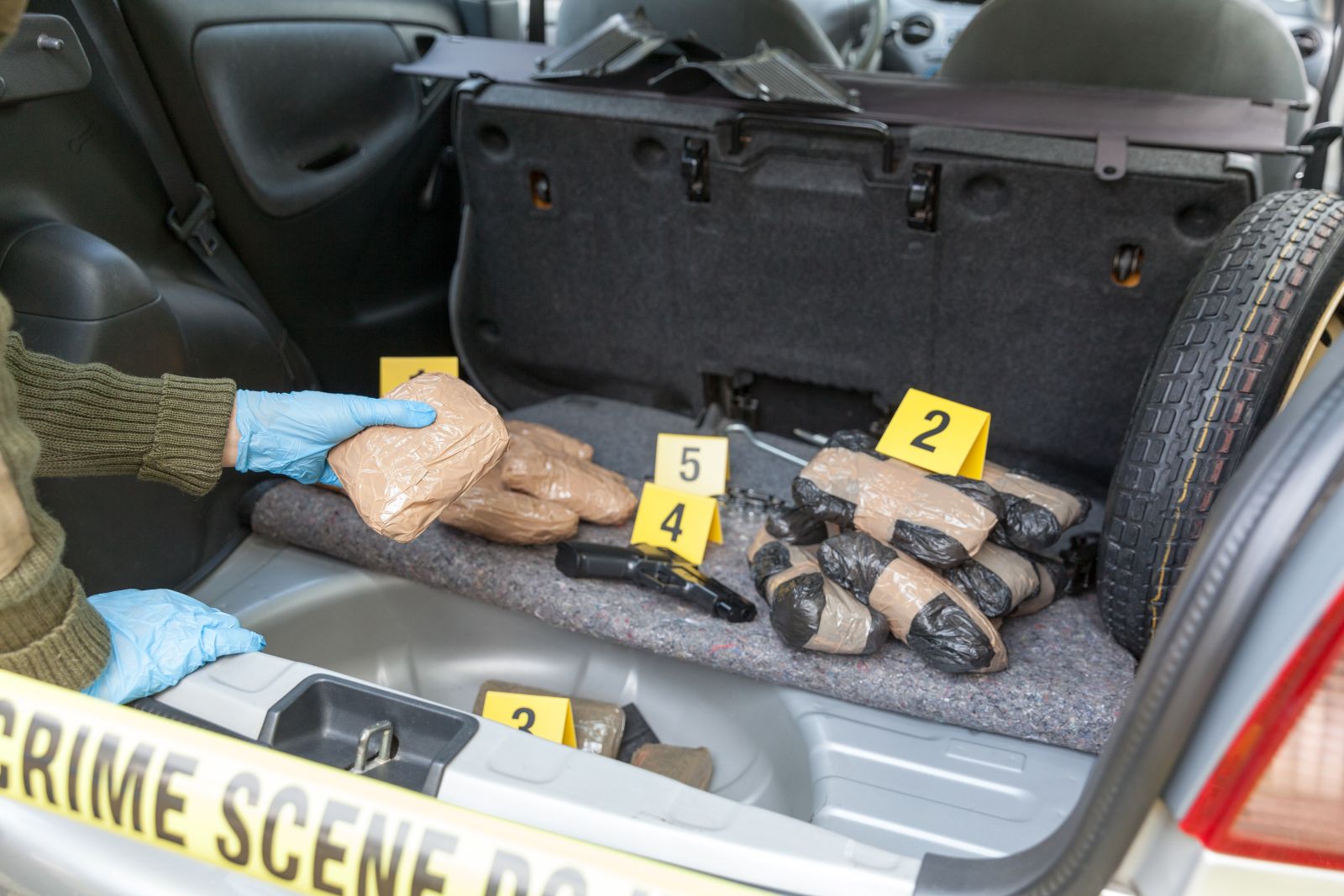
Inside a Federal Drug Investigation in Ralston, NE: Evidence, Surveillance, and Constitutional Rights
Federal prosecutors may rely on evidence gathered over weeks, months, or longer. Investigators frequently attempt to establish patterns of alleged drug distribution by examining communications, surveillance, financial activity, and information obtained from suspected participants.
However, the size or duration of an investigation does not determine whether the allegations are accurate. Evidence must be examined for reliability, constitutional compliance, and its actual connection to the accused. A thorough defense requires evaluating not only what investigators collected, but also how that information was obtained, whether important context is missing, and whether the government’s interpretation establishes the elements of the charged offense.
How Federal Investigators Use Informants and Cooperating Defendants
Federal investigators frequently rely on confidential informants and individuals facing their own criminal allegations to obtain information about suspected drug activity. Some sources receive financial compensation, while others may cooperate in hopes of receiving favorable treatment, reduced charges, or a recommendation for a lighter sentence.
Although information provided by cooperating witnesses can be relevant evidence, their motivations and credibility deserve careful scrutiny. A witness seeking personal benefits may have incentives to exaggerate another person’s involvement or minimize their own responsibility. Comparing witness statements with surveillance recordings, electronic communications, investigative reports, and other independent evidence can reveal inconsistencies that may affect the prosecution’s case.
Intercepted Communications and Digital Evidence
Federal trafficking and conspiracy investigations increasingly depend on electronic communications. Investigators may analyze intercepted telephone conversations, text messages, call histories, social media activity, encrypted messaging applications, and information extracted from computers or mobile devices. Prosecutors may use these materials to suggest that individuals coordinated drug transactions, arranged transportation, or participated in a broader distribution network.
However, the existence of electronic communications does not automatically establish their meaning or prove who was responsible for them. Investigators may misunderstand slang, overlook surrounding conversations, or attribute messages to an individual without sufficient supporting evidence. A federal drug defense attorney must assess the legality of the collection methods, the authenticity of the records, the identity of the alleged participants, and whether the communications actually demonstrate criminal knowledge or intent.
Search Warrants and Seized Evidence
Federal drug investigations may involve searches of homes, vehicles, businesses, storage facilities, and electronic devices. Evidence recovered during these searches can form a substantial part of the prosecution’s case.
The Fourth Amendment protects individuals against unreasonable searches and seizures. Depending on the circumstances, a defense attorney may challenge whether investigators had sufficient grounds for a warrant, exceeded the authorized scope of a search, or relied on an exception to the warrant requirement that did not apply.
How Can a Federal Drug Crimes Lawyer Defend Your Case?
Successfully defending against federal drug allegations requires a comprehensive understanding of federal criminal law, investigative procedures, and the evidence prosecutors intend to use. An experienced federal drug crimes lawyer must look beyond the indictment to evaluate how the investigation was conducted, whether the government can establish each required element of the offense, and what legal challenges may weaken the prosecution’s case. Every aspect of the allegations deserves careful examination before determining the most effective defense strategy.
Suppressing Evidence Obtained Through Unlawful Searches
Evidence obtained through unlawful searches or seizures may be subject to suppression under applicable constitutional principles. A successful suppression motion can limit the government’s ability to use particular evidence and may significantly affect the prosecution.
Potential issues include unlawful traffic stops, defective search warrants, improper searches of electronic devices, and disputes concerning consent or recognized exceptions to warrant requirements.
Examining Whether Prosecutors Can Prove Possession and Intent
Federal drug cases frequently involve allegations that an individual knowingly possessed controlled substances, intended to distribute them, or participated in unlawful drug activity. However, establishing those elements can be difficult when narcotics are discovered in places used or occupied by multiple individuals. The government must demonstrate the defendant’s legally sufficient connection to the substances rather than relying solely on proximity, personal relationships, or suspicious circumstances.
A thorough defense may examine who owned or controlled the property, whether the accused was aware of the substances, and whether the evidence demonstrates the specific intent required for the charged offense. In possession-with-intent cases, prosecutors must establish more than mere suspicion that drugs were intended for distribution. Challenging unsupported assumptions about possession, knowledge, or intent can be critical to holding the government to its burden of proof.
Defending Against Federal Drug Conspiracy Allegations
One of the most challenging aspects of a federal drug conspiracy case is that prosecutors may pursue charges against individuals who never personally handled, transported, or sold controlled substances. Instead, the government may argue that phone conversations, personal relationships, financial activity, or statements from alleged co-conspirators demonstrate participation in a larger trafficking network. These allegations can expose defendants to serious penalties even when their alleged involvement differs substantially from that of other participants.
An effective defense must examine whether the government can prove the existence of an unlawful agreement and the defendant’s knowing and voluntary participation. This includes evaluating the alleged scope of the conspiracy, the individual’s actual conduct, and whether witness statements accurately describe their involvement. Distinguishing legitimate associations and unrelated activities from knowing participation in a drug trafficking agreement can be critical to challenging federal conspiracy charges.
Challenging Drug Weights, Purity Testing, and Forensic Results
Drug type, purity, and quantity can affect both the statutory charges and the potential sentence. Laboratory testing, sampling methods, chain-of-custody documentation, and quantity calculations may therefore require detailed scrutiny.
When federal prosecutors allege a trafficking conspiracy, drug quantities associated with other defendants may become part of the government’s sentencing arguments. Yet participation in an alleged conspiracy does not automatically make an individual responsible for every drug transaction attributed to the group. Defense counsel must examine whether the quantities assigned to the defendant are supported by reliable evidence and satisfy the applicable standards governing individual responsibility.
Exposing Credibility Problems and Weaknesses in the Investigation
Federal drug cases often rely on statements from confidential informants, cooperating defendants, and individuals who claim to have witnessed or participated in criminal activity. Some witnesses may receive compensation or hope to obtain favorable treatment in their own cases. Although these circumstances do not automatically make their statements unreliable, they create important credibility issues that deserve careful examination.
Defense counsel must carefully compare these allegations with surveillance footage, electronic communications, investigative reports, and other available evidence. Contradictory statements, mistaken identifications, incomplete records, or unsupported assumptions may reveal weaknesses in the government’s case. Identifying these problems can be particularly important when the prosecution relies heavily on witness accounts rather than independently verifiable evidence.
Protecting Your Interests Through Federal Negotiations and Trial Preparation
Federal drug prosecutions may be resolved through negotiated plea agreements, contested pretrial proceedings, or trial. Although approximately 2% of federal cases proceed to trial, every defendant deserves a defense strategy informed by the possibility of litigation. Effective negotiations require a detailed understanding of the evidence, applicable sentencing laws, potential mandatory minimum penalties, and weaknesses in the prosecution’s allegations.
If the prosecution cannot offer a reasonable resolution, the defense must be prepared to challenge the allegations in federal court. This may involve contesting the admissibility of evidence, cross-examining government witnesses, presenting favorable evidence, and exposing inconsistencies in the prosecution’s theory. Regardless of the seriousness of the charges, the government must prove guilt beyond a reasonable doubt, and the accused has the right to require prosecutors to meet that burden.
What Happens After a Federal Drug Arrest in Ralston, NE?
A federal drug arrest can initiate a series of court proceedings that move differently from criminal cases handled in Nebraska state courts. From the first appearance before a federal judge to potential plea negotiations or trial, each stage involves legal rights, procedural requirements, and decisions that can substantially affect the defendant’s future. Understanding how federal criminal proceedings unfold is an important first step toward protecting those rights and preparing an effective defense.
Initial Appearance and Detention Hearing
After being taken into federal custody, a defendant generally makes an initial appearance before a United States magistrate judge. During this proceeding, the court addresses the allegations, advises the defendant of applicable rights, and considers legal representation. Questions concerning whether the accused may be released while the prosecution is pending are also addressed, sometimes through a separate detention hearing.
Under the federal Bail Reform Act, certain serious drug offenses create a rebuttable presumption favoring pretrial detention. This does not mean every defendant must remain incarcerated. The court evaluates the statutory factors, including the risk of nonappearance and potential danger to others or the community.
Defense counsel may present evidence of stable employment, family obligations, longstanding community connections, prior compliance with court requirements, and other circumstances supporting release. When appropriate, an attorney may also propose conditions designed to address the court’s concerns while allowing the defendant to remain outside custody during the proceedings.
Federal Grand Jury Proceedings and Arraignment
Federal felony drug charges commonly proceed through a grand jury indictment. This formal charging document identifies the alleged offenses and provides the basis for continued prosecution. However, being indicted does not mean the defendant has been found guilty. An indictment establishes that the grand jury found sufficient probable cause to support bringing the charges.
At arraignment, the defendant is formally advised of the allegations and enters a plea. The case then proceeds through pretrial litigation, discovery, negotiations, and potentially trial.
Reviewing Discovery and Filing Pretrial Motions
Discovery is a critical stage of federal criminal defense because it provides access to evidence the government is legally required to disclose. Depending on the allegations, these materials may include law enforcement reports, surveillance recordings, laboratory analyses, electronic communications, witness information, and other documentation relevant to the prosecution.
Defense attorneys may also pursue pretrial motions to challenge evidence obtained through unconstitutional searches, contest the admissibility of particular statements or records, and address violations of federal procedural requirements. Resolving these issues before trial can significantly affect the evidence available to prosecutors and the defense’s assessment of the case.
Negotiating a Resolution or Contesting the Charges at Trial
Some defendants resolve their cases through negotiated plea agreements. Others elect to contest the charges at trial. Either decision can carry significant consequences and should be made only after carefully evaluating the evidence, potential sentencing exposure, and available legal options.
If the prosecution proceeds to trial, the defendant is presumed innocent unless and until the government proves guilt beyond a reasonable doubt. The defense may challenge the reliability of witnesses, question investigative procedures, dispute the interpretation of evidence, and require prosecutors to establish every essential element of the charged offense. Thorough preparation at each earlier stage helps ensure that the defense is ready to protect the defendant’s interests if the case ultimately reaches federal court.

Accused of a federal drug crime in the Ralston, NE area? When you choose a Miltenberger Law Ralston, NE federal drug crimes lawyer, you aren’t only choosing a dedicated federal drug defense lawyer in Ralston, NE and beyond – you’re defending your rights, your freedom, and your future. Along with experienced federal drug crime legal advocacy, our team is available 24/7 and offers legal representation in the following areas of criminal defense for clients throughout Ralston, NE and beyond:
- Traffic Lawyer
- Assault Lawyer
- Domestic Violence Defense Attorney
- Drug Manufacturing Lawyer
- Drug Crimes Defense Attorney
Why Early Legal Representation Matters in a Federal Drug Investigation
One of the most important decisions you can make when facing a possible federal drug investigation is seeking legal representation before criminal charges are formally filed. Federal agents rarely begin building a case on the day of an arrest. Investigators may have already collected months of surveillance, examined phone records and financial transactions, interviewed cooperating witnesses, and gathered evidence through search warrants. Waiting until an indictment is issued may mean losing valuable opportunities to protect your interests during the earliest stages of the investigation.
Federal agents may also seek voluntary interviews before charges are filed. Even if you believe the allegations are unfounded, attempting to explain the situation without understanding the investigation can create unnecessary risks. Statements may be interpreted differently than intended, and knowingly making materially false statements in a matter within federal jurisdiction can result in additional criminal exposure.
You are entitled to important constitutional protections, including the right against compelled self-incrimination under the Fifth Amendment. Rather than attempting to address federal investigators’ concerns without legal guidance, you can generally decline voluntary questioning and request time to consult a defense attorney. You should also preserve potentially relevant evidence, avoid discussing the investigation with witnesses in an effort to affect their statements, and refrain from any conduct that could interfere with lawful investigative proceedings.
Early representation may allow an Ralston, NE federal drug crimes attorney to evaluate the circumstances, communicate with investigators when appropriate, identify evidence that should be preserved, and advise you about decisions that could affect the entire case.
Common Questions About Federal Drug Charges and Prosecution in Ralston, NE
What determines whether a drug charge is federal or state in Nebraska?
Federal drug charges involve alleged violations of federal criminal statutes and are prosecuted in federal court. State charges are brought under Nebraska law. The nature of the alleged conduct, investigative circumstances, and prosecutorial decisions may influence which authorities pursue the case. The charging documents establish the actual offenses filed.
Can I face federal trafficking charges if drugs crossed state lines?
Yes. Federal jurisdiction does not necessarily require proof that drugs crossed state lines or that the defendant traveled outside Nebraska. Conduct occurring entirely within Ralston, NE, or another Nebraska community may violate federal drug laws if the government can establish the required elements of a federal trafficking, distribution, or conspiracy offense.
Could I be convicted of a federal drug conspiracy if I never handled any narcotics?
Potentially. Federal conspiracy law allows prosecutors to pursue charges against individuals accused of knowingly participating in an agreement to commit a drug offense, even when they did not personally possess, transport, or distribute controlled substances. Nevertheless, knowing someone involved in drug distribution or trafficking is not enough by itself. The prosecution must establish the unlawful agreement and the defendant’s knowing and voluntary involvement.
Will a federal drug conviction automatically result in a mandatory minimum prison term?
Not necessarily. Certain federal drug trafficking offenses carry mandatory minimum sentences based on the substance, quantity, or other circumstances established under federal law. However, some drug offenses have no general mandatory minimum requirement. Qualifying defendants may also be eligible for statutory sentencing relief, including safety-valve provisions or other authorized reductions, depending on the specific circumstances.
Is it possible to have federal drug charges dismissed before going to trial?
Yes. Depending on the circumstances, a federal drug prosecution may be dismissed because of legal deficiencies, evidentiary problems, constitutional violations, or other issues affecting the charges. Successful pretrial motions may also exclude important evidence or weaken the government’s case. However, dismissal depends on the specific facts and applicable law and cannot be guaranteed.
Will I automatically remain in jail after a federal drug arrest?
Possibly. Some serious federal drug charges trigger a rebuttable presumption that detention is appropriate, but this does not eliminate the possibility of pretrial release. The court evaluates statutory considerations involving the defendant’s background, likelihood of appearing for future proceedings, and potential danger to the community. A knowledgeable Ralston, NE federal defense attorney may advocate for release by presenting favorable personal circumstances and proposing appropriate conditions of supervision.
Can federal investigators use my phone records or messages to build their case?
Electronic communications can become important evidence in federal drug investigations, particularly when prosecutors allege trafficking or conspiracy. However, phone records and messages do not automatically establish criminal conduct. Your defense team can investigate how the information was collected, whether it is admissible, who actually sent or received the communications, and whether prosecutors have misunderstood or misrepresented their context. These questions may be especially important when electronic evidence forms a substantial part of the government’s allegations.
Can I be charged if drugs were found in a car or house shared with other people?
Discovering narcotics in a shared location does not mean everyone present is automatically guilty of a federal drug offense. Prosecutors must establish that the defendant knowingly possessed the controlled substances under the applicable legal standards. When drugs are recovered from a shared apartment, family residence, or vehicle occupied by several people, the defense may examine who had access to the location, who exercised control over the substances, and whether the evidence actually connects the accused to the alleged criminal conduct. Proximity alone is not necessarily sufficient to prove possession.
Will a federal drug conviction continue to affect my life after I complete my sentence?
The consequences of a federal drug conviction can extend well beyond incarceration. Depending on the offense, defendants may face substantial fines, forfeiture of certain assets, and years of federal supervised release. A conviction can also create lasting challenges involving employment, professional licenses, housing, educational opportunities, and financial stability. The specific consequences depend on the charges, sentencing provisions, and individual circumstances.
Should I answer questions from federal agents without a lawyer present?
Seeking legal advice before participating in a voluntary interview is generally prudent when you may be suspected of criminal conduct. You may decline to answer substantive questions and request counsel. Never provide false information or interfere with an investigation.
Accused of a Federal Drug Crime in Ralston, NE? Put Miltenberger Law Offices on Your Side
A federal drug accusation can change the course of your life, but an indictment is not a conviction. The government may have significant investigative resources, yet prosecutors must still establish every required element through admissible evidence. Witness statements can be challenged, investigative procedures can be examined, and disputed allegations deserve careful scrutiny.
At Miltenberger Law, we understand the pressure that serious criminal charges place on individuals and their families. A federal prosecution can threaten your freedom, employment, financial stability, and future opportunities. You deserve legal guidance that takes those consequences seriously and carefully evaluates the circumstances surrounding the allegations.
Whether you are under investigation for methamphetamine trafficking, fentanyl distribution, possession with intent to distribute, or an alleged federal drug conspiracy, taking action early can help protect your rights and preserve important defense opportunities.
Don’t allow federal drug allegations to determine your future without a fight. If you are under investigation, have been arrested, or are facing an indictment, reach out to Miltenberger Law or call (402) 217-2267 today. Speak with an experienced federal drug crimes lawyer in Ralston, NE about your legal options and begin building a defense focused on protecting your freedom, your reputation, and your future.