
Leading Douglas County federal drug crimes lawyer. Few criminal accusations carry the potential consequences of a federal drug prosecution. A conviction can mean years in federal prison, significant fines, restrictions on your future, and lasting damage to your personal and professional life. With extensive investigative resources and strict federal sentencing laws, prosecutors often pursue drug trafficking and conspiracy cases aggressively. For anyone under investigation or facing federal drug charges in Douglas County, NE, the decisions made during the earliest stages of a case can have far-reaching consequences.
Unlike many state-level drug cases, federal prosecutions frequently involve coordinated investigations, multiple defendants, confidential informants, intercepted communications, and allegations of criminal activity extending across county or state lines. By the time an arrest occurs, investigators may have spent months collecting evidence. However, a lengthy investigation does not mean the government’s conclusions are accurate or that every allegation can be proven beyond a reasonable doubt.
At Miltenberger Law Offices, we believe that every federal drug accusation deserves a thorough examination and an individualized defense. We investigate how evidence was obtained, assess the credibility of the government’s allegations, and evaluate potential constitutional violations and other legal challenges. Whether you are accused of distributing methamphetamine, participating in fentanyl trafficking, committing possession with intent to distribute, or joining an alleged federal drug conspiracy, our priority is to protect your rights, challenge unsupported accusations, and pursue the most favorable resolution available under the circumstances.
Article Summary: What You’ll Learn About Federal Drug Charges in Douglas County, NE
Facing federal drug charges means navigating a criminal justice system with its own investigative agencies, prosecution procedures, and potentially severe sentencing requirements. This article breaks down how drug investigations become federal cases, the charges defendants commonly face, and the prison sentences and other penalties authorized under the Controlled Substances Act. You’ll gain insight into federal investigative tactics, the stages of a federal criminal case in Douglas County, NE, and the legal strategies defense lawyers may use to contest drug trafficking and conspiracy accusations. We also explain the importance of acting quickly to protect your rights when facing charges in the United States District Court for the District of Nebraska.

Federal Drug Charges in Douglas County, Nebraska: Federal Court and Criminal Investigations
Douglas County encompasses Omaha, Bennington, portions of the Elkhorn area, and numerous surrounding neighborhoods and communities. Interstate 80, Interstate 680, U.S. Highway 75, and Dodge Street connect the county with Sarpy County, Washington County, and neighboring Iowa. Federal drug investigations involving Douglas County may examine alleged activity across the Omaha metropolitan area, including suspected trafficking operations involving multiple locations, participants, or jurisdictions.
Federal drug prosecutions arising in Douglas County are handled in the United States District Court for the District of Nebraska. The Roman L. Hruska Federal Courthouse, located at 111 South 18th Plaza in downtown Omaha, is a principal federal court facility. Federal offenses are prosecuted by the United States Attorney’s Office rather than the Douglas County Attorney’s Office, and the proceedings follow federal criminal statutes and procedural requirements.
Investigations may involve allegations of drug trafficking, conspiracy, possession with intent to distribute, or firearm offenses connected to suspected narcotics activity. Evidence may include intercepted communications, confidential informants, surveillance, financial records, and materials recovered during searches. Because federal cases can involve mandatory minimum penalties and complicated sentencing issues, Douglas County defendants must carefully evaluate the specific conduct attributed to them and the government’s evidence supporting each charge.
What Makes a Drug Crime a Federal Offense in Nebraska?
Drug offenses committed in Douglas County and throughout Nebraska may be prosecuted in state or federal court, depending on the nature of the alleged criminal activity and the applicable laws. Federal authorities frequently become involved when investigations uncover suspected large-scale drug trafficking, significant quantities of controlled substances, coordinated distribution operations, or conduct that violates federal narcotics statutes.
One of the principal laws used in federal drug prosecutions is 21 U.S.C. § 841, a provision of the Controlled Substances Act. It makes it unlawful, except as authorized, to manufacture, distribute, dispense, or possess controlled substances with the intent to manufacture, distribute, or dispense them. Federal prosecutors rely on this statute in cases involving alleged drug trafficking, distribution, and possession with intent to distribute.
Contrary to a common misconception, drugs do not have to cross state boundaries for federal charges to apply. Federal prosecutors can pursue offenses that allegedly occurred entirely within Nebraska, provided the conduct satisfies the requirements of federal law. Nevertheless, interstate connections may become significant when investigators suspect that drugs, money, or individuals moved between Douglas County, NE, Lincoln, Council Bluffs, and other communities as part of a larger distribution operation.
Federal drug investigations may also involve cooperation between federal agencies, Nebraska law enforcement, and local police departments. Investigators may use confidential informants, controlled drug purchases, surveillance operations, intercepted communications, and electronic records to develop allegations against one or more individuals. The involvement of multiple agencies can make these cases particularly complex, especially when prosecutors attempt to connect separate activities to an alleged trafficking organization.
What Sets Federal Drug Investigations Apart From Nebraska State Prosecutions?
Federal drug investigations often involve agencies such as the Drug Enforcement Administration (DEA), Federal Bureau of Investigation (FBI), Homeland Security Investigations (HSI), and other federal or local authorities. Investigators may use confidential informants, search warrants, financial records, intercepted communications, and cooperating witnesses to develop evidence before filing charges.
Federal prosecutors may also build cases around alleged drug conspiracies rather than individual transactions. This approach allows the government to pursue charges against people accused of having different responsibilities within a suspected distribution operation, including individuals who allegedly arranged transactions, supplied financial support, coordinated transportation, or otherwise knowingly joined the unlawful agreement. A defendant does not necessarily have to possess or distribute drugs personally to face conspiracy charges, but prosecutors must establish knowing participation in the alleged criminal agreement.
These cases demand careful attention to the government’s evidence, the applicable statutes, and the specific conduct attributed to each defendant. The seriousness of a federal investigation does not relieve prosecutors of their obligation to establish every element of the charged offense.
Federal Drug Offenses That Can Lead to Prosecution in Douglas County, NE
Federal narcotics prosecutions can involve numerous offenses, each with different elements and sentencing consequences. The particular charge matters because it determines what prosecutors must prove and which statutory penalties may apply. A knowledgeable drug crimes lawyer in Douglas County, NE can help evaluate the allegations and identify the legal issues that may affect the defense.
Federal Drug Trafficking and Distribution
Federal drug trafficking charges often arise when prosecutors allege that an individual distributed controlled substances or possessed them with the intent to distribute. Federal authorities investigate offenses involving methamphetamine, fentanyl, cocaine, heroin, marijuana, unlawfully distributed prescription medications, and other controlled substances. Depending on the circumstances, allegations may involve a single transaction or suspected participation in a much larger distribution operation.
To support trafficking allegations, federal prosecutors may introduce evidence involving drug quantities, packaging supplies, financial records, surveillance footage, electronic messages, or testimony from alleged participants. Nevertheless, the discovery of certain materials, unexplained financial activity, or connections to individuals suspected of drug trafficking does not independently establish that a defendant knowingly committed a federal drug offense.
A skilled federal drug crimes lawyer in Douglas County, NE will closely evaluate whether the prosecution can establish the alleged conduct, the required knowledge and intent, and the type and quantity of controlled substances involved. These considerations are especially significant when prosecutors seek penalties involving mandatory minimum prison sentences.
Conspiracy to Commit Federal Drug Crimes
Conspiracy is one of the most consequential charges in federal drug prosecutions because it can involve allegations against multiple defendants who are accused of participating in a common criminal agreement.
Under 21 U.S.C. § 846, conspiring to commit a federal drug offense can result in the same statutory penalties authorized for the underlying criminal violation. Consequently, an individual accused of joining a trafficking conspiracy may face substantial sentencing exposure even without personally completing a drug transaction.
To establish a drug conspiracy, prosecutors generally must prove that an unlawful agreement existed and that the defendant knowingly and voluntarily participated in it. Simply knowing someone involved in drug activity, being present during a transaction, or maintaining a personal relationship with an alleged participant does not necessarily establish conspiracy.
These distinctions can be critical when prosecutors attempt to connect individuals to a larger trafficking operation based on phone calls, text messages, financial transactions, or statements from cooperating defendants. A federal drug crimes defense attorney must distinguish evidence of actual participation from speculation, association, or conduct that does not establish the required agreement.
Possession of Controlled Substances With Intent to Distribute
Federal prosecutors may pursue possession-with-intent charges even when investigators have no direct evidence that a defendant completed a drug sale. However, a conviction requires proof of the essential elements of possession with intent to distribute, including knowing possession of controlled substances and an intention to distribute them. The government must also establish a legally sufficient connection between the accused and the drugs, particularly when relying on allegations of constructive possession.
Federal investigators may rely on drug quantities, digital scales, packaging supplies, large amounts of cash, or electronic communications to support allegations of intended distribution. However, these factors do not automatically prove criminal intent. When controlled substances are discovered inside a shared residence, vehicle, or business, determining who knew about the drugs and exercised control over them may be essential to challenging the prosecution’s case.
Federal Drug Manufacturing and Production Offenses
Federal manufacturing charges involve allegations that an individual unlawfully produced, processed, or participated in the manufacture of controlled substances. These cases may concern methamphetamine laboratories, illicit drug processing operations, or facilities used to prepare controlled substances for distribution. Depending on the alleged conduct, prosecutors may pursue charges against individuals accused of operating a production site, supplying materials, or knowingly participating in the manufacturing process.
Evidence in these investigations may include chemical substances, laboratory equipment, forensic testing, financial transactions, electronic records, and statements from cooperating witnesses. An experienced Douglas County, NE federal drug crimes lawyer must examine whether the evidence establishes the defendant’s actual involvement, knowledge of the alleged operation, and intent required for the charged offense. Simply being present at a location where drugs were manufactured does not necessarily establish criminal responsibility.
Federal Prescription Drug Offenses
Federal drug prosecutions are not limited to methamphetamine, fentanyl, cocaine, or other illicit substances. Charges may also arise from allegations involving the unauthorized distribution, dispensing, or diversion of prescription medications, including opioid painkillers, stimulants, and other federally controlled drugs. Investigations may involve physicians, pharmacists, healthcare employees, prescription holders, or individuals accused of unlawfully distributing medications.
These cases often require careful examination of prescription records, medical documentation, professional licensing, dispensing practices, and the circumstances surrounding the alleged transactions. When healthcare professionals are accused, questions about whether prescriptions were issued or medications dispensed within the scope of legitimate medical practice may become particularly important. The government must establish the elements of the specific federal offense rather than relying solely on unusual prescribing patterns or disputed medical decisions.
Drug Trafficking Allegations Involving Firearms
Drug trafficking investigations may also lead to separate federal firearm charges when authorities allege that a weapon was used, carried, or possessed to facilitate criminal activity. These allegations can significantly increase a defendant’s sentencing exposure, particularly when prosecutors claim that a firearm played a role in an alleged drug distribution operation.
Under 18 U.S.C. § 924(c), certain firearm offenses connected to drug trafficking carry mandatory minimum prison sentences that generally must be served consecutively to other terms of imprisonment. The applicable penalties depend on the specific conduct alleged and the statutory provisions involved.
However, finding a firearm in a residence, vehicle, or other location where drugs are also discovered does not automatically establish a violation of § 924(c). Prosecutors must prove the required connection between the firearm and the underlying drug trafficking crime. Whether the weapon was used or carried during and in relation to the offense, or possessed in furtherance of it, can become a central issue in the defense.
Federal Methamphetamine and Fentanyl Prosecutions in Douglas County, NE
Federal charges involving methamphetamine and fentanyl are among the most serious drug offenses prosecuted in Nebraska. Both substances are subject to federal sentencing laws that impose substantial penalties, including mandatory minimum prison sentences when certain drug quantity thresholds are established. The specific substance, amount involved, and nature of the alleged criminal activity can significantly influence a defendant’s potential sentencing exposure.
Federal narcotics investigations originating in Douglas County, NE may extend well beyond the immediate community. Authorities sometimes investigate suspected distribution networks operating throughout Douglas County, Sarpy County, and surrounding Nebraska jurisdictions, particularly when they believe controlled substances are being transported through major regional highways. Routes such as Interstate 80 and Interstate 680 connect the region with Iowa, Missouri, Kansas, Colorado, South Dakota, Wyoming, and other states, making interstate transportation allegations a potential focus of federal investigations.
However, a person’s proximity to a transportation route, association with another suspect, or presence at a location under investigation does not independently establish guilt. Prosecutors must prove the defendant’s actual involvement in the charged offense.
Federal Methamphetamine Trafficking Offenses
One of the most consequential aspects of federal methamphetamine trafficking prosecutions is how the government identifies, measures, and classifies the alleged controlled substances. Federal statutes establish different quantity thresholds for methamphetamine mixtures and actual methamphetamine, meaning the results of laboratory testing and purity analysis can directly affect potential mandatory minimum sentences. Disputes over testing accuracy, sample identification, and drug weight may therefore have significant legal consequences.
In multi-defendant cases, prosecutors may attempt to connect an individual to quantities associated with a broader conspiracy. Defense counsel must examine the evidence supporting those calculations and whether the applicable legal standards permit those quantities to be attributed to the defendant.
Fentanyl Distribution and Trafficking
Fentanyl prosecutions may involve allegations concerning counterfeit pills, powder, distribution networks, or controlled substances containing fentanyl. These cases can carry significant penalties, particularly when statutory drug quantity thresholds are met.
These cases become even more serious when the government alleges that fentanyl distribution resulted in a person’s death or serious bodily injury. Such allegations can trigger significantly enhanced statutory penalties. However, prosecutors must establish the elements required under federal law, including the applicable causation standard. Examining toxicology findings, medical records, laboratory results, and the evidence connecting the defendant’s alleged conduct to the resulting harm may be critical to the defense.
Understanding Federal Drug Crime Penalties in Douglas County, NE
A federal drug conviction can result in substantial prison time, particularly when the offense involves trafficking, distribution, or conspiracy. The penalties depend on several factors, including the type of controlled substance, the quantity involved, the federal statute under which charges are filed, qualifying prior criminal convictions, and other circumstances that may affect sentencing. In some cases, federal law establishes mandatory minimum prison terms that significantly limit a judge’s sentencing discretion.
Under 21 U.S.C. § 841(b), many trafficking offenses fall within the following general sentencing categories:
| Federal Drug Offense | Examples of Applicable Drug Quantities | Statutory Prison Penalties |
|---|---|---|
| Large-Scale Federal Drug Trafficking 21 U.S.C. § 841(b)(1)(A) |
500 g or more of methamphetamine mixture; 50 g or more of actual methamphetamine; 400 g or more of fentanyl; 5 kg or more of cocaine; or 1 kg or more of heroin. | 10-year mandatory minimum; up to life imprisonment |
| Intermediate-Quantity Drug Trafficking 21 U.S.C. § 841(b)(1)(B) |
50 g or more of methamphetamine mixture; 5 g or more of actual methamphetamine; 40 g or more of fentanyl; 500 g or more of cocaine; or 100 g or more of heroin, below the applicable higher thresholds. | 5-year mandatory minimum; up to 40 years |
| Distribution and Possession With Intent to Distribute 21 U.S.C. § 841(b)(1)(C) |
Examples include methamphetamine, fentanyl, heroin, cocaine, or other qualifying Schedule I or II substances when the quantities or circumstances do not trigger the higher penalties under subsections (A) or (B). Certain other specifically covered substances are also included. | Up to 20 years No general mandatory minimum |
| Lower-Quantity Marijuana Distribution 21 U.S.C. § 841(b)(1)(D) |
Generally, less than 50 kg of marijuana, excluding certain plants, or fewer than 50 marijuana plants, subject to statutory exceptions. | Up to 5 years Generally no mandatory minimum |
| Conspiracy to Commit a Federal Drug Offense 21 U.S.C. § 846 |
Knowingly and voluntarily joining an unlawful agreement to manufacture, distribute, or otherwise commit a qualifying federal drug offense involving controlled substances. | Penalties correspond to the underlying federal drug offense |
These are general sentencing ranges, not guaranteed outcomes. Certain qualifying prior convictions, allegations involving death or serious bodily injury, and other statutory provisions can increase the penalties. Some offenses also carry substantial fines, supervised release requirements, and forfeiture consequences.
How Mandatory Minimum Sentences Affect Federal Drug Cases
Mandatory minimum sentencing laws can restrict a federal judge’s ability to impose a prison sentence below a specified term. For example, certain trafficking offenses involving qualifying quantities of methamphetamine, fentanyl, or other controlled substances can trigger five-year or ten-year mandatory minimum sentences.
Limited statutory exceptions may apply in appropriate cases. Under 18 U.S.C. § 3553(f), qualifying defendants may be eligible for safety-valve relief from certain mandatory minimum sentences when all statutory requirements are satisfied. Other provisions may permit reductions based on substantial assistance to the government under applicable procedures.
Determining whether these exceptions apply requires a detailed examination of the defendant’s criminal history, alleged conduct, and other relevant circumstances. An experienced Douglas County, NE federal drug crimes lawyer can evaluate potential eligibility and identify available sentencing arguments. Having no prior criminal convictions does not, by itself, guarantee qualification for safety-valve relief or exemption from a mandatory minimum sentence.
Understanding the United States Sentencing Guidelines
Federal courts also consider the United States Sentencing Guidelines, which address the seriousness of the offense, criminal history, and other factors relevant to sentencing. Drug quantity, the defendant’s role, certain firearm-related conduct, and other circumstances may influence the advisory guideline calculation.
Although federal sentencing guidelines are advisory rather than mandatory, they remain an important consideration in determining the ultimate punishment. Defense counsel may dispute inaccurate drug quantity calculations, unsupported sentencing enhancements, or allegations that exaggerate a defendant’s involvement. Presenting evidence of mitigating circumstances and challenging unreliable information can also be essential when advocating for a fair and individualized sentence.
Can Someone Convicted of a Federal Drug Crime Be Released on Parole?
Unlike many state prison systems, the modern federal criminal justice system generally does not provide traditional parole for offenses committed after November 1, 1987. The Sentencing Reform Act of 1984 eliminated traditional parole for these federal offenses, fundamentally changing how prison sentences are served. Although the federal system includes post-conviction supervision, supervised release is not the same as parole and generally begins after imprisonment.
Eligible federal inmates may receive good-conduct time credits or qualify for other sentence-related benefits under applicable laws and regulations. However, these possibilities do not guarantee early release or eliminate the consequences of a lengthy prison sentence. Understanding the distinction between incarceration, potential sentence reductions, and supervised release is critical when evaluating the long-term consequences of federal drug charges.
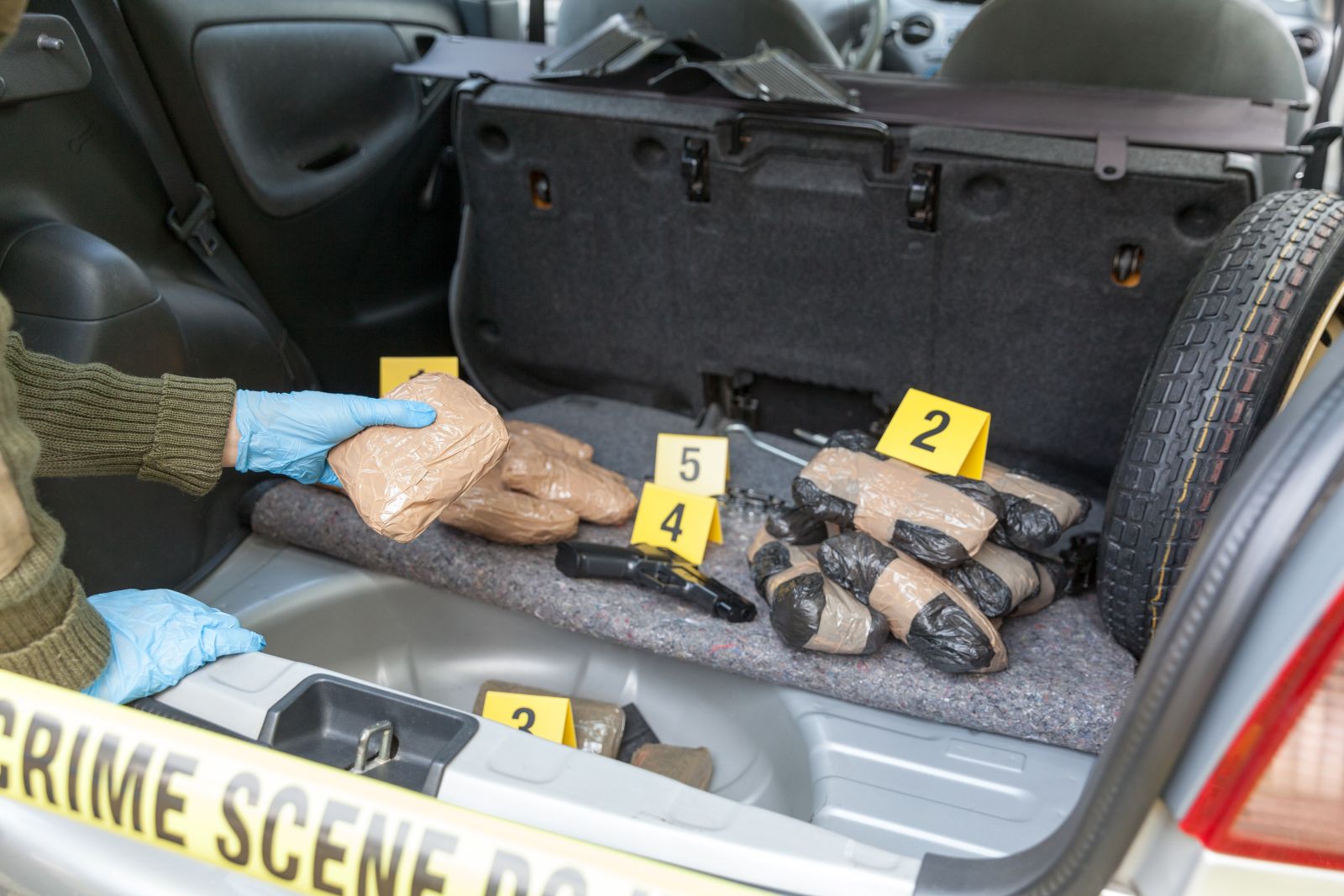
How Federal Authorities Investigate and Develop Drug Cases in Douglas County, NE
When federal authorities suspect drug trafficking or conspiracy, they may conduct an extensive investigation before making an arrest. Agents often attempt to connect individuals, locations, financial transactions, and communications to an alleged distribution operation. These investigations can involve prolonged surveillance, information from confidential sources, electronic monitoring, and records collected from multiple agencies, sometimes producing thousands of pages of evidence.
However, collecting a large volume of evidence is not the same as proving a criminal offense. The defense must examine whether the evidence is reliable, whether investigators followed constitutional requirements, and whether the government’s conclusions are supported by the underlying facts.
Confidential Informants and Cooperating Defendants
Federal drug investigations frequently involve people who provide information to authorities in exchange for payment, favorable consideration, or the possibility of reduced criminal penalties.
Although information provided by cooperating witnesses can be relevant evidence, their motivations and credibility deserve careful scrutiny. A witness seeking personal benefits may have incentives to exaggerate another person’s involvement or minimize their own responsibility. Comparing witness statements with surveillance recordings, electronic communications, investigative reports, and other independent evidence can reveal inconsistencies that may affect the prosecution’s case.
Wiretaps, Text Messages, and Electronic Communications
Federal trafficking and conspiracy investigations increasingly depend on electronic communications. Investigators may analyze intercepted telephone conversations, text messages, call histories, social media activity, encrypted messaging applications, and information extracted from computers or mobile devices. Prosecutors may use these materials to suggest that individuals coordinated drug transactions, arranged transportation, or participated in a broader distribution network.
These records do not always speak for themselves. The meaning of particular conversations may be disputed, messages may lack context, and questions may arise about who actually used a device or account. Defense counsel must examine authentication, attribution, lawful collection, and the conclusions prosecutors draw from the communications.
Search Warrants and Seized Evidence
Federal narcotics investigations may involve searches of residences, automobiles, commercial properties, storage units, and electronic devices. Investigators may seize suspected controlled substances, firearms, cash, financial documents, computers, phones, and other materials they believe are connected to drug trafficking. The circumstances surrounding these searches can become particularly important when the recovered evidence forms the foundation of the government’s allegations.
The Fourth Amendment establishes constitutional protections against unreasonable searches and seizures, while Federal Rule of Criminal Procedure 41 addresses important procedures involving federal search warrants. Depending on the facts, defense counsel may examine whether a warrant was supported by probable cause, whether officers searched beyond its authorized scope, or whether a claimed exception to the warrant requirement was legally justified. When evidence is obtained through a constitutional violation, a motion to suppress may be an important part of the defense.
What Defense Strategies Can Protect You Against Federal Drug Prosecution?
Defending a federal drug charge requires more than reviewing the indictment and negotiating with prosecutors. The government must establish the elements of the offense through admissible evidence, and an effective defense examines every significant issue that could affect the case.
Suppressing Evidence Obtained Through Unlawful Searches
Federal law enforcement officers must respect constitutional protections when conducting traffic stops, searching property, or seizing evidence. When investigators violate those protections, the defense may seek to exclude unlawfully obtained evidence through a motion to suppress. If successful, such a challenge can prevent prosecutors from introducing important evidence and may substantially weaken the government’s case.
Potential issues include unlawful traffic stops, defective search warrants, improper searches of electronic devices, and disputes concerning consent or recognized exceptions to warrant requirements.
Disputing Knowledge, Possession, and Intent
Federal drug convictions generally require proof that the defendant knowingly engaged in the prohibited conduct. When controlled substances are recovered from a shared vehicle, residence, business, or other location, determining who actually possessed or controlled the drugs can become a central issue. Simply being near narcotics or having a relationship with someone suspected of drug trafficking does not automatically establish criminal responsibility.
Your defense team may examine who controlled the property, whether the defendant knew the drugs were present, and whether the evidence supports the alleged intent to distribute. The prosecution cannot rely solely on suspicion or association to satisfy its burden of proof.
Defending Against Federal Drug Conspiracy Allegations
One of the most challenging aspects of a federal drug conspiracy case is that prosecutors may pursue charges against individuals who never personally handled, transported, or sold controlled substances. Instead, the government may argue that phone conversations, personal relationships, financial activity, or statements from alleged co-conspirators demonstrate participation in a larger trafficking network. These allegations can expose defendants to serious penalties even when their alleged involvement differs substantially from that of other participants.
The defense must distinguish knowing involvement in an unlawful agreement from mere association, presence, or unrelated conduct. Questions about the scope of the alleged conspiracy, the defendant’s actual role, and the reliability of cooperating witnesses may be central to the case.
Challenging Drug Weights, Purity Testing, and Forensic Results
Drug quantity and chemical composition are often among the most consequential issues in a federal narcotics prosecution. The amount and type of controlled substances attributed to a defendant may determine whether mandatory minimum sentencing provisions apply and can substantially affect the advisory federal sentencing guidelines. For that reason, laboratory testing, purity analysis, sample identification, evidence handling, and reported drug weights must be evaluated for accuracy and reliability.
In conspiracy cases, it is also important to determine whether the government has a sufficient legal and factual basis to attribute particular quantities to the defendant. Allegations concerning an entire trafficking operation do not automatically establish each individual’s responsibility for every transaction.
Evaluating Witness Credibility and Investigative Errors
Federal drug cases often rely on statements from confidential informants, cooperating defendants, and individuals who claim to have witnessed or participated in criminal activity. Some witnesses may receive compensation or hope to obtain favorable treatment in their own cases. Although these circumstances do not automatically make their statements unreliable, they create important credibility issues that deserve careful examination.
Defense counsel must carefully compare these allegations with surveillance footage, electronic communications, investigative reports, and other available evidence. Contradictory statements, mistaken identifications, incomplete records, or unsupported assumptions may reveal weaknesses in the government’s case. Identifying these problems can be particularly important when the prosecution relies heavily on witness accounts rather than independently verifiable evidence.
Protecting Your Interests Through Federal Negotiations and Trial Preparation
Some federal drug cases may be resolved through negotiated agreements, while others require contested hearings or trial. Only about 2% of federal cases actually go to trial. Meaningful negotiations depend on understanding the government’s evidence, potential sentencing exposure, and the strengths and weaknesses of available defenses.
If the prosecution cannot offer a reasonable resolution, the defense must be prepared to challenge the allegations in federal court. This may involve contesting the admissibility of evidence, cross-examining government witnesses, presenting favorable evidence, and exposing inconsistencies in the prosecution’s theory. Regardless of the seriousness of the charges, the government must prove guilt beyond a reasonable doubt, and the accused has the right to require prosecutors to meet that burden.
What Happens After a Federal Drug Arrest in Douglas County, NE?
Following a federal drug arrest, defendants enter a legal process governed by federal statutes, constitutional protections, and procedural rules that differ from those used in Nebraska state courts. Federal criminal cases typically involve several stages, each presenting important decisions concerning pretrial release, evidence, potential plea negotiations, and trial preparation. Understanding these proceedings can help defendants recognize what to expect and why early legal representation is essential.
First Court Appearance and Pretrial Detention Decisions
After being taken into federal custody, a defendant generally makes an initial appearance before a United States magistrate judge. During this proceeding, the court addresses the allegations, advises the defendant of applicable rights, and considers legal representation. Questions concerning whether the accused may be released while the prosecution is pending are also addressed, sometimes through a separate detention hearing.
Under the federal Bail Reform Act, certain serious drug offenses create a rebuttable presumption favoring pretrial detention. This does not mean every defendant must remain incarcerated. The court evaluates the statutory factors, including the risk of nonappearance and potential danger to others or the community.
A defense attorney may present relevant information concerning community ties, employment, family responsibilities, prior history, and proposed release conditions.
How Federal Indictments and Arraignments Work
Many federal felony drug prosecutions proceed through a grand jury indictment. The indictment identifies the charges, but it does not establish guilt.
At arraignment, the accused is formally advised of the charges and asked to enter a plea. A not-guilty plea allows the defense to continue examining the allegations, reviewing evidence, pursuing appropriate motions, and preparing for further proceedings. The case may subsequently involve negotiations with federal prosecutors or advance toward trial.
Examining the Government’s Evidence and Challenging Legal Violations
Discovery is a critical stage of federal criminal defense because it provides access to evidence the government is legally required to disclose. Depending on the allegations, these materials may include law enforcement reports, surveillance recordings, laboratory analyses, electronic communications, witness information, and other documentation relevant to the prosecution.
Pretrial motions may address constitutional violations, the admissibility of evidence, procedural disputes, or other legal issues affecting the prosecution.
Plea Agreements and Trial
Some defendants resolve their cases through negotiated plea agreements. Others elect to contest the charges at trial. Either decision can carry significant consequences and should be made only after carefully evaluating the evidence, potential sentencing exposure, and available legal options.
At trial, the defendant is presumed innocent, and the government must prove the charged offense beyond a reasonable doubt.

Under investigation for a federal drug offense in Douglas County, NE? When you choose a Miltenberger Law federal drug defense attorney in or around Douglas County, NE, you aren’t just selecting a dedicated federal drug defense lawyer in Douglas County and throughout Nebraska – you are safeguarding your rights, your freedom, and your future. Beyond knowledgeable federal drug crime legal advocacy, our staff is available 24/7 and provides legal defense services in the following practice areas for residents of Douglas County and surrounding communities:
- Traffic Lawyer
- Assault Lawyer
- Domestic Violence Defense Attorney
- Drug Manufacturing Lawyer
- Drug Crimes Defense Attorney
The Importance of Hiring a Federal Drug Crimes Lawyer Before Charges Are Filed
Waiting until an arrest or indictment to contact a defense attorney can put you at a significant disadvantage during a federal drug investigation. Federal authorities often spend months gathering evidence before taking formal action, including interviewing potential witnesses, reviewing financial and electronic records, conducting surveillance, and executing search warrants. By the time you learn that you are under investigation, prosecutors may already have developed a detailed theory connecting you to suspected drug trafficking or conspiracy activity.
Federal investigators may also contact individuals for voluntary interviews while an investigation is still underway. Although you may believe that cooperating without an attorney will help clear up a misunderstanding, answering questions without knowing the scope of the investigation can expose you to unnecessary legal risks. Statements can be taken out of context, interpreted differently than intended, or used to support additional allegations. Knowingly providing materially false information in a matter within federal jurisdiction may also constitute a separate criminal offense.
The Constitution provides important protections during criminal investigations, including the Fifth Amendment protection against compelled self-incrimination. You generally have the right to decline a voluntary interview and consult an attorney before answering investigators’ questions. At the same time, it is essential to avoid destroying documents, attempting to influence witness testimony, or taking any action that could be interpreted as obstructing the investigation.
An experienced Douglas County, NE federal drug crimes attorney can provide guidance before critical decisions are made. Early involvement allows defense counsel to evaluate the available information, determine how to respond to investigative requests, communicate with federal agents or prosecutors when appropriate, and take steps to protect relevant evidence. Although early representation cannot guarantee that charges will be avoided, it can help prevent unnecessary mistakes and establish a stronger foundation for defending your rights if the investigation leads to prosecution.
Common Questions About Federal Drug Charges and Prosecution in Douglas County, NE
How is a federal drug offense different from a Nebraska state drug charge?
Drug allegations may fall under either federal or state jurisdiction depending on the conduct involved and the laws allegedly violated. Federal narcotics prosecutions involve violations of federal controlled substance laws, while state cases proceed under Nebraska statutes. Investigative priorities, the nature of the suspected offense, and prosecutorial discretion may influence which authorities pursue charges. The formal charging documents identify the specific laws the defendant is accused of violating.
Can I face federal trafficking charges if drugs crossed state lines?
Yes. Federal drug laws can apply to conduct occurring entirely within Nebraska. Prosecutors generally do not need to establish that a defendant personally transported controlled substances across state boundaries to pursue a federal distribution or conspiracy offense.
Is it possible to face federal conspiracy charges without selling or transporting drugs?
Potentially. Federal conspiracy law allows prosecutors to pursue charges against individuals accused of knowingly participating in an agreement to commit a drug offense, even when they did not personally possess, transport, or distribute controlled substances. Nevertheless, knowing someone involved in drug distribution or trafficking is not enough by itself. The prosecution must establish the unlawful agreement and the defendant’s knowing and voluntary involvement.
Does every federal drug conviction carry a mandatory prison sentence?
No. Federal mandatory minimum sentences apply to certain offenses involving qualifying drug quantities, substances, or other statutory circumstances. Other federal drug crimes may carry substantial maximum penalties without a general mandatory minimum. In appropriate cases, defendants may also qualify for limited sentencing relief under specific federal provisions, provided all applicable legal requirements are satisfied.
Can federal drug charges be dismissed before trial?
Yes. Depending on the circumstances, a federal drug prosecution may be dismissed because of legal deficiencies, evidentiary problems, constitutional violations, or other issues affecting the charges. Successful pretrial motions may also exclude important evidence or weaken the government’s case. However, dismissal depends on the specific facts and applicable law and cannot be guaranteed.
Will I automatically remain in jail after a federal drug arrest?
Not necessarily. Certain serious drug charges trigger a rebuttable presumption favoring detention, but the federal court must evaluate the applicable statutory factors. A skilled Douglas County, NE federal defense attorney may present information supporting release under appropriate conditions.
Can federal investigators use text messages and phone records against me?
Electronic communications can become important evidence in federal drug investigations, particularly when prosecutors allege trafficking or conspiracy. However, phone records and messages do not automatically establish criminal conduct. Your defense team can investigate how the information was collected, whether it is admissible, who actually sent or received the communications, and whether prosecutors have misunderstood or misrepresented their context. These questions may be especially important when electronic evidence forms a substantial part of the government’s allegations.
Can I be charged if drugs were found in a car or house shared with other people?
Discovering narcotics in a shared location does not mean everyone present is automatically guilty of a federal drug offense. Prosecutors must establish that the defendant knowingly possessed the controlled substances under the applicable legal standards. When drugs are recovered from a shared apartment, family residence, or vehicle occupied by several people, the defense may examine who had access to the location, who exercised control over the substances, and whether the evidence actually connects the accused to the alleged criminal conduct. Proximity alone is not necessarily sufficient to prove possession.
How can a federal drug conviction affect my future beyond prison time?
Beyond potential imprisonment, a federal drug conviction may involve supervised release, fines, forfeiture, and difficulties involving employment, housing, professional licensing, and other opportunities. The particular consequences depend on the offense and individual circumstances.
Should I answer questions from federal agents without a lawyer present?
Never. If federal investigators contact you about suspected drug activity, consulting a criminal defense attorney before agreeing to a voluntary interview can help protect your rights. Even statements intended to explain a misunderstanding may create additional legal complications. You can generally decline voluntary questioning and seek legal counsel before responding. Never knowingly provide false information, destroy evidence, or attempt to influence witnesses or obstruct an investigation.
Facing Federal Drug Charges in Douglas County, NE? Protect Your Future With Miltenberger Law Offices
A federal drug accusation can change the course of your life, but an indictment is not a conviction. The government may have significant investigative resources, yet prosecutors must still establish every required element through admissible evidence. Witness statements can be challenged, investigative procedures can be examined, and disputed allegations deserve careful scrutiny.
Miltenberger Law understands that every federal drug case involves a person whose future is on the line. Criminal allegations can disrupt employment, strain family relationships, threaten financial stability, and create uncertainty that extends far beyond the courtroom. You deserve an attorney who understands the seriousness of these consequences, listens to your concerns, and carefully examines the evidence and legal issues that could influence the outcome of your case.
From federal investigations involving methamphetamine and fentanyl to allegations of drug trafficking, possession with intent to distribute, and participation in large-scale narcotics conspiracies, the decisions you make early in the process matter. An attorney can help you understand the allegations, evaluate potential defenses, respond appropriately to investigators, and prepare for the challenges of federal prosecution. The sooner you seek legal guidance, the sooner you can begin taking meaningful steps to protect your rights.
Don’t allow federal drug allegations to determine your future without a fight. Contact Miltenberger Law online or call (402) 217-2267 today to discuss your circumstances with a knowledgeable Douglas County, NE federal drug crimes attorney. Take the first step toward understanding your options, challenging the allegations, and protecting everything you have worked to build.