Drug manufacturing lawyer in Blair, NE. Drug manufacturing charges can turn an ordinary Tuesday morning in Blair, NE into a life-changing crisis. Police arrive with a search warrant.
Officers may seize phones, computers, medications, household chemicals, gardening supplies, tools, containers, and anything else they believe supports their theory. Before laboratory testing is complete, investigators may already be describing the property as a drug-manufacturing site.
Those accusations can carry severe felony penalties, but allegations alone are not enough for a conviction.
The government must prove that you knowingly manufactured, or intended to manufacture, a controlled substance under Nebraska law. That often requires connecting you to evidence found during a search while overcoming questions about ownership, intent, and whether the items recovered actually support the charges.
At Miltenberger Law Offices, we carefully examine every aspect of the government’s case, including the search warrant, forensic testing, digital evidence, and witness statements, to identify weaknesses and build the strongest possible defense.
A serious allegation requires a serious defense. Call (402) 217-2267 or contact us online to discuss your case with an experienced Blair, NE drug manufacturing lawyer.
What You’ll Learn About Blair, NE Drug Manufacturing Charges
Drug manufacturing charges are among the most aggressively prosecuted drug offenses in Nebraska, often carrying severe felony penalties and long-term consequences. However, these cases are frequently built on circumstantial evidence, search warrants, laboratory testing, and investigators’ interpretations of items found during a search, not simply the discovery of illegal drugs.
In this guide, you’ll learn:
- What qualifies as drug manufacturing under Nebraska law
- The differences between manufacturing, cultivation, extraction, and processing offenses
- How Blair, NE drug manufacturing investigations typically begin
- The types of evidence commonly presented by prosecutors
- The penalties associated with drug manufacturing convictions in Nebraska
- Legal defenses that may be available depending on the facts
- What steps to take if you’re under investigation or have been arrested for drug manufacturing
If you or someone you love is facing drug manufacturing charges in Blair, NE, understanding the law and your legal options is the first step toward protecting your future.
How Nebraska Defines Drug Manufacturing
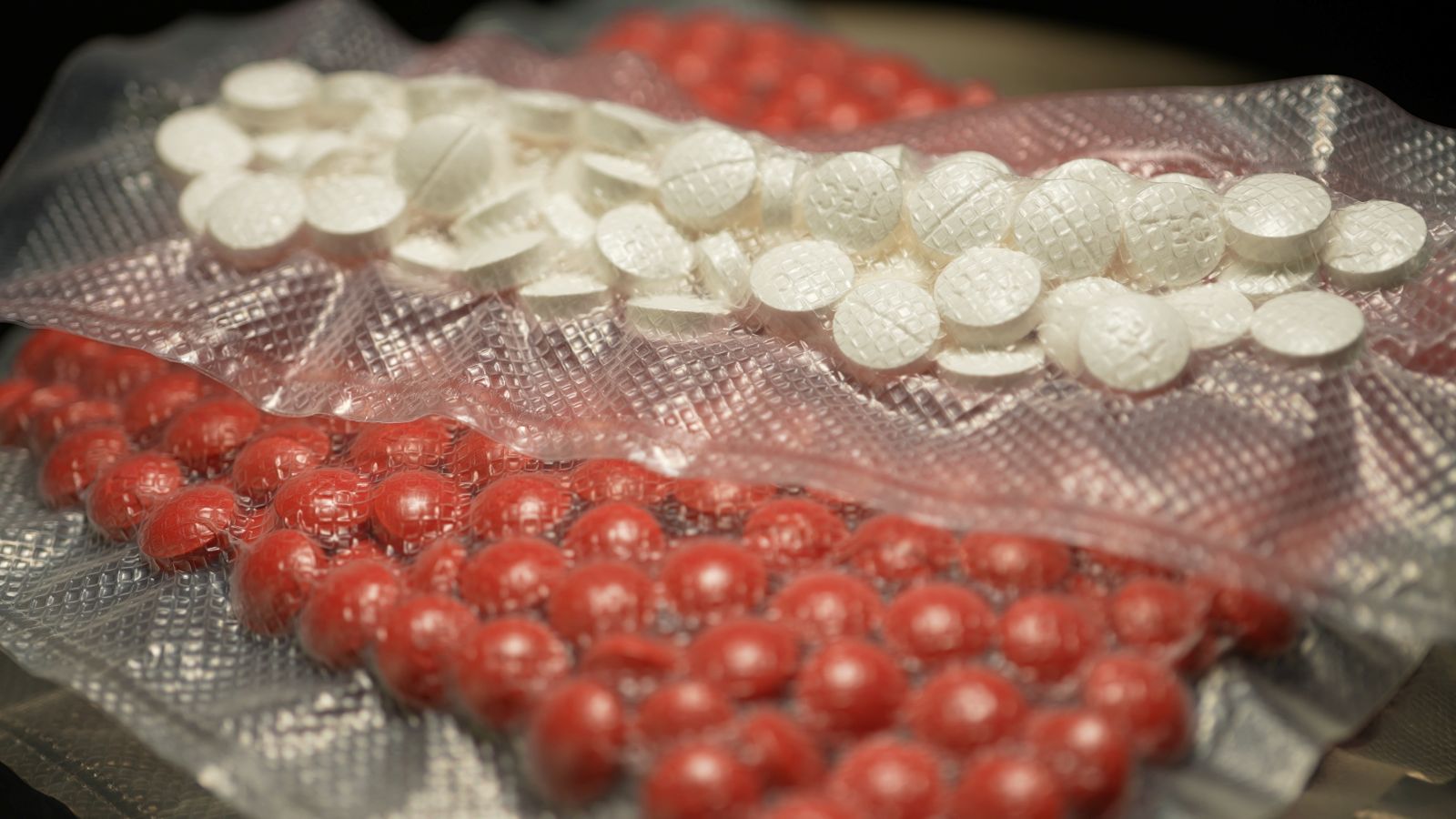
When most people hear the term “drug manufacturing,” they picture a sophisticated laboratory or a large-scale illegal operation. Under Nebraska law, however, the definition is much broader. A person may face manufacturing charges even when investigators never discover a completed controlled substance or a traditional drug lab.
Nebraska’s Uniform Controlled Substances Act defines manufacturing to include producing, preparing, propagating, converting, or processing a controlled substance under Nebraska Revised Statutes § 28-401. The definition also encompasses certain extraction methods, chemical synthesis, and some packaging or labeling activities connected to controlled substances.
Nebraska law defines production to include planting, cultivating, growing, or harvesting a controlled substance. As a result, cultivation allegations may be prosecuted as manufacturing even when the case does not involve chemicals or laboratory equipment.
During an investigation, officers may point to items such as:
- Chemicals or alleged precursor ingredients
- Laboratory-style glassware, tubing, or heating equipment
- Scales, packaging materials, presses, or grinders
- Grow lights, fertilizer, irrigation, or ventilation systems
- Written instructions or online search histories
- Messages discussing ingredients, quantities, or production
- Chemical residue recovered from tools or equipment
The presence of these items does not automatically establish a crime. Many have legitimate household, agricultural, commercial, or personal uses. Prosecutors must establish more than the presence of objects that officers consider suspicious. They must connect the accused to the alleged activity and prove the knowledge and intent required by law.
Manufacturing Versus Possession With Intent to Manufacture in Blair, NE
Not every drug manufacturing prosecution involves evidence that illegal drugs were actually produced. In many cases, prosecutors instead allege that a person intended to manufacture a controlled substance based on the items recovered during an investigation. Nebraska Revised Statutes § 28-416 prohibits both manufacturing a controlled substance and possessing one with the intent to manufacture it. While the charges are similar, the evidence used to support them can differ significantly.
Manufacturing allegations generally involve claims that someone had already begun producing, cultivating, processing, converting, extracting, or otherwise creating a controlled substance.
In a possession-with-intent case in the Blair, NE area, the government may not need to prove that a finished drug was successfully created. Prosecutors may instead argue that the accused possessed ingredients, equipment, or controlled substances while intending to use them for manufacturing.
Evidence frequently cited includes:
- Groups of items allegedly associated with manufacturing
- Large quantities of certain chemicals or ingredients
- Internet searches, saved articles, or written instructions
- Text messages between multiple people
- Prior purchases of certain products
- Residue detected on containers or equipment
- Statements made during police questioning
Intent cannot simply be assumed. Household products, gardening supplies, tools, and online research often have legitimate purposes, and prosecutors must prove beyond a reasonable doubt that the accused intended to manufacture a controlled substance, not merely that suspicious-looking items were present.
How Blair, NE Drug Manufacturing Cases Are Investigated
Some manufacturing cases begin during traffic stops or unrelated police calls. Others develop over weeks or months through surveillance, informants, purchase records, or complaints about a residence.
That investigation may involve:
- Tips from neighbors or members of the public
- Confidential informants or cooperating witnesses
- Complaints from landlords or property owners
- Reports of chemical odors, fires, or hazardous conditions
- Evidence discovered during another search
- A traffic stop involving alleged precursor materials
- Statements from a roommate, former partner, or alleged accomplice
- Surveillance of homes, garages, vehicles, or storage units
After obtaining a warrant, investigators may seize nearly anything they believe is connected to manufacturing a controlled substance. In addition to alleged drugs or chemicals, police often collect cell phones, computers, receipts, documents, tools, growing equipment, packaging materials, and other everyday items.
Simply presenting a collection of seized property does not prove criminal activity. A skilled drug defense lawyer in Blair, NE evaluates where each item was found, who owned it, whether it had a legitimate purpose, and whether the government can actually tie it to the accused beyond a reasonable doubt
Challenging Search Warrants in Blair, NE Drug Manufacturing Cases
In many drug manufacturing cases, the prosecution’s evidence comes almost entirely from a search warrant. Officers often search homes, apartments, vehicles, storage units, cell phones, and computers after convincing a judge that probable cause exists to believe evidence of a crime will be found.
Police may argue they developed probable cause through information gathered from confidential informants, surveillance, controlled buys, discarded trash, financial records, utility data, or observations made during the investigation.
A signed warrant does not make the search unquestionable.
An experienced drug manufacturing attorney in Blair, NE may evaluate whether:
- The warrant affidavit contained reliable and current information
- The alleged informant had credibility or ulterior motives
- Officers accurately described what they observed
- Important facts were omitted from the application
- The warrant clearly described the property to be searched
- Police searched beyond the locations or items authorized
- Electronic devices and digital accounts were searched lawfully
Informant claims deserve particularly close scrutiny. An informant may be trying to avoid prosecution, reduce a pending charge, obtain money, or retaliate after a personal dispute. Purchase records and surveillance can also be misleading. Buying a lawful product does not establish how it was used. Visiting a residence does not prove what happened inside it. If the warrant lacked probable cause or officers exceeded its scope, the defense team may ask the court to suppress evidence recovered during the search.
Common Drug Manufacturing Allegations in Blair, NE
Drug manufacturing charges in Blair, NE can arise from many different types of alleged activity. Some cases involve accusations of producing methamphetamine, while others center on marijuana cultivation, drug extraction, chemical processing, or possessing equipment and ingredients prosecutors claim were intended for manufacturing. The exact allegations matter because the substance involved, the evidence recovered, and the stage of the alleged process can all affect the charge, potential penalties, and available defenses.
Common allegations in and around Blair, NE include:
Methamphetamine Manufacturing
Suspected methamphetamine manufacturing is aggressively investigated because authorities associate the process with hazardous chemicals, fires, explosions, and environmental risks.
Investigators may point to cold medications, solvents, lithium batteries, glassware, tubing, filters, chemical containers, purchase records, text messages, or laboratory residue as evidence of an alleged manufacturing operation.
However, many of these products have legitimate everyday uses. To obtain a conviction, prosecutors must do more than show these items were present, they must prove the accused knowingly participated in manufacturing methamphetamine.
That connection may be difficult to establish when evidence is found in a shared residence, detached garage, common basement, vehicle, or area accessible to several people.
Marijuana Cultivation
Because Nebraska’s statutory definition of production includes cultivating and growing a controlled substance, marijuana grow allegations can be prosecuted as manufacturing.
Investigators may focus on plants, seeds, lighting systems, fertilizer, ventilation, irrigation, harvested material, or electricity records. The number and maturity of the plants, their location, who controlled the property, and who had access can all affect the case.
Even if those items are recovered, prosecutors must still connect them to the accused. The existence of a grow operation on a property does not automatically prove that every resident or property owner knew about or participated in the alleged cultivation.
Extraction and Processing Cases
Drug manufacturing allegations are not limited to cultivating plants or operating a laboratory. Prosecutors may also file manufacturing charges based on claims that someone extracted, concentrated, refined, or processed a controlled substance.
During these investigations, law enforcement may seize heating devices, presses, solvents, glassware, plant material, containers, or residue they believe is consistent with drug processing. Whether those materials actually contain a controlled substance, however, depends on reliable laboratory testing, not an officer’s assumptions.
An experienced Blair, NE drug defense attorney should carefully examine every step of the testing process, including how the evidence was collected, stored, documented, analyzed, and whether proper procedures were followed before accepting the government’s conclusions.
How Digital Evidence Is Used in Drug Manufacturing Cases
Today’s drug manufacturing investigations often rely as much on digital evidence as physical evidence. Prosecutors frequently attempt to use electronic records to establish knowledge, intent, or participation in an alleged manufacturing operation.
Common forms of digital evidence include:
- Text messages, chats, and direct messages
- Internet browsing and search histories
- Purchase histories from online retailers
- Photographs and videos
- Emails and social media accounts
- Notes or saved instructions
- GPS, location, and account-access information
- Payment-app transactions
Digital evidence can be powerful, but it can also be misunderstood. Messages may use slang, jokes, abbreviations, or coded language that investigators interpret incorrectly. A screenshot may omit the conversation before and after the quoted message. An online search may reflect curiosity rather than criminal activity.
There may also be questions about who used the device. Families, couples, roommates, and coworkers regularly share computers, accounts, wireless networks, and passwords. A full forensic review may reveal timestamps, login information, surrounding conversations, synchronized devices, or other details that weaken the prosecution’s interpretation.
Constructive Possession and Shared Homes
In many drug manufacturing prosecutions, investigators do not recover alleged evidence directly from the accused. Instead, prosecutors may rely on the legal theory of constructive possession, arguing that the defendant knew about the evidence and had the ability to exercise control over it.
This issue commonly arises when evidence is found in:
- A residence occupied by multiple adults
- Vehicles used by family members or roommates
- Detached garages, workshops, or sheds
- A jointly rented or borrowed storage unit
- A workplace or commercial building
- A room assigned to someone else
Being present where evidence is discovered is not enough to prove possession. Prosecutors must establish a meaningful connection between the accused and the alleged manufacturing materials.
The defense may examine property records, lease agreements, fingerprints, DNA, surveillance footage, phone records, receipts, account information, and witness testimony to determine who actually controlled the location and the items recovered there. Where multiple individuals had equal access, assumptions cannot replace proof beyond a reasonable doubt.
Laboratory Analysis and Drug Quantity
Many drug manufacturing prosecutions depend on laboratory testing rather than an officer’s observations. While investigators may suspect a substance is illegal, scientific analysis is generally necessary to determine its identity and significance.
Laboratory testing may be used to determine:
- The presence of a controlled substance
- The specific substance identified
- The weight of the tested material
- Whether residue exists on equipment
- Whether recovered chemicals are consistent with manufacturing
The defense should examine the chain of custody and testing process for contamination, broken seals, labeling mistakes, incomplete records, instrument problems, or unsupported conclusions.
Drug weight can substantially affect the severity of Nebraska drug charges, particularly in cases involving methamphetamine, fentanyl, cocaine, or heroin. Because felony classifications may depend on the weight of a mixture containing a detectable amount of a controlled substance, the defense may challenge sampling methods, moisture levels, packaging, and whether all material attributed to the accused was actually tested. Trace residue, standing alone, rarely answers the critical questions of who possessed the item or whether manufacturing ever occurred.
What Does the Government Have to Prove in a Nebraska Drug Manufacturing Case?
A drug manufacturing arrest does not automatically result in a conviction. Prosecutors bear the burden of proving every required element of the charged offense beyond a reasonable doubt. Whether the allegation involves manufacturing or possession with intent to manufacture, the evidence must establish more than suspicion or association.
Among the issues the prosecution must address are the following:
Was the Alleged Substance a Controlled Substance in Blair, NE?
The government must prove that the substance involved is classified as a controlled substance under Nebraska law. Laboratory analysis, proper testing procedures, and an unbroken chain of custody are often critical to that determination. Nebraska’s controlled substance schedules are set forth in Neb. Rev. Stat. § 28-405.
Did the Evidence Support Manufacturing Allegations?
When officers do not recover a finished controlled substance, prosecutors frequently argue that chemicals, equipment, or other materials demonstrate an intent to manufacture. The defense may challenge whether those items were capable of producing the alleged drug or whether they had legitimate, lawful purposes.
Did the Defendant Have the Required Intent?
Prosecutors must prove the accused acted knowingly or intentionally. Simply living at a property in Blair, NE or being near suspicious materials does not automatically establish the mental state required for a conviction.
Who Controlled the Alleged Manufacturing Materials?
When several people had access to the location, the government must present evidence linking the accused to the seized substances, ingredients, devices, or equipment.
Was the Evidence Lawfully Obtained?
Evidence obtained through unconstitutional searches, unlawful traffic stops, defective warrants, improper interrogations, or searches exceeding the scope of legal authority may be subject to challenge before trial.
Potential Penalties for Drug Manufacturing Charges in Nebraska
A conviction for drug manufacturing can carry life-changing consequences. Nebraska law generally classifies these offenses as felonies, with the severity of the charge depending on the controlled substance involved, the alleged quantity, a defendant’s criminal history, and whether aggravating circumstances are present.
Under Neb. Rev. Stat. § 28-416, manufacturing an exceptionally hazardous Schedule I, II, or III drug is generally a Class II felony. Manufacturing another Schedule I, II, or III controlled substance is generally a Class IIA felony, while manufacturing a Schedule IV or V substance is generally a Class IIIA felony. Certain drug quantities can lead to more serious Class ID, IC, or IB felony charges.
Sentencing classifications are established by Neb. Rev. Stat. § 28-105 and may include:
- Class IB felony: 20 years to life imprisonment
- Class IC felony: Mandatory minimum of 5 years and up to 50 years
- Class ID felony: Three- to 50-year prison sentence
- Class II felony: One to 50 years
- Class IIA felony: Up to 20 years’ imprisonment
- Class IIIA felony: Up to 3 years in prison, up to 18 months of post-release supervision, a fine of up to $10,000, or both
Additional factors may expose a defendant to more severe penalties, including allegations involving protected locations, minors, firearms, or offenses that allegedly resulted in serious bodily injury or death.
A conviction may also affect employment, housing, professional licenses, education, immigration status, firearm rights, child custody, and ownership of property targeted for forfeiture.

Facing Blair, NE drug manufacturing charges? When you hire a Miltenberger Law Blair, NE drug manufacturing lawyer, you aren’t simply partnering with a top-rated drug manufacturing lawyer in and around Blair, NE – you are securing your rights, your freedom, and your future. Along with an experienced drug manufacturing lawyer, our team is available 24/7 and offers expertise in these practice areas for Blair, NE residents:
- Traffic Lawyer
- Assault Lawyer
- Domestic Violence Defense Attorney
- Drug Crimes Defense Attorney
- DUI with Drugs Lawyer
Defending Against Drug Manufacturing Charges in Blair, NE
Every criminal case is unique, and the strongest defense depends on the evidence, the investigation, and the specific allegations. Depending on the circumstances, an experienced defense attorney may consider strategies such as:
Unlawful Search or Seizure
A drug manufacturing defense attorney in Blair, NE may argue that officers relied on unreliable information, lacked probable cause, obtained a defective warrant, or exceeded the constitutional limits of a search.
Lack of Knowledge or Intent
Prosecutors must prove the accused knowingly participated in manufacturing a controlled substance. Evidence discovered on shared property does not automatically establish knowledge or involvement.
Lack of Possession or Control
Evidence discovered in a residence, vehicle, garage, or storage area in or around Blair, NE used by multiple people may belong to someone else. The government must prove more than mere presence at the location.
Lawful Possession of Everyday Items
Many products associated with drug manufacturing, including household chemicals, fertilizers, containers, tools, and glassware, are commonly owned for completely legitimate reasons.
Insufficient Scientific Evidence
Testing may reveal only trace residue, fail to identify a controlled substance, or fail to prove that the seized materials were capable of completing the alleged process.
Unreliable Witnesses
Confidential informants, cooperating witnesses, and alleged accomplices may have personal or legal reasons to shift blame, minimize their own involvement, or obtain favorable treatment from prosecutors.
Weak or Misleading Electronic Evidence
Text messages, internet searches, emails, or social media communications may be incomplete, misunderstood, or attributable to someone else with access to the device or account.
Protecting Your Rights After a Drug Manufacturing Arrest in Blair, NE
If you are under investigation or have been arrested for drug manufacturing, the decisions you make in the hours and days that follow can have a significant impact on your case. Consider taking the following steps:
- Do not answer law enforcement’s questions without legal counsel. Officers may already possess evidence they are not disclosing. You have the right to remain silent. Use it.
- Do not consent to additional searches. If officers have a warrant, do not interfere. However, you are not required to voluntarily consent to searches of other property, vehicles, phones, or electronic devices.
- Do not alter or destroy potential evidence. That conduct could create additional allegations and eliminate helpful evidence.
- Avoid discussing the case with others. Avoid discussing the allegations with alleged accomplices, witnesses, or informants, as those conversations could be viewed as attempts to influence testimony.
- Document the search. As soon as possible, document when officers arrived, what they searched, what property they seized, and anything that was said during the encounter.
- Speak with a criminal defense attorney in Blair, NE as soon as possible. The sooner an attorney becomes involved, the sooner they can review the search warrant, evaluate the evidence, protect your rights, and begin preparing your defense.
Experienced Defense for Drug Manufacturing Charges in Blair, NE
Drug manufacturing allegations can quickly become complex. Cases often involve extensive investigations, search warrants, laboratory analysis, electronic evidence, and testimony from informants or forensic experts. A strong defense requires more than accepting the prosecution’s version of events.
Miltenberger Law approaches these cases by examining the details the prosecution may prefer to treat as settled:
- Did police have probable cause?
- Did officers execute the search warrant lawfully?
- Can the prosecution connect the alleged evidence to the accused?
- Is there sufficient evidence of knowing participation or intent?
- Were scientific testing procedures reliable and properly documented?
- Whether digital communications have been accurately interpreted
- Were witnesses motivated by reduced charges, financial incentives, or personal disputes?
- Has the government accurately calculated the alleged drug quantity and applicable penalties?
Every criminal case deserves a careful, independent review. Our job is to challenge questionable evidence, identify constitutional issues, and build the strongest defense possible while protecting your rights at every stage of the process.
Contact an Experienced Drug Manufacturing Defense Lawyer in Blair, NE
Drug manufacturing allegations in Blair, NE can have immediate and long-term consequences. A conviction may result in significant prison time, substantial fines, and a permanent felony record that affects nearly every aspect of your future. The sooner you involve an experienced defense attorney, the sooner you can begin protecting your rights.
Evidence involving chemicals, laboratory equipment, marijuana plants, digital communications, or alleged precursor materials does not automatically establish criminal liability. Every search, laboratory report, witness statement, and piece of physical evidence should be independently reviewed before conclusions are drawn.
Miltenberger Law represents people facing drug manufacturing investigations and felony charges in Blair and across Nebraska. We can review the search, analyze the evidence, explain your potential exposure, and begin building a defense based on the facts.
Call (402) 217-2267 or contact Miltenberger Law online to schedule a confidential consultation with an experienced drug manufacturing lawyer in Blair, NE.