Drug manufacturing lawyer in Blair, NE. Drug manufacturing charges can turn an ordinary Tuesday morning in Blair, NE into a life-changing crisis. Police arrive with a search warrant.
Officers often execute search warrants at homes, apartments, garages, storage units, or vehicles, seizing everything they believe could support their case, including phones, computers, medications, gardening supplies, tools, receipts, and household products.
Those accusations can carry severe felony penalties, but allegations alone are not enough for a conviction.
The government must prove that you knowingly manufactured, or intended to manufacture, a controlled substance under Nebraska law. That often requires connecting you to evidence found during a search while overcoming questions about ownership, intent, and whether the items recovered actually support the charges.
At Miltenberger Law Offices, we carefully examine every aspect of the government’s case, including the search warrant, forensic testing, digital evidence, and witness statements, to identify weaknesses and build the strongest possible defense.
Call (402) 217-2267 or contact us online today to discuss your case with an experienced Blair, NE drug manufacturing attorney.
What You’ll Learn About Blair, NE Drug Manufacturing Charges
Drug manufacturing cases often involve much more than the discovery of illegal drugs. Investigators may rely on search warrants, digital evidence, laboratory testing, confidential informants, and everyday household items to support felony allegations. Understanding how these cases are investigated, and what prosecutors must prove, is essential if you or a loved one has been accused of manufacturing a controlled substance.
In this article, we’ll cover:
- How Nebraska law defines drug manufacturing and possession with intent to manufacture
- How manufacturing differs from possession with intent to manufacture
- How drug manufacturing investigations typically begin in Blair, NE
- The evidence prosecutors commonly use to support these charges
- The penalties associated with drug manufacturing convictions in Nebraska
- Common defense strategies that may be available depending on the facts of your case
- What steps to take if you’re under investigation or have been arrested for drug manufacturing
If you or someone you love is facing drug manufacturing charges in Blair, NE, understanding the law and your legal options is the first step toward protecting your future.
What Is Drug Manufacturing Under Nebraska Law?
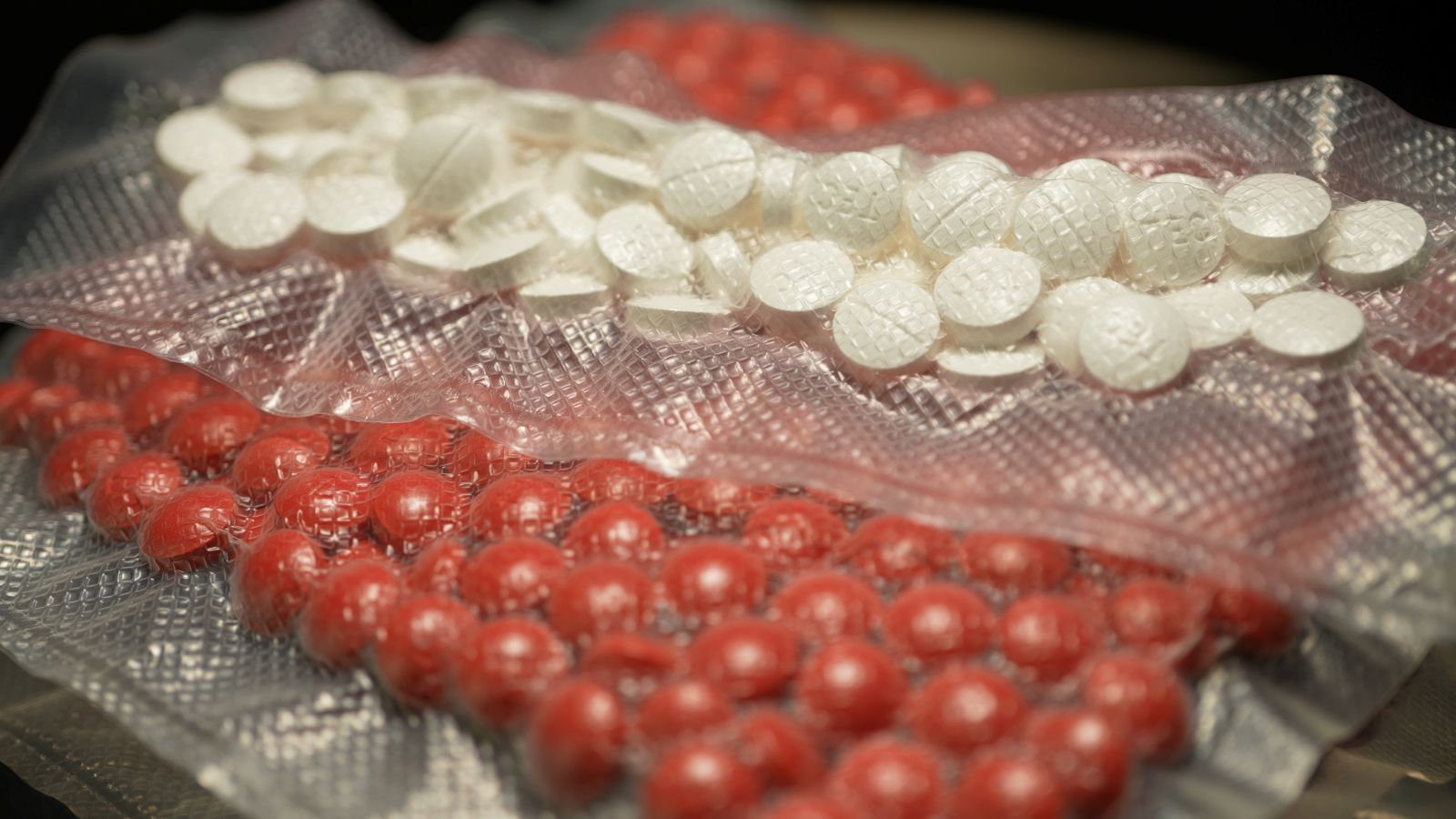
Drug manufacturing charges are often broader than people realize. Nebraska law does not require investigators to uncover an active drug lab or large quantities of illegal narcotics before filing felony manufacturing charges. Instead, prosecutors may rely on evidence suggesting someone intended to produce or process a controlled substance.
Nebraska’s Uniform Controlled Substances Act defines manufacturing to include producing, preparing, propagating, converting, or processing a controlled substance under Nebraska Revised Statutes § 28-401. The definition also encompasses certain extraction methods, chemical synthesis, and some packaging or labeling activities connected to controlled substances.
Production is defined separately to include planting, growing, cultivating, or harvesting a controlled substance, meaning cultivation allegations may also support a manufacturing charge.
Evidence commonly cited by investigators includes:
- Chemicals or alleged precursor ingredients
- Glassware, containers, tubing, or heating equipment
- Scales, packaging materials, presses, or grinders
- Grow lights, fertilizer, irrigation, or ventilation systems
- Written instructions, online research, or recipes
- Messages discussing ingredients, quantities, or production
- Residue found on tools or household objects
None of these items automatically prove drug manufacturing. Many have legitimate personal, agricultural, commercial, or industrial purposes. Prosecutors must still establish that the accused knowingly participated in manufacturing a controlled substance, not simply that suspicious-looking items were present.
Manufacturing Versus Possession With Intent to Manufacture in Blair, NE
Although these offenses are closely related, Nebraska law treats manufacturing and possession with intent to manufacture as separate crimes. Under Nebraska Revised Statutes § 28-416, prosecutors may pursue either charge depending on what they believe the evidence shows.
Manufacturing allegations generally involve claims that someone had already begun producing, cultivating, processing, converting, extracting, or otherwise creating a controlled substance.
In a possession-with-intent case in the Blair, NE area, the government may not need to prove that a finished drug was successfully created. Prosecutors may instead argue that the accused possessed ingredients, equipment, or controlled substances while intending to use them for manufacturing.
To support that claim, prosecutors often rely on circumstantial evidence, including:
- The combination of items found in one location
- The quantity of ingredients allegedly present
- Internet searches or saved instructions
- Text messages between multiple people
- Prior purchases of certain products
- Residue detected on containers or equipment
- Statements made during police questioning
Intent cannot simply be assumed. Household products, gardening supplies, tools, and online research often have legitimate purposes, and prosecutors must prove beyond a reasonable doubt that the accused intended to manufacture a controlled substance, not merely that suspicious-looking items were present.
How Blair, NE Drug Manufacturing Cases Are Investigated
Many drug manufacturing prosecutions begin long before an arrest is made. Law enforcement may spend weeks, or even months, gathering information they believe establishes probable cause before executing a search warrant.
Investigators may receive information from:
- Anonymous tips or neighborhood complaints
- Confidential informants or cooperating witnesses
- Complaints from landlords or property owners
- Emergency responses involving chemical odors or suspected hazardous materials
- Evidence discovered during another search
- Traffic stops involving chemicals, equipment, or controlled substances
- Statements from a roommate, former partner, or alleged accomplice
- Surveillance of homes, garages, vehicles, or storage units
After obtaining a warrant, investigators may seize nearly anything they believe is connected to manufacturing a controlled substance. In addition to alleged drugs or chemicals, police often collect cell phones, computers, receipts, documents, tools, growing equipment, packaging materials, and other everyday items.
Prosecutors may later argue that these items, when viewed together, establish an illegal manufacturing operation. An experienced Blair, NE drug defense attorney examines each piece of evidence individually, looking for weaknesses in the government’s assumptions and determining whether the evidence actually connects the accused to the alleged offense
Search Warrants and Drug Manufacturing Investigations in Blair, NE
Search warrants are central to many drug manufacturing prosecutions because most of the evidence is recovered from private property or electronic devices.
Police may argue they developed probable cause through information gathered from confidential informants, surveillance, controlled buys, discarded trash, financial records, utility data, or observations made during the investigation.
However, the existence of a search warrant does not automatically mean the search was lawful or that every piece of evidence is admissible in court.
An experienced drug manufacturing attorney in Blair, NE may evaluate whether:
- The warrant affidavit contained reliable and current information
- An informant had a motive to lie or had proven unreliable
- Information provided by an informant was reliable and properly corroborated
- Investigators omitted or misrepresented important facts
- The warrant clearly described the property to be searched
- Officers exceeded the authority granted by the warrant
- Digital searches complied with constitutional protections
Informants, surveillance, and purchase records do not always tell the full story. A lawful purchase, frequent visitors, or increased utility usage may have entirely innocent explanations. Likewise, an informant may have personal motives or expect favorable treatment in another criminal case. If constitutional violations occurred during the investigation or search, the defense may ask the court to suppress the evidence obtained, which can significantly weaken, or even eliminate, the prosecution’s case.
Common Drug Manufacturing Allegations in Blair, NE
Drug manufacturing charges in Blair, NE can arise from many different types of alleged activity. Some cases involve accusations of producing methamphetamine, while others center on marijuana cultivation, drug extraction, chemical processing, or possessing equipment and ingredients prosecutors claim were intended for manufacturing. The exact allegations matter because the substance involved, the evidence recovered, and the stage of the alleged process can all affect the charge, potential penalties, and available defenses.
Common allegations in and around Blair, NE include:
Methamphetamine Manufacturing
Suspected methamphetamine manufacturing is aggressively investigated because authorities associate the process with hazardous chemicals, fires, explosions, and environmental risks.
Police may identify cold medications, solvents, batteries, filters, tubing, glassware, or chemical containers as components of a manufacturing process. They may also rely on residue, purchase histories, digital instructions, or statements from cooperating witnesses.
Many alleged components have common lawful uses. Even when suspicious items are present, prosecutors must prove that the accused knew about them and intended to participate in manufacturing methamphetamine.
That connection may be difficult to establish when evidence is found in a shared residence, detached garage, common basement, vehicle, or area accessible to several people.
Marijuana Cultivation
Nebraska law broadly defines production to include planting, cultivating, growing, and harvesting controlled substances. As a result, allegations involving marijuana grow operations may be prosecuted as drug manufacturing offenses.
Investigators may rely on evidence such as marijuana plants, seeds, lighting systems, irrigation equipment, fertilizer, ventilation systems, or unusually high utility usage to support their allegations.
Owning or renting a property does not necessarily prove knowledge of everything stored or grown on it. That is especially true when several adults occupy the home or when evidence is discovered in a locked bedroom, basement, garage, shed, or outdoor area controlled by someone else.
Drug Extraction and Chemical Processing Allegations
Drug manufacturing allegations are not limited to cultivating plants or operating a laboratory. Prosecutors may also file manufacturing charges based on claims that someone extracted, concentrated, refined, or processed a controlled substance.
During these investigations, law enforcement may seize heating devices, presses, solvents, glassware, plant material, containers, or residue they believe is consistent with drug processing. Whether those materials actually contain a controlled substance, however, depends on reliable laboratory testing, not an officer’s assumptions.
An experienced Blair, NE drug defense attorney should carefully examine every step of the testing process, including how the evidence was collected, stored, documented, analyzed, and whether proper procedures were followed before accepting the government’s conclusions.
How Digital Evidence Is Used in Drug Manufacturing Cases
Law enforcement increasingly relies on electronic evidence to build drug manufacturing cases. In many investigations, prosecutors attempt to combine digital records with physical evidence recovered during a search to argue that the accused intended to manufacture a controlled substance.
Investigators may review:
- Text messages and private conversations
- Internet search histories
- Online purchase records and receipts
- Photos, videos, and cloud storage
- Email and social media communications
- Digital notes or instructional documents
- GPS, location, and account-access information
- Digital payment records and financial transactions
Electronic evidence is not always as straightforward as prosecutors suggest. Messages can be taken out of context, jokes or slang may be misinterpreted, and screenshots often fail to show the complete conversation.
In addition, many devices and online accounts are shared by family members, roommates, or coworkers. A detailed forensic examination may reveal information about who actually accessed the device, when communications occurred, and whether the government’s interpretation of the evidence is accurate.
Shared Property and Constructive Possession
Drug manufacturing cases often involve evidence found in places used by more than one person. When officers cannot show that the accused actually possessed the alleged evidence, prosecutors may instead argue constructive possession, claiming the defendant knew about the items and exercised control over them.
These disputes frequently arise when evidence is recovered from:
- A residence occupied by multiple adults
- A vehicle used by multiple people
- Detached garages, workshops, or sheds
- Storage lockers rented by multiple people
- A workplace or commercial building
- A room assigned to someone else
Being present where evidence is discovered is not enough to prove possession. Prosecutors must establish a meaningful connection between the accused and the alleged manufacturing materials.
The defense may investigate who had keys, who occupied the relevant room, whose belongings were nearby, whose name appeared on packages, and whether fingerprints or DNA were recovered. Phone records, receipts, leases, surveillance footage, witness statements, and account information may help identify who actually controlled the evidence. When multiple people had access, the government should not be permitted to replace proof with assumptions.
Questioning Laboratory Results and Drug Weight
Drug manufacturing prosecutions frequently depend on laboratory reports to identify alleged controlled substances and determine their weight. Without reliable testing, an officer’s opinion alone is generally insufficient to establish what a substance actually contains.
Laboratory testing may be used to determine:
- The presence of a controlled substance
- The identity of the substance
- The weight of the material tested
- Whether residue exists on equipment
- Whether chemicals are consistent with manufacturing
The defense should examine the chain of custody and testing process for contamination, broken seals, labeling mistakes, incomplete records, instrument problems, or unsupported conclusions.
Drug weight can substantially affect the severity of Nebraska drug charges, particularly in cases involving methamphetamine, fentanyl, cocaine, or heroin. Because felony classifications may depend on the weight of a mixture containing a detectable amount of a controlled substance, the defense may challenge sampling methods, moisture levels, packaging, and whether all material attributed to the accused was actually tested. Trace residue, standing alone, rarely answers the critical questions of who possessed the item or whether manufacturing ever occurred.
Elements of a Drug Manufacturing Charge in Nebraska
The specific elements depend on the charge, but prosecutors generally must prove that the accused knowingly or intentionally manufactured a controlled substance or possessed it with the intent to manufacture it.
Among the issues the prosecution must address are the following:
Was a Controlled Substance Involved in Blair, NE?
The government must prove that the substance involved is classified as a controlled substance under Nebraska law. Laboratory analysis, proper testing procedures, and an unbroken chain of custody are often critical to that determination. Nebraska’s controlled substance schedules are set forth in Neb. Rev. Stat. § 28-405.
Did the Evidence Support Manufacturing Allegations?
In some cases, investigators recover an alleged finished product. In others, prosecutors rely on equipment, chemicals, or precursor materials to argue that manufacturing was underway or about to occur. Whether those items actually support that conclusion may become a contested issue.
Did the Defendant Have the Required Intent?
An individual should not be convicted because another occupant stored suspicious materials on shared property in Blair, NE. Prosecutors must connect the accused to the activity and establish the required mental state.
Who Controlled the Alleged Manufacturing Materials?
When several people had access to the location, the government must present evidence linking the accused to the seized substances, ingredients, devices, or equipment.
Was the Evidence Obtained in Compliance With the Constitution?
Evidence obtained through unconstitutional searches, unlawful traffic stops, defective warrants, improper interrogations, or searches exceeding the scope of legal authority may be subject to challenge before trial.
Nebraska Penalties for Drug Manufacturing
Drug manufacturing is generally prosecuted as a felony in Nebraska. The classification depends on the controlled substance, alleged quantity, location, criminal history, involvement of a minor, possession of a firearm, and other circumstances.
Under Neb. Rev. Stat. § 28-416, manufacturing an exceptionally hazardous Schedule I, II, or III drug is generally a Class II felony. Manufacturing another Schedule I, II, or III controlled substance is generally a Class IIA felony, while manufacturing a Schedule IV or V substance is generally a Class IIIA felony. Certain drug quantities can lead to more serious Class ID, IC, or IB felony charges.
Under Neb. Rev. Stat. § 28-105, Nebraska’s general felony penalties include:
- Class IB felony: 20 years to life imprisonment
- Class IC felony: Mandatory minimum of 5 years and up to 50 years
- Class ID felony: Mandatory minimum of 3 years and up to 50 years
- Class II felony: One to 50 years’ imprisonment
- Class IIA felony: Up to 20 years’ imprisonment
- Class IIIA felony: Up to 3 years in prison, up to 18 months of post-release supervision, a fine of up to $10,000, or both
Penalties may increase when an offense is alleged to have occurred near a school, playground, or certain youth facilities; when a minor allegedly participated; when a firearm was possessed during the offense; or when the substance allegedly caused death or serious bodily injury.
Beyond incarceration, a felony conviction can create lasting consequences for employment opportunities, housing, professional licensing, immigration status, firearm ownership, educational opportunities, child custody matters, and civil asset forfeiture proceedings.

Charged with drug manufacturing in Blair, NE? When you choose a Miltenberger Law drug manufacturing defense attorney in or around Blair, NE, you aren’t simply partnering with a leading drug manufacturing attorney in and around Blair, NE – you are safeguarding your rights, your freedom, and your future. Along with a knowledgeable drug manufacturing lawyer, our legal team is available 24/7 and provides expertise in these practice areas for individuals in Blair, NE:
- Assault Lawyer
- Domestic Violence Defense Attorney
- Drug Crimes Defense Attorney
- DUI with Drugs Lawyer
- Aggravated DUI Lawyer
Possible Defense Strategies in Blair, NE Drug Manufacturing Cases
Every criminal case is unique, and the strongest defense depends on the evidence, the investigation, and the specific allegations. Depending on the circumstances, an experienced defense attorney may consider strategies such as:
Challenging the Investigation
The defense may challenge whether law enforcement had probable cause, obtained a valid search warrant, remained within the warrant’s authorized scope, or unlawfully searched a residence, vehicle, cellphone, computer, or online account.
Absence of Criminal Intent
Simply being near chemicals, equipment, or controlled substances does not prove someone intended to manufacture drugs. Prosecutors must establish the required mental state beyond a reasonable doubt.
Shared Access to the Property
Evidence found in a shared home or vehicle in the Blair, NE area may belong to a roommate, family member, visitor, or other occupant. Presence alone does not establish possession.
Legitimate Purpose for the Evidence
Household chemicals, tools, gardening supplies, medications, glassware, and online research may have innocent explanations. Prosecutors must establish criminal intent rather than asking a jury to assume it.
Weak Laboratory Evidence
Laboratory testing may fail to identify a controlled substance, detect only trace amounts, or produce unreliable results because of testing errors or chain-of-custody problems.
Bias or Motives of Witnesses
Informants and alleged accomplices may exaggerate another person’s involvement to receive money, avoid charges, obtain a reduced sentence, or settle a personal grievance.
Digital Evidence Taken Out of Context
A complete review may show that messages were taken out of context, another person used the device, or the prosecution’s interpretation is unsupported.
Steps to Take if You’re Accused of Drug Manufacturing in Blair, NE
What you do next can affect the case:
- Do not answer law enforcement’s questions without legal counsel. Officers may already possess evidence they are not disclosing. You have the right to remain silent. Use it.
- Do not agree to additional searches. Comply with lawful orders, but do not consent to additional searches beyond what officers are legally authorized to conduct.
- Do not alter or destroy potential evidence. That conduct could create additional allegations and eliminate helpful evidence.
- Avoid discussing the case with others. Do not contact alleged accomplices, witnesses, or confidential informants about the investigation. Conversations may be monitored or later used against you.
- Keep detailed notes. Record the date, time, officers involved, locations searched, items seized, and any other details you remember while they’re still fresh.
- Speak with a criminal defense attorney in Blair, NE as soon as possible. Early representation allows the defense to preserve evidence, investigate witnesses, and review the warrant before memories and records disappear.
Why Trust Miltenberger Law With Your Blair, NE Drug Manufacturing Defense?
Drug manufacturing cases in the Blair, NE area may involve search warrants, laboratory reports, digital extractions, witness interviews, photographs, and technical claims about chemicals or equipment.
At Miltenberger Law, we carefully evaluate every aspect of the government’s case, including:
- Did police have probable cause?
- Did officers execute the search warrant lawfully?
- Who controlled the property?
- Whether prosecutors can establish knowledge and criminal intent
- The reliability of laboratory testing and forensic evidence
- Do the text messages, emails, or digital records actually support the allegations?
- Were witnesses motivated by reduced charges, financial incentives, or personal disputes?
- Can the government prove the alleged quantity or enhancement?
Our role is not to judge you. It is to protect your rights, challenge unsupported conclusions, and require the government to prove every element of its case.
Contact an Experienced Drug Manufacturing Defense Lawyer in Blair, NE
A drug manufacturing charge in Blair, NE can threaten your freedom, employment, family, and reputation. Do not assume that the discovery of chemicals, equipment, plants, residue, or messages means prosecutors can prove guilt.
Every search can be challenged. Every item must be connected to the accused. Every witness must be evaluated. Every allegation must be proven.
Miltenberger Law represents people facing drug manufacturing investigations and felony charges in Blair and across Nebraska. We can review the search, analyze the evidence, explain your potential exposure, and begin building a defense based on the facts.
Call (402) 217-2267 or reach out to Miltenberger Law online to arrange a confidential consultation with a knowledgeable drug manufacturing lawyer serving Blair, NE.