
Federal drug conspiracy: Can you be charged without ever selling Drugs? You never sold drugs. You never handled a package of methamphetamine or fentanyl. You never collected money from a drug transaction. So how can federal prosecutors accuse you of participating in a drug trafficking conspiracy?
Under federal law, the answer may come down to something far less obvious than a completed drug sale: an alleged agreement.
Federal drug conspiracy charges can reach individuals who never personally distributed controlled substances. A person accused of arranging transportation, coordinating deliveries, providing logistical assistance, or knowingly participating in a distribution agreement may face prosecution even without directly handling drugs. But there is an equally important distinction: knowing someone who sells drugs, being present during a transaction, or associating with suspected dealers does not automatically make someone a conspirator.
For individuals facing federal drug investigations in Omaha and across Nebraska, that distinction can mean the difference between criminal liability and an accusation the government cannot prove. A federal drug crimes lawyer in Omaha can examine whether prosecutors have evidence of an actual criminal agreement or are attempting to turn association, suspicion, or unrelated conduct into a federal conspiracy case.
Blog Summary: What You’ll Learn About Federal Drug Conspiracy Charges
Yes, you can be charged with federal drug conspiracy without ever selling, possessing, or transporting drugs. Under 21 U.S.C. § 846, prosecutors must prove that an unlawful drug agreement existed and that the defendant knowingly and voluntarily joined it. They do not have to prove that the defendant personally completed a drug transaction or committed a separate act to advance the conspiracy. However, mere presence, friendship, family relationships, or knowledge of another person’s drug activity is not enough by itself to establish guilt. This blog explains how federal prosecutors build conspiracy cases, what evidence matters, when association becomes criminal participation, and how these allegations may be challenged. The skilled federal drug crimes legal team at Miltenberger Law is here to help.
What Is Federal Drug Conspiracy Under 21 U.S.C. § 846?
Federal drug conspiracy is a separate criminal offense established by 21 U.S.C. § 846. The statute makes it a federal crime to attempt or conspire to commit certain offenses under the Controlled Substances Act, including unlawful drug distribution and possession with intent to distribute.
The central issue is the agreement itself. Prosecutors do not necessarily have to establish that the planned drug transaction was completed, that the defendant personally possessed controlled substances, or that every participant performed the same role.
To secure a conviction in the U.S. District Court for the District of Nebraska, federal prosecutors must prove beyond a reasonable doubt that:
- Existence of an Agreement: Two or more individuals agreed to pursue an illegal objective. The agreement does not have to be documented or explicitly stated and may be established through circumstantial evidence, including text messages, intercepted communications, or coordinated conduct.
- Knowledge of the Objective: You were aware of the conspiracy’s fundamental purpose and understood that its objective was unlawful. You did not need to know every aspect of the operation or identify all individuals involved, provided you understood the essential criminal goal.
- Knowing and Voluntary Involvement: You knowingly and willingly became part of the agreement with the intent to advance its illegal objective.
- Overt Act Requirement: For general federal conspiracies (18 U.S.C. § 371), at least one conspirator must commit an “overt act” in furtherance of the scheme. However, for federal drug conspiracies (21 U.S.C. § 846) and certain fraud conspiracies, prosecutors do not need to prove an overt act was ever committed.
The agreement does not have to be written, formally announced, or explicitly discussed in front of witnesses. Prosecutors may attempt to establish it through circumstantial evidence, including communications, repeated transactions, coordinated activity, and the relationships between alleged participants.
However, the absence of a formal agreement does not eliminate the government’s burden of proof. Prosecutors must still establish that the accused knowingly participated in a shared criminal objective, not merely that the person was connected to someone engaged in illegal activity.
Can You Really Be Convicted Without Ever Touching or Selling Drugs?
Federal conspiracy law focuses on knowing participation in an unlawful agreement, not whether every defendant personally handled the drugs. A person who knowingly agrees to facilitate a drug distribution operation may face conspiracy charges even if another participant physically possesses, transports, or sells the controlled substances.
Consider a hypothetical situation involving several people in Omaha. One individual obtains methamphetamine, another arranges customers, and a third knowingly coordinates deliveries as part of their shared distribution plan. The third person may never physically handle the drugs, but prosecutors could argue that the individual’s conduct demonstrates voluntary participation in the conspiracy.
Now consider a different situation. Someone gives a friend a ride across Omaha without knowing that the friend intends to conduct a drug transaction. The driver may have provided transportation, but that fact alone does not establish a knowing agreement to violate federal drug laws.
The difference is not simply whether someone helped another person. It is whether the government can prove that the accused knowingly and voluntarily joined the unlawful drug agreement.
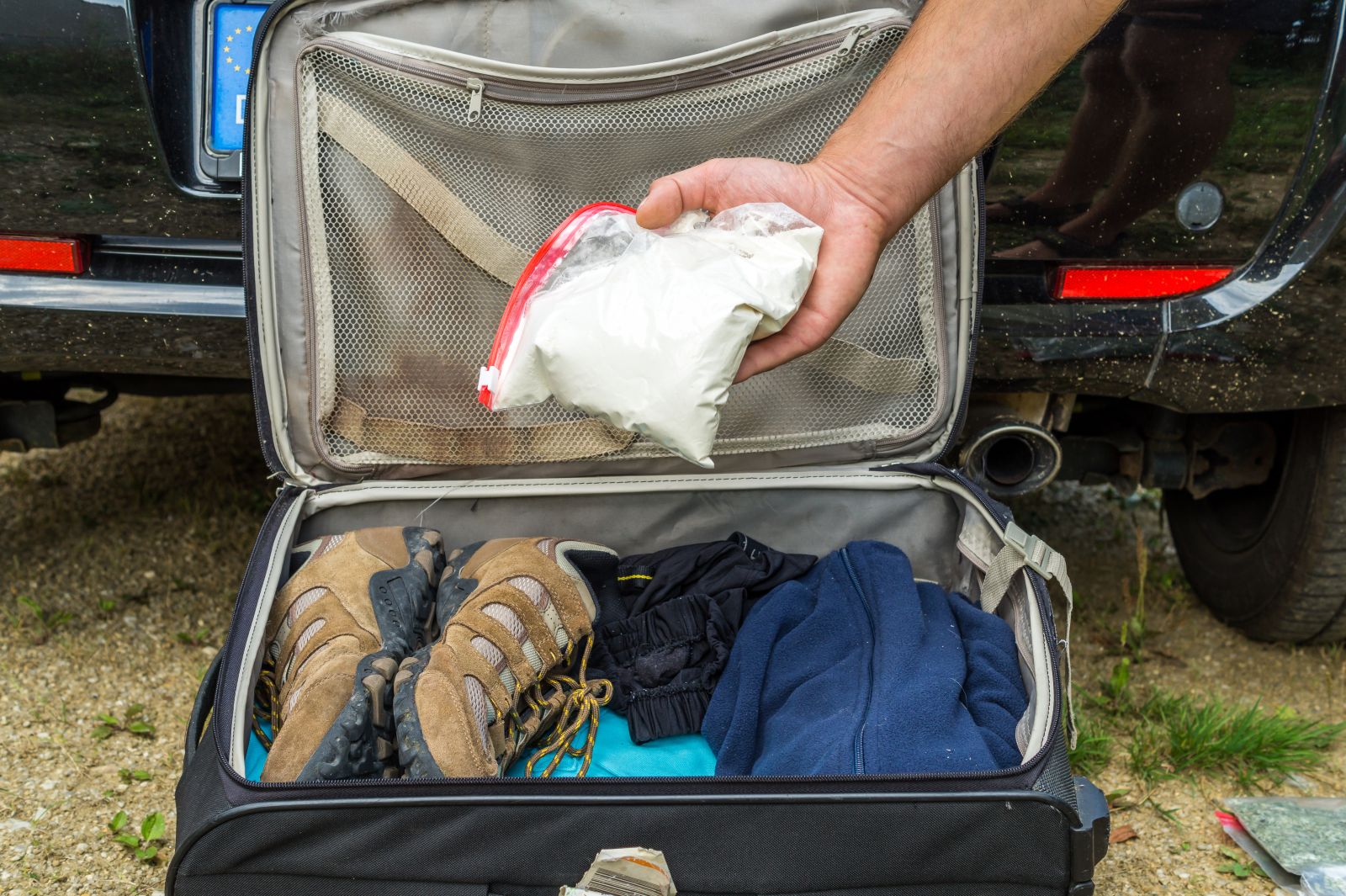
What Is the Difference Between Knowing About Drug Activity and Participating in a Conspiracy?
One of the most significant issues in federal drug conspiracy cases is the distinction between knowledge and participation.
Imagine learning that a roommate, relative, or close friend is involved in selling controlled substances. You may suspect that certain visitors are customers. You may overhear conversations about money or deliveries. You might even know that illegal drugs are being kept somewhere in the home.
Those circumstances may attract investigators’ attention, but knowledge of another person’s criminal activity does not automatically establish that you agreed to participate in it.
Federal prosecutors must prove more than awareness or association. They must establish that the accused knowingly joined the unlawful agreement. Evidence of coordinated activity, repeated assistance, shared financial interests, or communications reflecting a common criminal purpose may become relevant, but each circumstance must be evaluated in context.
This distinction is especially important when investigations involve family members, roommates, romantic partners, or groups of friends. Personal relationships can place someone near suspected criminal conduct without establishing criminal responsibility for it.
How Do Federal Prosecutors Prove a Drug Conspiracy Without a Completed Sale?
Federal drug conspiracy cases frequently rely on circumstantial evidence. Because alleged criminal agreements are rarely documented in formal contracts or openly announced, investigators may attempt to reconstruct a conspiracy through communications, witness statements, transactions, and patterns of behavior.
Text Messages, Phone Calls, and Electronic Communications
Investigators may examine text messages, call records, encrypted communications, and other electronic evidence to identify alleged relationships between participants. Conversations about meeting locations, money, deliveries, or quantities may become relevant when prosecutors believe they concern drug distribution.
However, communications must be interpreted in context. A vague message, an unanswered call, or an ambiguous conversation does not necessarily establish a criminal agreement. The meaning of particular statements and whether they demonstrate knowing participation can become contested issues.
Confidential Informants and Cooperating Witnesses
Federal investigators may rely on individuals who claim to have participated in or observed suspected drug activity. Some witnesses cooperate after being arrested themselves and may hope to receive consideration in their own criminal cases.
Such testimony can be important, but it must be evaluated for accuracy, consistency, credibility, and possible incentives. An accusation from a cooperating witness does not relieve the government of its burden to prove the charged conspiracy beyond a reasonable doubt.
Financial Transactions and Alleged Distribution Records
Prosecutors may examine financial transfers, cash payments, payment applications, handwritten records, or other materials they believe demonstrate participation in drug distribution.
The existence of a financial transaction does not necessarily establish that it involved controlled substances. Investigators must connect the evidence to the alleged unlawful agreement, and alternative explanations may be relevant depending on the circumstances.
Travel, Surveillance, and Coordinated Activity
Vehicle movements, location information, surveillance footage, and repeated meetings may also become part of a federal conspiracy investigation. For example, authorities may examine whether several individuals traveled together or appeared at locations associated with suspected drug transactions.
But travel and association are not inherently criminal. The government must demonstrate why the activity supports an inference of knowing participation in a drug conspiracy rather than an innocent relationship or unrelated conduct.
Can You Be Charged With Conspiracy for Buying Drugs for Personal Use?
A purchase of controlled substances can constitute a criminal offense, but it does not automatically establish that the buyer participated in a broader drug distribution conspiracy.
Federal courts distinguish between an ordinary buyer-seller relationship and an agreement to advance a larger unlawful distribution objective. Evidence that someone purchased drugs solely for personal use may support a different conclusion from evidence showing repeated transactions, quantities intended for resale, coordinated distribution, or a shared financial interest in further sales.
The distinction is not always straightforward. A single transaction may occur within a broader conspiracy, while repeated purchases do not eliminate the need to prove the defendant’s knowing participation in the charged agreement.
For defendants in Omaha, this can become a central issue when prosecutors attempt to characterize a customer, acquaintance, or occasional purchaser as a member of a larger trafficking organization. Reach out to Miltenberger Law for a free consultation.
Can You Be Charged With Conspiracy if You Never Met the Other Defendants?
Federal drug conspiracies may involve individuals who never meet one another or do not know the identities of every alleged participant. A defendant does not necessarily have to know every member or every detail of the operation to be convicted.
However, prosecutors must still establish that the defendant knowingly joined the unlawful agreement charged in the case.
For example, a federal investigation may involve alleged suppliers, distributors, and intermediaries operating in Omaha, Lincoln, and other Nebraska communities. Some participants may communicate through intermediaries rather than dealing directly with one another.
The fact that individuals are connected through a series of transactions does not automatically prove that they all joined one overarching conspiracy. Courts may need to distinguish between a single coordinated agreement, multiple separate conspiracies, and ordinary buyer-seller relationships.
That distinction matters because prosecutors may attempt to attribute a broad range of alleged conduct to defendants whose individual involvement was substantially more limited.
What Are the Penalties for Federal Drug Conspiracy in Nebraska?
Federal drug conspiracy charges can carry substantial prison sentences. Under 21 U.S.C. § 846, a defendant generally faces the same statutory penalties prescribed for the underlying federal drug offense that was the object of the conspiracy.
For certain trafficking offenses under 21 U.S.C. § 841(b), the statutory penalties depend on factors including the type and quantity of controlled substances involved. Qualifying offenses may carry five-year or ten-year mandatory minimum prison sentences, while other offenses may have no general mandatory minimum.
For example, certain offenses involving 50 grams or more of a methamphetamine mixture may fall within a statutory range of 5 to 40 years. Offenses involving 500 grams or more of a methamphetamine mixture may carry a range of 10 years to life. Different thresholds apply to actual methamphetamine, fentanyl, cocaine, heroin, and other controlled substances.
These ranges are not automatic sentences for every person accused of participating in a conspiracy. The government must establish the facts necessary to support the applicable statutory penalties, and sentencing can involve additional issues concerning individual responsibility, qualifying prior convictions, and statutory exceptions.
Can You Face a Mandatory Minimum Sentence Without Personally Handling Drugs?
A defendant convicted of federal drug conspiracy may face mandatory minimum penalties even without personally possessing or selling controlled substances. However, the applicable penalty must be determined under the governing statutory and sentencing rules, including the relevant findings concerning the defendant and the charged offense.
Some defendants may qualify for relief under the federal safety-valve provision in 18 U.S.C. § 3553(f). Eligibility depends on multiple statutory requirements and cannot be assumed simply because a person played a limited role in the alleged offense.
These sentencing questions make it especially important to distinguish the conduct of one defendant from the actions attributed to an entire alleged trafficking organization.
How Can a Federal Drug Conspiracy Charge Be Challenged?
Defending against a federal drug conspiracy allegation requires careful examination of what the government claims the defendant agreed to do and whether the evidence establishes knowing participation.
In some cases, the central dispute involves whether an unlawful agreement existed at all. In others, the government may have evidence of a conspiracy involving several people but insufficient proof that a particular defendant knowingly joined it.
Challenging the Alleged Agreement
Prosecutors may interpret repeated contact, shared travel, or ordinary financial transactions as evidence of coordinated criminal activity. A defense may examine whether those circumstances actually demonstrate a shared unlawful objective or whether the government is drawing conclusions unsupported by the evidence.
Distinguishing Association From Participation
A defendant may know someone involved in drug distribution without agreeing to participate. Family relationships, friendships, romantic relationships, and ordinary business dealings must be distinguished from knowing involvement in a criminal agreement.
Examining Cooperating Witness Testimony
Witnesses who provide information to federal investigators may have their own criminal exposure or potential incentives to cooperate. Their statements can be evaluated against communications, financial records, surveillance, and other evidence to identify inconsistencies or unsupported allegations.
Disputing Drug Quantities and Individual Responsibility
In a multi-defendant case, prosecutors may allege that substantial quantities of drugs were involved in the overall operation. Determining which quantities may legally affect a particular defendant’s statutory penalties or sentencing calculation can require detailed analysis of the evidence and governing law.
Reviewing Searches, Seizures, and Electronic Evidence
Federal conspiracy investigations may involve vehicle searches, residential searches, cellphone examinations, and other investigative methods. Evidence obtained in violation of constitutional protections may be subject to suppression, depending on the circumstances and applicable exceptions.
No single defense applies to every conspiracy prosecution. The important question is whether the government can prove each element of the charged offense against the individual defendant beyond a reasonable doubt.
Federal Drug Conspiracy Investigations in Omaha and the District of Nebraska
Federal drug conspiracy cases in Omaha may extend throughout Douglas County, Sarpy County, and surrounding communities such as Bellevue, Papillion, La Vista, Ralston, Elkhorn, and Gretna. Investigations may also involve alleged activity in Lincoln, Fremont, Council Bluffs, Iowa, or other communities connected by Interstate 80 and regional transportation routes.
Federal drug offenses are prosecuted through the United States District Court for the District of Nebraska. The Roman L. Hruska Federal Courthouse is located at 111 South 18th Plaza in downtown Omaha. Federal prosecutors may pursue conspiracy charges involving multiple defendants, extensive discovery, and evidence gathered by agencies such as the DEA, FBI, and local law enforcement partners.
Unlike ordinary state drug prosecutions, federal conspiracy cases operate under federal statutes, the Federal Rules of Criminal Procedure, and federal sentencing provisions. The government may present evidence concerning a broad alleged operation, but the defendant’s own knowledge, participation, and legal responsibility remain critical questions.
Important Federal Court Decisions on Drug Conspiracy
Several federal court decisions help explain the limits of drug conspiracy liability. These cases are particularly relevant to individuals accused of participating in a distribution operation without personally selling or handling drugs.
United States v. Shabani (1994): A Completed Drug Transaction Is Not Required
In United States v. Shabani, 513 U.S. 10 (1994), the United States Supreme Court held that prosecutors do not have to prove a separate overt act in furtherance of a conspiracy under 21 U.S.C. § 846. The unlawful agreement itself is the foundation of the offense.
Why it matters: A defendant may face conspiracy liability without personally completing a drug sale or taking a separate action to advance the agreement. However, the government must still prove the defendant’s knowing participation in the unlawful agreement.
United States v. Prieskorn (1981): A Buyer-Seller Relationship Alone Is Not Enough
In United States v. Prieskorn, 658 F.2d 631 (8th Cir. 1981), the Eighth Circuit examined the distinction between a drug transaction and participation in a conspiracy. The court recognized that an ordinary agreement to buy and sell drugs, standing alone, does not necessarily establish the shared criminal objective required for a broader conspiracy. The court nevertheless found additional evidence sufficient in that case.
Why it matters: Prosecutors cannot automatically treat every buyer as a member of a distribution conspiracy. The surrounding circumstances must support the alleged agreement to participate in a broader unlawful objective.
United States v. Shavers (2020): Mere Presence Does Not Establish Conspiracy Membership
In United States v. Shavers (8th Cir. 2020), the Eighth Circuit discussed the evidence required to establish participation in a drug conspiracy. The court explained that even a minor participant may be convicted when the government proves knowing membership, but simply being present at a drug transaction, even with awareness of another person’s intended activity, does not by itself establish conspiracy participation.
Why it matters: The law distinguishes between being near criminal activity and knowingly joining an unlawful agreement. This can be especially important for passengers, roommates, relatives, and acquaintances implicated in multi-defendant investigations.
Frequently Asked Questions About Federal Drug Conspiracy Charges
Can you be charged with federal drug conspiracy if no drugs were found?
Yes. Physical recovery of drugs from the defendant is not required for a federal conspiracy charge. Prosecutors may rely on communications, witness testimony, financial records, and other evidence to establish the alleged agreement and the defendant’s knowing participation.
Can you be convicted of conspiracy if the drug sale never happened?
Yes. Federal drug conspiracy under 21 U.S.C. § 846 does not require completion of the planned drug offense or proof of a separate overt act. The government must still prove the unlawful agreement and the defendant’s knowing and voluntary participation.
Can you face conspiracy charges for knowing a drug dealer?
Knowing or associating with someone involved in drug distribution does not automatically establish conspiracy liability. Prosecutors must prove that the accused knowingly joined the unlawful agreement.
Can you be charged if you only drove someone to a drug transaction?
Potentially, but the circumstances matter. Knowingly agreeing to provide transportation as part of a drug distribution plan may support conspiracy allegations. Providing a ride without knowledge of the unlawful purpose does not, by itself, establish knowing participation.
Do federal prosecutors need text messages proving an agreement?
No. An agreement may be established through direct or circumstantial evidence. Text messages can be relevant, but prosecutors may also rely on witness statements, transactions, coordinated activity, and other evidence.
Can you be convicted if you never met the other conspirators?
Yes. A defendant does not necessarily have to know every participant in an alleged conspiracy. However, prosecutors must prove that the defendant knowingly joined the unlawful agreement charged in the case.
Can a federal drug conspiracy charge be dismissed?
Yes, depending on the circumstances. Charges may be dismissed for various legal or evidentiary reasons, but dismissal is not automatic simply because the defendant never personally sold drugs. The strength of the evidence and the applicable law determine what challenges may be available.
Accused of Federal Drug Conspiracy in Omaha? Protect Your Rights and Your Future
Federal drug conspiracy charges can place someone at risk of serious criminal penalties even when they never personally handled, transported, or sold controlled substances. But an accusation of conspiracy is not proof that a person knowingly agreed to participate in a drug trafficking operation.
At Miltenberger Law, we understand how overwhelming criminal allegations can become when investigators connect individuals to a broader case involving multiple defendants, federal agencies, and potentially substantial prison sentences. The details matter, including what the accused knew, what they allegedly agreed to do, and whether the government’s evidence supports those allegations.
If you are under investigation or have been charged with a federal drug offense in Omaha or elsewhere in Nebraska, call (402) 217-2267 or contact Miltenberger Law online to discuss your circumstances with an experienced federal drug crimes lawyer and learn more about your legal options.