
Can an Interstate 80 drug stop in Nebraska lead to federal drug charges? A routine traffic stop on Interstate 80 can become a federal drug case, even when the driver was originally pulled over for an ordinary traffic violation. A speeding ticket, an equipment issue, or another suspected traffic offense may lead to an investigation that results in serious drug trafficking allegations. But finding drugs in a vehicle does not automatically mean everyone inside is guilty, and crossing state lines does not automatically turn a drug offense into a federal crime.
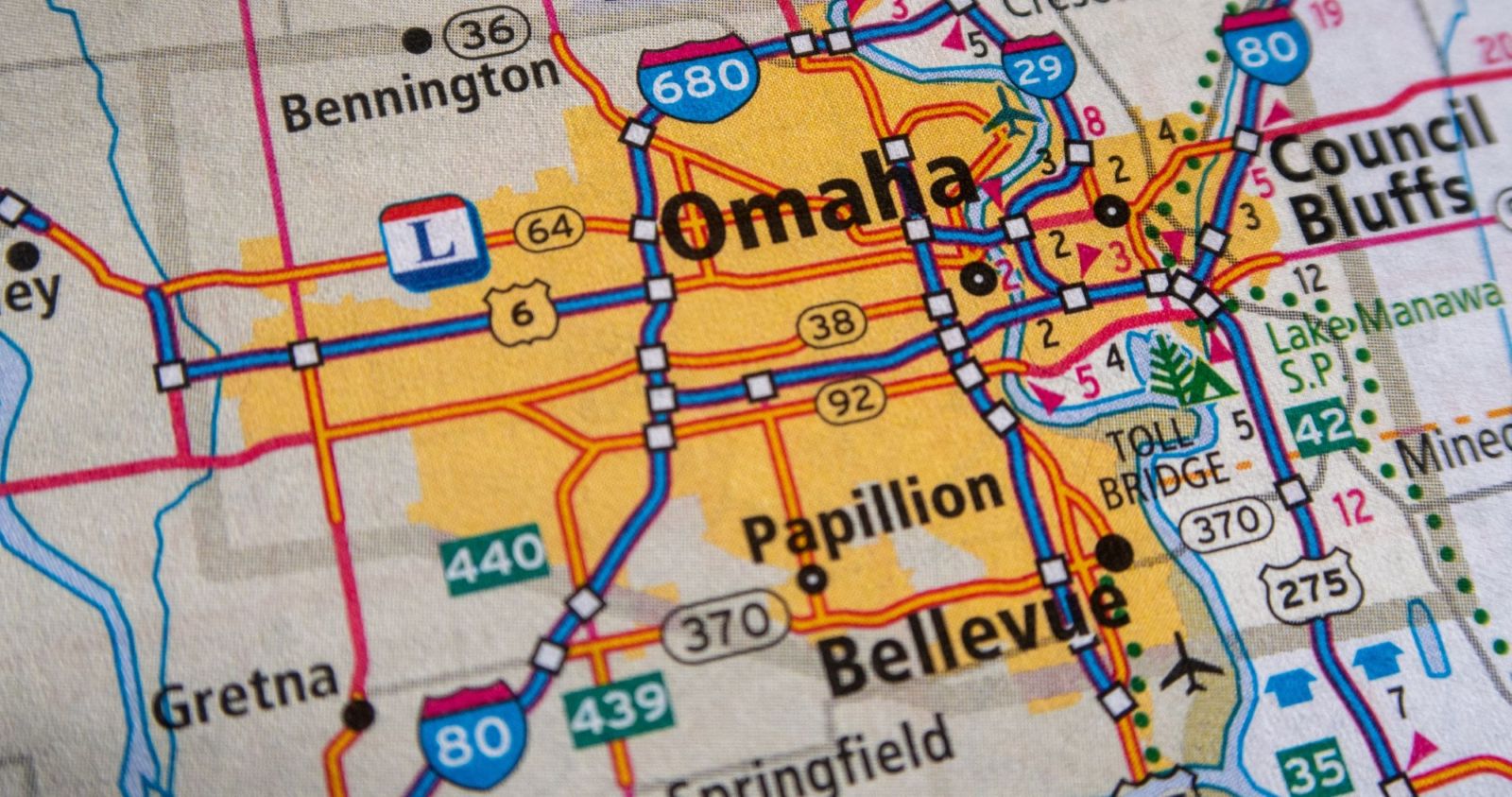
Interstate 80 stretches across Nebraska, connecting Omaha, Lincoln, York, Grand Island, Kearney, North Platte, and numerous smaller communities. It is an important route for commercial transportation and everyday travel. It is also a highway where law enforcement officers may encounter suspected drug transportation during traffic enforcement.
For someone arrested after an I-80 traffic stop, the distinction between a Nebraska state drug charge and a federal drug prosecution can be enormous. Federal charges may involve lengthy prison sentences, mandatory minimum penalties, and investigations extending well beyond the original traffic stop. An experienced federal drug crimes lawyer in Omaha at Miltenberger Law Offices can evaluate the circumstances surrounding the stop, the search, and the evidence prosecutors intend to use.
Blog Summary: What You’ll Learn About Interstate 80 Drug Stops in Nebraska
A drug arrest on Interstate 80 in Nebraska can result in state or federal prosecution depending on the alleged conduct, the evidence, and the decision of prosecuting authorities. This blog explains when an ordinary traffic stop can develop into a federal drug investigation, what constitutional protections apply to vehicle searches, whether drivers and passengers can both face charges, and how drug quantities and alleged trafficking activity may affect the case. It also examines what happens when federal authorities become involved and why the legality of the initial stop can be critical to the outcome.
When Does an Interstate 80 Drug Arrest Become a Federal Case?
Most traffic stops on Interstate 80 begin with state or local law enforcement. A Nebraska State Patrol trooper, county sheriff’s deputy, or municipal police officer may stop a vehicle after observing a suspected traffic violation. If officers discover controlled substances, the resulting investigation may initially proceed under Nebraska law.
However, the case may be referred to federal authorities when the evidence suggests a violation of federal drug laws. Factors that may influence federal involvement include the type and quantity of drugs recovered, evidence of an alleged distribution operation, connections to an ongoing federal investigation, or suspected coordination among multiple individuals.
Under 21 U.S.C. § 841, federal prosecutors may bring charges involving the manufacture, distribution, or possession with intent to distribute controlled substances. Federal jurisdiction does not necessarily require proof that the defendant personally transported drugs across state lines.
For example, someone stopped near Lincoln with a substantial quantity of methamphetamine may initially be arrested by state authorities. If the investigation produces evidence supporting federal trafficking charges, the case may subsequently be prosecuted in federal court. The decision depends on the facts, applicable law, and prosecutorial discretion.
Can Police Search Your Vehicle During an Interstate 80 Traffic Stop?
Police generally need a recognized legal justification to search a vehicle during a traffic stop. Depending on the circumstances, that justification may involve voluntary consent, probable cause, a valid warrant, or another established exception to the Fourth Amendment’s warrant requirement. Being stopped on Interstate 80 does not eliminate a driver’s constitutional protections.
For example, officers may ask permission to search a vehicle. A person may generally refuse a request for a voluntary consent search, although officers may still conduct a search if another lawful basis exists. Whether consent was freely given can become an important issue when evaluating the admissibility of evidence.
Officers may also search a vehicle without a warrant when they have probable cause to believe it contains contraband or evidence of a crime, subject to the legal limits governing vehicle searches. The circumstances supporting probable cause must be evaluated individually.
Can Police Extend a Traffic Stop to Bring in a Drug-Sniffing Dog?
One of the most important Fourth Amendment decisions involving Nebraska traffic enforcement is Rodriguez v. United States, decided by the United States Supreme Court in 2015.
The case began with a Nebraska traffic stop. After completing the tasks associated with the traffic violation, an officer continued detaining the driver to conduct a drug-detection dog sniff. The Supreme Court held that police generally cannot prolong an otherwise completed traffic stop for an unrelated dog sniff without independent reasonable suspicion or another lawful justification.
This ruling matters because the legality of a search may depend not only on why officers stopped the vehicle but also on what happened afterward. A traffic stop that begins lawfully can still raise constitutional questions if officers improperly extend the detention.
Can a Passenger Face Federal Drug Charges After an I-80 Traffic Stop?
A passenger can face federal drug charges following an Interstate 80 traffic stop, but simply riding in a vehicle containing illegal drugs does not automatically establish guilt. Prosecutors must prove the elements of the charged offense, including the required knowledge and intent.
Federal drug cases sometimes involve allegations of constructive possession. This means prosecutors may attempt to establish that an individual knowingly exercised control over drugs even when those substances were not physically carried on the person’s body.
Consider a situation in which officers discover fentanyl inside a suitcase in the trunk of a vehicle carrying three people. The driver may own the vehicle, one passenger may own the suitcase, and another passenger may have no knowledge of its contents. Those distinctions matter. Prosecutors cannot simply assume that every occupant knowingly possessed the drugs because they were traveling together.
Investigators may examine ownership, access to the location where drugs were found, communications, statements, and other circumstances. Even when the government alleges a broader conspiracy, it must establish the defendant’s knowing participation in the unlawful agreement rather than relying solely on association with another suspect.
Does the Amount of Drugs Found on Interstate 80 Determine Whether Charges Are Federal?
Drug quantity can be an important factor in federal prosecution, but there is no universal rule stating that a particular amount automatically converts every Nebraska drug case into a federal offense.
Federal law establishes different sentencing ranges for qualifying trafficking offenses involving specific controlled substances and quantities. Under 21 U.S.C. § 841(b), certain offenses involving methamphetamine, fentanyl, cocaine, or heroin may carry mandatory minimum sentences of five or ten years, depending on the substance, quantity, and other statutory circumstances.
However, the amount recovered from a vehicle does not necessarily establish that every occupant possessed it or intended to distribute it. The government must still prove the required elements of the offense. Laboratory testing, the reliability of quantity calculations, and the relationship between the defendant and the recovered substances may all become important issues.
What Happens After Federal Authorities Take Over an Interstate 80 Drug Case?
When an investigation results in federal charges, the case generally proceeds under a different set of rules than an ordinary Nebraska state prosecution. Federal agents may become involved, the United States Attorney’s Office may pursue an indictment, and the defendant may be required to appear before a federal magistrate judge.
Federal drug prosecutions in Nebraska are handled through the United States District Court for the District of Nebraska. Federal court facilities include the Roman L. Hruska Federal Courthouse at 111 South 18th Plaza in Omaha and the Robert V. Denney Federal Building at 100 Centennial Mall North in Lincoln.
Depending on the charges, the defendant may face a detention hearing to determine whether release is appropriate while the case is pending. Certain serious federal drug offenses trigger a rebuttable presumption favoring detention under 18 U.S.C. § 3142, although detention is not automatic in every drug case.
Federal prosecutors must provide discovery as required by law, and the defense may file motions challenging evidence or seeking other relief. Some cases resolve through negotiated pleas, while others proceed to trial. The appropriate course depends on the evidence, the charges, and the defendant’s individual circumstances.
Can Evidence From an Illegal Interstate 80 Stop Be Thrown Out?
If law enforcement violated the Fourth Amendment during a traffic stop, detention, or vehicle search, a defendant may have grounds to request suppression of evidence. A successful suppression motion can prevent prosecutors from using certain unlawfully obtained evidence, although suppression does not automatically require dismissal of every charge.
Important questions may include whether officers had a lawful basis for the initial stop, whether they extended the detention without sufficient justification, whether consent to search was voluntary, and whether the circumstances established probable cause for a warrantless vehicle search.
A defense attorney may also examine police reports, dashcam recordings, body-camera footage, dispatch records, and the timing of canine deployments. Small differences between an officer’s written account and the recorded sequence of events may become significant when determining whether constitutional requirements were satisfied.
These issues are particularly important in federal cases because evidence discovered during a state traffic stop may become the foundation of a federal prosecution. The constitutional protections governing the initial investigation remain relevant even after federal authorities assume responsibility for the case.
What Should You Do After an Interstate 80 Drug Arrest in Nebraska?
An arrest involving suspected drug trafficking can create immediate uncertainty, especially when the person arrested lives outside Nebraska or was traveling through the state. Federal investigators may seek interviews, request access to electronic devices, or attempt to obtain statements concerning other suspected participants.
Anyone facing this situation should understand the right to remain silent and the right to consult an attorney. Providing explanations without legal guidance can create complications, particularly when investigators are examining an alleged conspiracy or comparing statements from several individuals.
It is also important to preserve potentially relevant information, including travel records, communications, and other evidence. Deleting messages or attempting to influence witnesses can create additional legal problems.
Because federal drug investigations may continue after an initial arrest, obtaining legal guidance early can help clarify the charges, upcoming court proceedings, and decisions that may affect the defense.
Interstate 80 Drug Stops in Nebraska: Real Federal Cases and Important Court Decisions
Interstate 80 is a major transportation corridor through Nebraska, and traffic stops along the highway have led to significant drug investigations involving local police, Nebraska State Patrol troopers, and federal law enforcement agencies. Some investigations have resulted in federal drug trafficking convictions and substantial prison sentences. Others have raised important constitutional questions about whether officers had sufficient legal justification to extend a traffic stop, conduct a vehicle search, or seize evidence.
Understanding both sides of these cases is essential. Real federal prosecutions demonstrate how a routine roadside encounter can develop into a serious criminal case, while decisions from the United States Supreme Court, the Eighth Circuit Court of Appeals, and Nebraska courts establish important limits on law enforcement authority. Together, these cases illustrate why the specific circumstances of an Interstate 80 drug stop can have a significant impact on the outcome of a prosecution.
A Traffic Stop Near Lincoln Led to Federal Methamphetamine Charges
In May 2023, Lincoln police stopped a vehicle traveling eastbound on Interstate 80 near mile marker 396. According to the United States Attorney’s Office for the District of Nebraska, a consent search revealed a concealed compartment containing approximately 25.7 kilograms of methamphetamine.
The investigation involved the Lincoln Police Department and the Drug Enforcement Administration. In March 2024, two defendants received federal prison sentences of 75 months and 68 months for their respective drug trafficking offenses.
Why it matters: This case demonstrates how a traffic stop initiated by local law enforcement can develop into a federal drug trafficking prosecution. It also highlights the importance of the circumstances surrounding a vehicle search, including whether consent was voluntarily provided and whether the search remained within lawful constitutional boundaries.
An Interstate 80 Stop Resulted in a Federal Fentanyl Conviction
Nebraska State Patrol troopers stopped a vehicle traveling on Interstate 80. According to federal prosecutors, the investigation resulted in the recovery of 656 pills containing fentanyl. The driver was subsequently convicted of possession with intent to distribute fentanyl and received a 28-month federal prison sentence in January 2025.
The case involved a regional task force with federal, state, and local law enforcement participation. The Department of Justice’s case summary illustrates how a traffic stop conducted by state troopers can become part of a federal drug prosecution.
Why it matters: A drug investigation does not have to begin with federal agents for federal charges to follow. State and local officers frequently participate in investigations that ultimately result in federal prosecution. However, the discovery of controlled substances does not automatically establish that every occupant of a vehicle knowingly possessed or intended to distribute them.
Important Court Decisions Involving Nebraska Drug Stops and Vehicle Searches
While these federal prosecutions illustrate the serious consequences that can follow an Interstate 80 drug stop, they do not mean every roadside search or extended detention is lawful. Courts have repeatedly examined the constitutional limits of traffic stops, particularly when officers investigate suspected drug activity beyond the original reason for pulling a vehicle over.
The following decisions provide important legal context for determining when police may prolong a traffic stop, what circumstances support reasonable suspicion, and when evidence obtained during a vehicle search may be challenged under the Fourth Amendment.
United States v. Beck (1998): Nervousness and Innocent Travel Details May Not Justify Extended Detention
In United States v. Beck, 140 F.3d 1129 (8th Cir. 1998), the Eighth Circuit Court of Appeals examined whether observations made during a Nebraska traffic stop established reasonable suspicion of drug-related criminal activity. The court determined that the circumstances relied upon by law enforcement, including nervousness and otherwise ordinary travel details, did not collectively justify extending the detention. The court held that the evidence should have been suppressed.
Why it matters: Traveling along a highway associated with drug investigations, appearing nervous during a police encounter, or having ordinary travel items in a vehicle does not automatically establish reasonable suspicion. Courts must examine the totality of the circumstances rather than relying on generalized assumptions about motorists.
Rodriguez v. United States (2015): Police Cannot Unlawfully Extend a Traffic Stop for a Drug-Sniffing Dog
In Rodriguez v. United States, 575 U.S. 348 (2015), the United States Supreme Court examined a Nebraska traffic stop in which an officer detained a driver for approximately seven to eight additional minutes to conduct a drug-detection dog sniff after completing the traffic-related tasks. The Court ruled that police generally cannot prolong a completed traffic stop for an unrelated dog sniff without independent reasonable suspicion or another lawful justification.
Why it matters: This decision is particularly important when officers extend an Interstate 80 traffic stop to investigate suspected drug activity. Even a relatively short delay can raise Fourth Amendment concerns if it is not legally justified.
State v. Anderson (2000): Nebraska Courts Examine the Evidence Supporting Continued Detention
In State v. Anderson, 258 Neb. 627 (2000), the Nebraska Supreme Court considered whether officers had reasonable suspicion to continue detaining a motorist during a drug investigation. The court examined factors such as nervous behavior, difficulty locating documents, and the circumstances surrounding the driver’s travel. The decision illustrates the importance of distinguishing ordinary reactions to police encounters from specific facts supporting reasonable suspicion.
Why it matters: Nebraska courts recognize that innocent motorists may appear nervous during traffic stops. Although nervousness can be considered alongside other circumstances, it does not automatically justify expanding a routine traffic investigation.
State v. Howard (2011): Courts Consider the Totality of Circumstances During Interstate 80 Stops
In State v. Howard, 282 Neb. 352 (2011), the Nebraska Supreme Court examined a drug investigation following an Interstate 80 traffic stop near Lincoln. The case involved questions about the occupants’ travel itinerary and whether the circumstances provided reasonable suspicion for further detention. The court evaluated the combined significance of the officers’ observations rather than considering each detail in isolation.
Why it matters: Courts may consider several individually innocent circumstances together when evaluating reasonable suspicion. The legality of an extended detention depends on the specific facts known to officers and whether those facts objectively justified further investigation.
What These Cases Mean for Interstate 80 Drug Arrests in Nebraska
Taken together, these federal prosecutions and appellate decisions demonstrate two important realities about drug investigations along Interstate 80. First, a traffic stop conducted by Nebraska law enforcement can lead to serious federal charges involving methamphetamine, fentanyl, or other controlled substances. Second, the government’s ability to prosecute those charges may depend on whether officers followed constitutional requirements during the initial detention, subsequent investigation, and vehicle search.
The original justification for the traffic stop, the duration of the detention, the circumstances surrounding consent to search, the use of drug-detection dogs, and the evidence connecting a particular defendant to the alleged offense may all become important legal issues. A substantial drug seizure does not eliminate constitutional protections, and the presence of narcotics in a vehicle does not automatically establish every occupant’s criminal responsibility.
For someone facing federal drug charges following an Interstate 80 traffic stop, these distinctions can be critical. An experienced Nebraska federal drug crimes lawyer can examine the circumstances of the stop, review the evidence obtained by investigators, and determine whether constitutional violations or other legal issues provide grounds to challenge the prosecution.
Frequently Asked Questions About Interstate 80 Drug Stops in Nebraska
Are all drug arrests on Interstate 80 prosecuted federally?
No. Drug arrests on Interstate 80 may result in Nebraska state charges or federal prosecution. The outcome depends on the alleged offense, available evidence, applicable law, and decisions made by prosecuting authorities.
Can you face federal drug charges if you never crossed state lines?
Yes. Federal drug trafficking charges under the Controlled Substances Act do not necessarily require proof that the defendant personally crossed a state border. The government must establish the elements of the specific federal offense charged.
Can police search a rental car during a drug investigation?
Yes, when a lawful basis for the search exists. Rental vehicles are not exempt from the Fourth Amendment, and the circumstances of the search, including consent and probable cause, may be important legal issues.
Can a passenger be charged if drugs are hidden in the vehicle?
Yes, but prosecutors must establish the passenger’s criminal responsibility. Mere presence in a vehicle containing drugs is not, by itself, sufficient to prove possession or participation in a trafficking offense.
Can a Nebraska traffic stop lead to a federal drug conspiracy charge?
Yes. If investigators uncover evidence of an agreement to commit a federal drug offense and the defendant’s knowing participation, prosecutors may pursue a conspiracy charge under 21 U.S.C. § 846. A person does not necessarily have to personally sell drugs to be accused of participating in a conspiracy.
Does finding a large amount of cash prove drug trafficking?
No. Cash may be considered alongside other evidence, but possessing a substantial amount of money does not independently establish a federal drug trafficking offense. Prosecutors must prove the elements of the charge beyond a reasonable doubt.
Can a drug case be dismissed if police unlawfully extended the traffic stop?
An unlawful extension may support a motion to suppress evidence. Whether suppression is available, and whether it could result in dismissal, depends on the facts, applicable legal exceptions, and the remaining evidence.
Facing Federal Drug Charges After an Interstate 80 Stop? Contact Miltenberger Law Offices
An Interstate 80 traffic stop can quickly become a serious criminal investigation involving federal agents, multiple defendants, and allegations carrying substantial prison sentences. But the discovery of drugs in a vehicle does not eliminate constitutional protections, and an arrest does not establish guilt.
At Miltenberger Law, we understand how much is at stake when criminal allegations threaten your freedom, career, and future. Whether the investigation began near Omaha, Lincoln, York, or elsewhere along Interstate 80, the circumstances of the traffic stop, vehicle search, and alleged connection to controlled substances deserve careful examination.
If you or someone you care about is facing a federal drug investigation or prosecution in Nebraska, call (402) 217-2267 or contact Miltenberger Law online to discuss your situation and learn more about your legal options.