Can a traffic lawyer get a speeding ticket dismissed in Nebraska? Getting a speeding ticket in Nebraska doesn’t automatically mean you have to accept the charge, pay the fine, and take the points on your license.
You’re driving along Interstate 80, heading home after a long day, when flashing lights appear in your rearview mirror. A few minutes later, you’re holding a speeding ticket. The officer says you were going 15 miles per hour over the limit. You’re fairly certain you weren’t, but arguing about it on the side of the road isn’t going to accomplish much.
Now you have a decision to make. You could pay the ticket, forget about the inconvenience, and move on. Or you could find out whether the citation is worth challenging before it affects your driving record, insurance costs, or ability to drive.
Many Nebraska drivers assume that a speeding ticket is practically impossible to fight. After all, an officer issued the citation, and the officer presumably has evidence supporting it. But traffic enforcement isn’t infallible, and a citation isn’t the same thing as a conviction.
So, can a traffic lawyer get a speeding ticket dismissed in Nebraska? Yes, depending on the evidence, the circumstances of the stop, and whether you qualify for an alternative resolution. Dismissal isn’t guaranteed, but there may be more options than simply paying the fine.
At Miltenberger Law Offices, our skilled traffic lawyers help drivers in Omaha and communities throughout Nebraska understand their traffic charges, evaluate potential defenses, and pursue appropriate resolutions. Before deciding what to do with your speeding ticket, it’s worth understanding what an attorney can actually do, and when fighting the citation makes sense.
Blog Summary: What You’ll Learn About Fighting a Speeding Ticket in Nebraska
A speeding ticket may seem like a minor inconvenience, but the consequences can extend beyond the amount printed on the citation. Depending on the violation, a conviction can add points to your Nebraska driving record, contribute to higher insurance costs, and create problems if you already have other traffic violations.
This blog explains how an experienced Omaha traffic lawyer may be able to challenge a speeding ticket, the evidence that can make a difference, whether Nebraska offers programs that allow citations to be dismissed, and what happens if you decide to fight your ticket in court. We’ll also discuss common mistakes drivers make after receiving a citation and how to determine whether hiring an attorney is worthwhile.
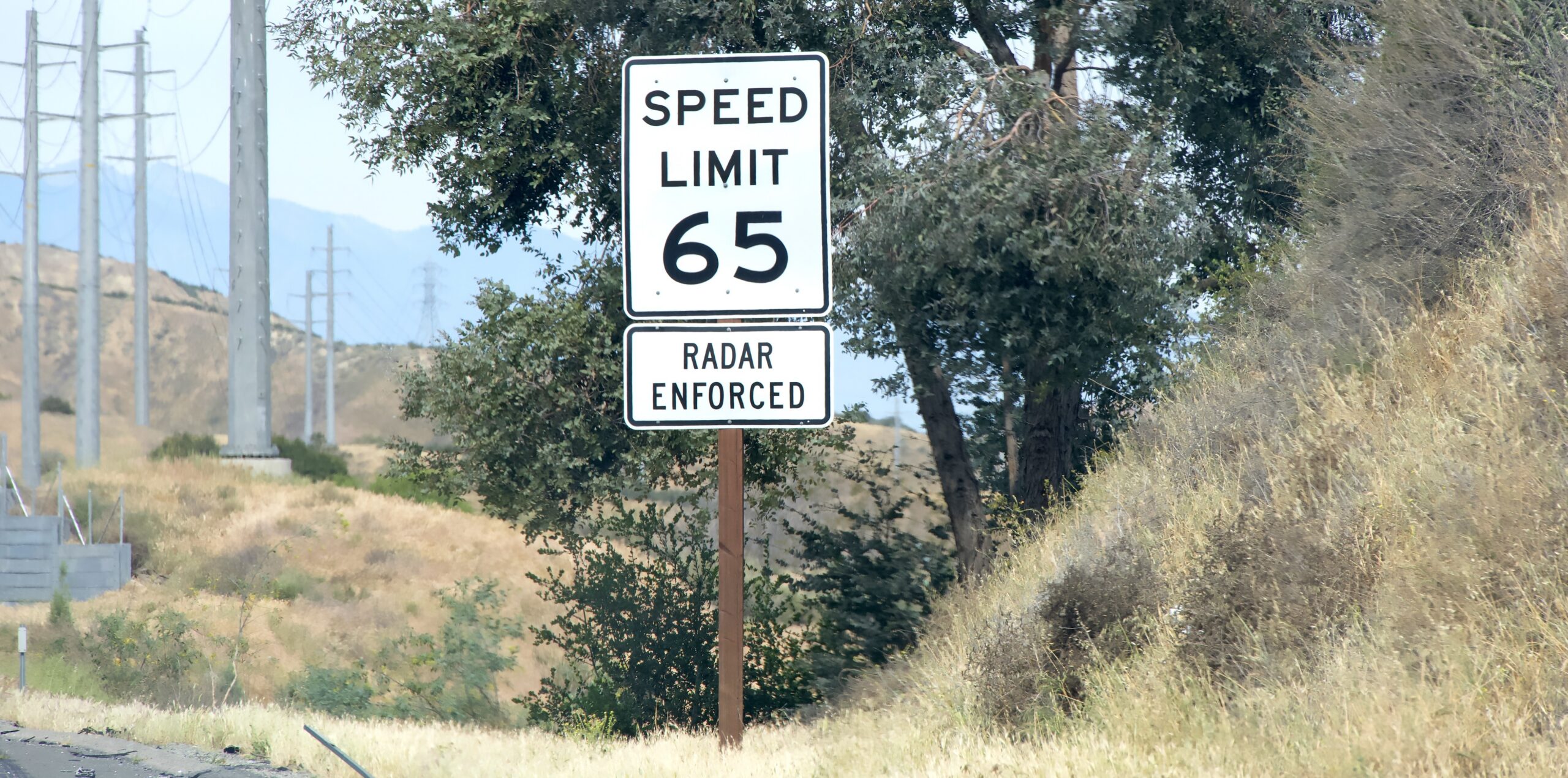
Can a Speeding Ticket Actually Be Dismissed in Nebraska?
Under Nebraska Revised Statute § 60-682.01, ordinary violations of applicable maximum speed limits are generally classified as traffic infractions. While an infraction is not the same as a criminal misdemeanor, it can still carry fines and points against your driving record.
A citation represents an allegation that you violated a traffic law. It doesn’t automatically establish that the violation occurred exactly as described.
Depending on the circumstances, a speeding ticket might be dismissed because the prosecution cannot establish the violation, the evidence is insufficient, a legal issue undermines the charge, or the driver successfully completes an approved diversion program.
However, not every citation contains a viable defense, and prosecutors aren’t required to dismiss a ticket simply because a driver hires an attorney. An experienced Nebraska traffic lawyer can review the case and help determine whether dismissal, a legally supported reduction, or another resolution is realistically available.
How Can a Traffic Lawyer Fight a Speeding Ticket in Nebraska?
Challenging a speeding ticket involves more than telling the judge you don’t believe you were driving that fast. A successful defense generally requires identifying a factual weakness, legal issue, or evidentiary problem that affects the prosecution’s ability to prove the charge.
Depending on how the citation was issued, several areas may deserve closer examination:
1. Reviewing Radar and Lidar Speed Measurements
Police officers frequently use radar or lidar equipment to measure vehicle speed. These devices can provide reliable evidence when properly operated, but their readings still need to be evaluated in the context of the particular traffic stop.
An attorney may examine whether the equipment was functioning properly, whether required accuracy checks were performed, whether the officer was trained to use the device, and whether the measurement was reliably associated with the correct vehicle.
For example, imagine an officer monitoring several vehicles traveling close together on Interstate 80 outside Lincoln. If the circumstances create uncertainty about which vehicle produced the speed reading, that issue may be relevant to the defense.
Not every technical concern invalidates a speed measurement. The question is whether a particular problem meaningfully affects the reliability or admissibility of the evidence.
2. Examining the Officer’s Observations
Not every speeding citation relies exclusively on an electronic device. Officers may use pacing, visual observations, or other methods to estimate a driver’s speed.
If an officer followed your vehicle to estimate its speed, for instance, an attorney may consider the distance involved, traffic conditions, the officer’s ability to maintain a consistent pace, and other factors affecting the accuracy of that estimate.
Details that initially seem unimportant, such as heavy traffic, a curve in the roadway, or a brief period of observation, may become relevant when evaluating how the alleged speed was determined.
3. Investigating the Posted Speed Limit
Speeding charges depend on the applicable speed limit at the location of the alleged violation.
Under Neb. Rev. Stat. § 60-6,186, Nebraska establishes statutory speed limits for different types of roads and authorizes certain adjustments under applicable law.
An attorney may examine whether the officer identified the correct speed limit, whether a reduced speed zone was properly established, and whether the evidence supports the specific violation alleged.
This can be particularly important when a citation involves a transition between speed zones, temporary construction restrictions, or an unfamiliar stretch of roadway.
4. Reviewing Dashcam, Bodycam, and Other Available Evidence
Sometimes the most useful evidence isn’t the ticket itself.
Depending on what exists and is available, police dashcam footage, body-worn camera recordings, patrol vehicle data, photographs, witness statements, and other documentation may help clarify what happened.
An attorney can evaluate whether the available evidence supports the officer’s account, reveals inconsistencies, or raises questions about the circumstances surrounding the citation.
That doesn’t mean every traffic stop is recorded or that every recording will help the defense. It means the case should be evaluated based on the available evidence rather than assumptions about what the officer must have observed.
5. Evaluating Whether the Prosecution Can Prove the Violation
Ultimately, the government must establish the charged traffic violation under the applicable legal standard.
An attorney can examine whether the evidence identifies the correct driver and vehicle, establishes the relevant speed limit, and sufficiently supports the allegation that the driver exceeded it.
If the prosecution cannot establish the violation, dismissal or a favorable court ruling may be possible.
And sometimes the most important part of defending a speeding ticket is recognizing which arguments are supported by evidence, and which ones are unlikely to succeed.
Can You Get a Speeding Ticket Dismissed by Taking a Driving Class in Nebraska?
Nebraska offers a program that many drivers don’t realize exists. The Safety Training Option Program (S.T.O.P.) allows eligible drivers with certain minor traffic citations to complete approved traffic safety training instead of proceeding through the ordinary conviction process.
According to the Nebraska Judicial Branch, successful participation in an eligible S.T.O.P. program can result in dismissal of the citation without a traffic fine, court appearance, or driver’s license points.
However, eligibility is not automatic. The nature of the violation, the driver’s record, and the rules of the applicable prosecutor or law enforcement program can determine whether this option is available. Availability and participation requirements may also differ depending on the Nebraska county or jurisdiction handling the citation.
Drivers should also understand that S.T.O.P. is different from voluntarily taking a Nebraska DMV-approved driver improvement course to reduce existing points. One may result in dismissal of an eligible pending citation, while the other generally provides limited point credit for qualifying existing convictions.
Before enrolling in any course, confirm that it is approved for the specific purpose you’re trying to accomplish. Completing an unrelated online driving class won’t automatically dismiss your Nebraska speeding ticket. The Miltenberger Law defense attorneys are here to help.
Is It Worth Hiring a Traffic Lawyer for a Speeding Ticket in Nebraska?
For some drivers, a minor citation with no points and limited additional consequences may not justify the expense of hiring an attorney. For others, even a relatively ordinary speeding ticket could create substantial problems.
Consider someone who drives for work, has several previous traffic convictions, or needs a clean driving record to maintain employment. A speeding conviction could affect that person’s situation differently than it would someone with no prior violations.
Hiring a traffic lawyer may be particularly worthwhile when:
- You already have several points on your Nebraska driver’s license.
- The ticket alleges a substantial amount of speeding.
- You believe the officer identified the wrong vehicle or recorded an inaccurate speed.
- You have a commercial driver’s license or drive regularly for employment.
- You received multiple citations during the same traffic stop.
- You want to determine whether a diversion program or other resolution is available.
The value of legal representation isn’t limited to obtaining a dismissal. It can also involve understanding the consequences of a proposed resolution, avoiding unnecessary mistakes, and ensuring the evidence receives appropriate scrutiny.
What Happens If You Just Pay Your Nebraska Speeding Ticket?
Paying a speeding ticket may seem like the easiest way to put the situation behind you. And from a purely administrative standpoint, it often is.
But there’s an important distinction between resolving a ticket and avoiding its consequences.
For eligible Nebraska traffic citations, paying the waiver amount generally constitutes a guilty plea and results in a conviction. That conviction may then be reported to the Nebraska DMV, where applicable points are assessed against your driving record.
According to the Nebraska DMV’s point system, speeding violations can carry anywhere from zero to four points depending on how far the driver exceeded the limit and the type of roadway involved.
For example, a conviction for driving 16 to 35 miles per hour over the applicable limit generally carries three points. Accumulating 12 points within two years results in license revocation.
Insurance consequences are another consideration. While a ticket doesn’t automatically increase everyone’s premium, insurers may evaluate traffic convictions when determining rates, subject to applicable rules and underwriting practices.
Before paying, consider whether the immediate convenience outweighs the potential effect on your driving record.
How Much Does a Speeding Ticket Cost in Nebraska?
Nebraska establishes fines for speeding violations under Neb. Rev. Stat. § 60-682.01.
The statutory fines for ordinary speeding infractions are:
| Speed Over the Limit | Statutory Fine |
|---|---|
| 1–5 mph | $50 |
| 6–10 mph | $75 |
| 11–15 mph | $125 |
| 16–20 mph | $200 |
| 21–35 mph | $300 |
| More than 35 mph | $400 |
These amounts don’t necessarily represent the total amount a driver will pay. Court costs and other applicable charges may increase the overall expense. Nebraska law also provides for doubled statutory fines for qualifying violations in school crossing zones and construction zones.
More importantly, the financial consequences of a speeding conviction can extend beyond the court. Points, potential insurance changes, and employment-related concerns may make the true cost substantially higher than the original fine.

What Should You Do After Receiving a Speeding Ticket in Nebraska?
The decisions you make after receiving a citation can affect your available options. Before automatically paying the fine, take a few practical steps to understand the situation.
Read the Ticket Carefully
Check the alleged speed, posted speed limit, location, offense description, and court information. Make sure you understand whether a court appearance is required and the deadline for responding.
Preserve Relevant Information
If you believe the ticket is inaccurate, write down what happened while the details are still fresh. Note traffic conditions, weather, signage, nearby vehicles, and anything else that may be relevant. Preserve any available dashcam footage or other evidence.
Check Your Existing Driving Record
Knowing how many points you already have can help you understand the consequences of another conviction. Nebraska’s DMV provides information about driving records, points, and license status.
Explore Your Options Before Paying
Find out whether you qualify for S.T.O.P., whether there are legitimate grounds to contest the allegation, and what effect a conviction could have on your driving privileges.
Speak With a Traffic Lawyer When the Stakes Are Significant
If the citation involves substantial speeding, an existing point history, or potential employment consequences, consulting a traffic lawyer in Omaha before resolving the case may help you make a more informed decision.
Whatever you decide, don’t ignore the citation or miss a required court date. Failing to respond can create additional problems that are entirely separate from the original speeding allegation.
Can a Speeding Ticket Be Reduced Instead of Dismissed?
In some cases, a reduction or negotiated resolution may be possible even when a complete dismissal isn’t supported by the evidence.
For example, a Miltenberger Law attorney may evaluate whether the evidence supports a different speed allegation or whether the prosecutor is willing to consider an alternative legally appropriate disposition.
However, reductions are not automatic, and prosecutors and courts are not obligated to agree to them. Practices may also vary between Nebraska jurisdictions.
It’s important to understand that a reduced charge doesn’t necessarily eliminate points or other consequences. Before accepting any proposed resolution, drivers should determine what conviction would appear on their record and how Nebraska law treats that offense.
A favorable resolution is one that addresses the driver’s actual legal and practical concerns, not simply one that produces a smaller fine.
Before You Pay That Speeding Ticket, Talk to Miltenberger Law
A speeding ticket might take only a few minutes to issue, but its consequences can last considerably longer.
Maybe you were cited while driving through Omaha or Lincoln. Maybe an officer stopped you on Interstate 80 while you were heading to work. Or maybe you received a ticket on a rural Nebraska highway for a speed you genuinely believe was inaccurate.
Whatever the circumstances, you deserve to understand your options before deciding how to respond.
At Miltenberger Law, we represent drivers facing speeding tickets and other traffic violations in Omaha and across Nebraska. We can evaluate the circumstances of your citation, explain the potential consequences, and help you determine whether challenging the ticket or pursuing another available resolution makes sense.
Call (402) 217-2267 or contact Miltenberger Law online to discuss your situation with an experienced Nebraska traffic lawyer.
Paying a speeding ticket may be the fastest way to close the case. It isn’t always the best way to protect your driving record. Find out whether you have a defense before you make that decision.