
Omaha, NE traffic lawyer. A traffic ticket in Omaha, NE can feel like one of those problems you’re supposed to handle quickly. Maybe alone.
Sometimes that’s where the story ends. Sometimes it isn’t.
Paying a traffic citation can mean accepting a conviction, and that conviction becomes part of your Nebraska driving record. Depending on the offense and what is already on your record, you could be looking at points, problems with your driver’s license, employment consequences if you drive for work, and other repercussions that cost considerably more than the original ticket.
Depending on the violation and your driving history, a conviction can add points to your Nebraska driving record, move you closer to losing your license, affect employment that requires driving, or expose you to consequences considerably more serious than a routine fine. Some allegations aren’t merely traffic infractions at all. They’re criminal traffic offenses.
At Miltenberger Law Offices, our experienced Omaha, NE criminal defense attorneys represent drivers facing traffic violations and criminal traffic charges throughout the Omaha area and communities across Nebraska.
A ticket may look straightforward. What happens after it isn’t always so simple. Before paying yours, call Miltenberger Law Offices at (402) 217-2267 or contact us online for free, confidential legal advice.
Article Summary: What You’ll Learn About Traffic Charges in Omaha, NE
Not every traffic case in Omaha, NE carries the same stakes. Some violations may result primarily in a fine and points, while others can jeopardize your license, interfere with your ability to drive for work, or expose you to a criminal conviction.
This page walks you through what Nebraska drivers should know before deciding how to handle a citation. That includes how to tell the difference between a traffic infraction and a criminal offense, how points are assessed under Nebraska law, and why certain allegations, such as reckless driving, driving while suspended, or offenses arising from a crash, deserve particular attention. We’ll also explain why CDL holders have additional reasons to take even seemingly minor violations seriously.
Most importantly, you’ll learn why the consequences of a traffic citation depend on more than the fine printed on the ticket. Your existing driving record, the specific offense, the evidence behind the citation, and how you resolve the case can all matter.
A traffic stop may last only a few minutes. Before resolving the citation that comes from it, make sure you understand what could follow you long after you drive away.
Should I Hire an Attorney for a Traffic Ticket in Omaha, NE?
You probably don’t need to call a traffic lawyer every time you see flashing lights in your rearview mirror.
But before automatically paying a ticket in Omaha, NE, you should know exactly what you’re accepting. Start with your driving record. How many points do you currently have, and how many could this violation add? Then consider your license. Could another conviction move you closer to suspension or otherwise restrict your ability to drive?
Is this actually a traffic infraction, or are you accused of a misdemeanor or felony involving a vehicle?
Finally, consider whether the allegation can actually be proven. Police observations aren’t automatically beyond dispute. Video footage, witness accounts, accident evidence, and the circumstances surrounding the stop can all become important?
Those are often more important questions than, “How much do I have to pay?” Because there’s a big difference between paying a fine and accepting consequences that could remain on your record long after the receipt is gone.
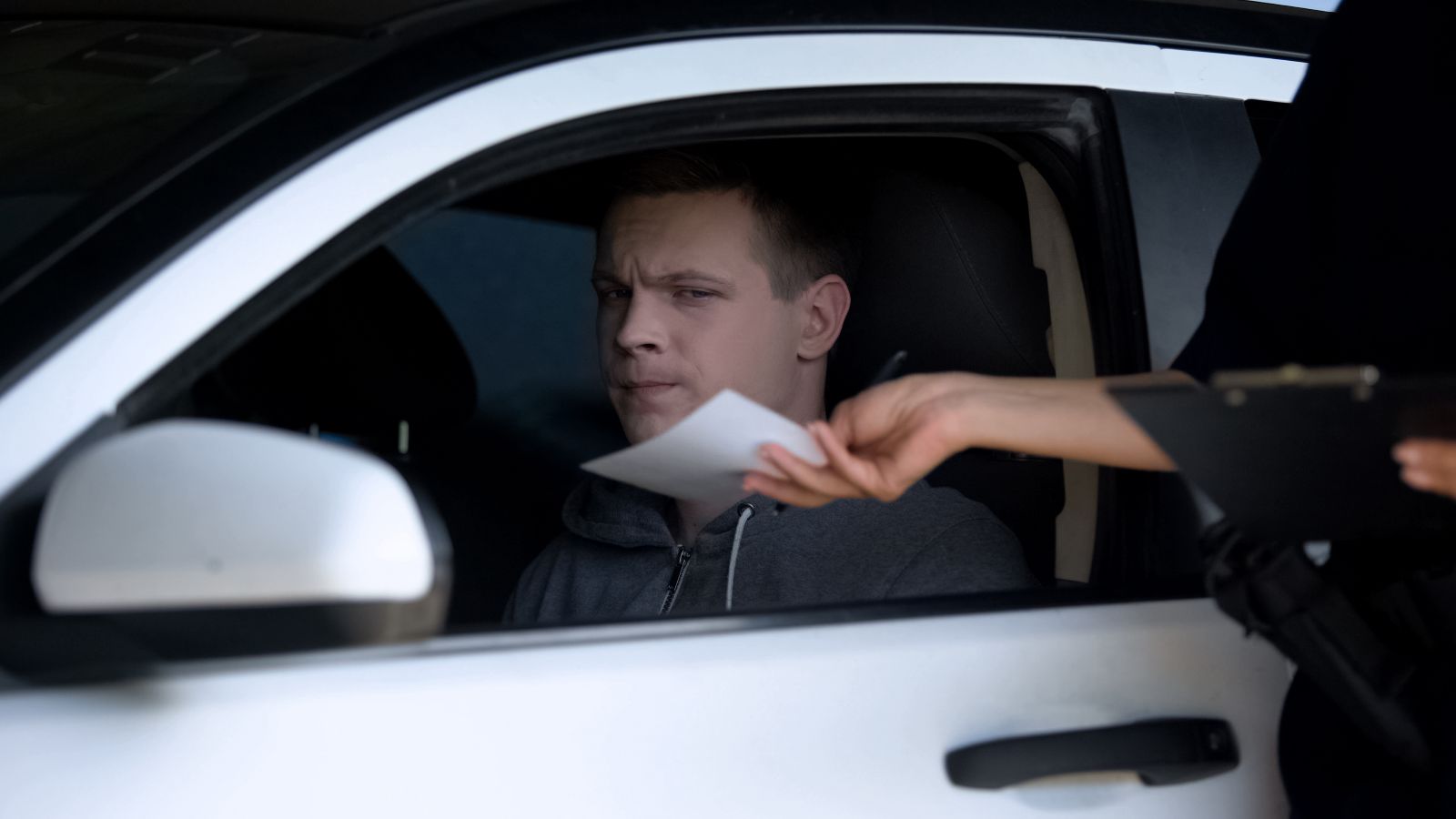
Traffic Violations We Defend in Omaha, NE
A traffic case can involve something as familiar as a speeding ticket or something far more serious, including allegations that can threaten your driver’s license and result in criminal penalties.
Miltenberger Law represents drivers in Omaha and across Nebraska facing charges and citations involving:
- Speeding and excessive speeding (Neb. Rev. Stat. § 60-682.01)
- Careless driving (Neb. Rev. Stat. § 60-6,212)
- Reckless driving (Neb. Rev. Stat. § 60-6,218)
- Willful reckless driving (Neb. Rev. Stat. § 60-6,214)
- Driving with a suspended or revoked license (Neb. Rev. Stat. § 60-4,108)
- Driving without a valid license (Neb. Rev. Stat. § 60-4,111)
- Leaving the scene of an accident (Neb. Rev. Stat. § 60-696)
- Failure to render aid (Neb. Rev. Stat. § 60-697)
- Failure to yield (Neb. Rev. Stat. §§§§ 60-6,147, 60-6,148, 60-6,149, 60-6,151)
- Improper lane changes (Neb. Rev. Stat. § 60-6,139)
- Following too closely (Neb. Rev. Stat. § 60-6,140)
- School bus violations (Neb. Rev. Stat. § 60-6,175)
- Distracted-driving violations (Neb. Rev. Stat. § 60-6,179.01)
- Commercial driver’s license violations (Neb. Rev. Stat. § 60-4,168 through §60-4,172)
- Accident-related traffic charges
- Other Nebraska moving violations
The fact that all of these offenses involve a motor vehicle doesn’t make them interchangeable.
For one driver, the primary concern may be points accumulating on a driving record. For another, the same trip down the road can end with a suspended license or a criminal charge carrying substantially greater consequences.
Before deciding how to respond, you need to know which category your case falls into. A traffic ticket and a criminal traffic prosecution are two very different things, even when both start with flashing lights in the rearview mirror.
What’s the Difference Between a Traffic Infraction and a Criminal Traffic Offense in Nebraska?
Two drivers can both be pulled over in Omaha, NE, both receive citations, and walk away facing very different legal consequences.
Legally, they can lead to very different places.
Under Nebraska Revised Statute § 60-672, a traffic infraction is generally a violation of Nebraska’s Rules of the Road or another traffic law that has not otherwise been declared a misdemeanor or felony.
That last part makes an enormous difference.
Take an ordinary speeding citation. Although a conviction can mean a fine and points on your Nebraska driving record, the violation itself generally isn’t classified as a misdemeanor or felony.
With a criminal traffic offense, the stakes change.
When Nebraska law specifically makes the alleged conduct a crime, a driver can face a misdemeanor or felony case rather than an ordinary traffic infraction.
Examples can include:
- DUI: A first or second offense is typically a Class W misdemeanor, while subsequent or high-BAC offenses can become felonies.
- Chemical Test Refusal: Refusing required chemical testing following a lawful DUI arrest can create additional legal and driver’s-license consequences.
- Driving While Suspended/Revoked: Getting behind the wheel when the state has already taken away your driving privileges can lead to a more serious case.
- Eluding/Avoiding Arrest: Using a motor vehicle to intentionally flee from or attempt to avoid a law enforcement officer.
- Reckless or Willful Reckless Driving: Operating a vehicle in a manner Nebraska law considers reckless or willfully reckless.
- Leaving the Scene/Failure to Render Aid: Nebraska imposes duties on drivers following crashes, and failing to meet those obligations can lead to criminal charges in certain circumstances.
The distinction matters because criminal traffic offenses can potentially expose a defendant to:
- Jail or, for sufficiently serious offenses, imprisonment
- Criminal fines
- Other restrictions on your driving privileges
- Suspension or revocation of your driver’s license
- Probation
- A criminal conviction on your record
- Harsher penalties if you’re convicted of another offense later
There is one wrinkle that can make Nebraska traffic law confusing. Traffic infractions may be handled procedurally in much the same way as misdemeanors unless another law provides otherwise, and Nebraska courts have characterized prosecution of a traffic infraction as a criminal action. But that does not automatically transform a traffic infraction into a misdemeanor or felony. The statutory classifications remain distinct.
Think of it this way: traffic infraction describes one legal classification. Misdemeanor and felony describe others.
What matters is the specific offense Nebraska says you committed, how that offense is classified, and the penalties that classification carries. That’s why the statute printed on your citation deserves more attention than the piece of paper it’s printed on.
How Traffic Tickets Add Points to Your Nebraska Driving Record
Traffic points are easy to ignore when you’re looking at them one ticket at a time. Nebraska doesn’t look at them one ticket at a time.
The Nebraska Department of Motor Vehicles assigns points following convictions for certain motor vehicle violations. How many points you receive depends on the specific offense.
For example, the Nebraska DMV currently assesses:
- Careless driving: 4 points
- Reckless driving: 5 points
- Willful reckless driving: 6 points
- Leaving the scene of an accident: 6 points
- Failure to render aid following an accident: 6 points
- Certain handheld wireless-device violations: 3 points
Speeding can result in anywhere from zero to four points depending on how far above the posted speed limit the driver was traveling and the type of roadway involved. One ticket might not put your license in immediate danger. Several tickets can be a different story.
Now comes the number Nebraska drivers really need to know: 12.. Accumulating 12 points within a two-year period results in revocation of your Nebraska driving privileges. The DMV states that a first point revocation lasts 6 months. A second point revocation occurring within 5 years can take you off the road for 3 years.
And don’t assume the timing of your court dates will determine which violations count together. For purposes of point accumulation, Nebraska looks to the date of the violation. That means a new citation shouldn’t always be viewed as a fresh start. If you already have points on your record, the more useful question is: Where will this conviction put me?.
If you’re already approaching Nebraska’s 12-point threshold, what looks like one more traffic citation can become a driver’s-license problem very quickly.
What Can Happen After a Speeding Ticket in Omaha, NE?
You were going 12 over. Or 20. Or, according to the officer, considerably faster than that. There’s a dollar amount on the ticket. Paying it takes a few minutes. Easy decision, right?.
At least, that’s how it looks on the citation.
A Nebraska speeding conviction can affect your driving record as well as your wallet. The number of points assessed depends on how far above the speed limit you were allegedly traveling and, at certain speeds, the type of road involved.
For example, driving more than 35 mph above the posted limit currently carries four points whether the violation occurs in a business or residential district, on a county road or state highway, or on the interstate.
At lower speeds, the points can differ according to the roadway.
A traffic defense attorney can review the evidence underlying a speeding citation, which may include:
- Whether radar or lidar was used
- The officer’s observations
- Pacing by a patrol vehicle
- Dash-camera or other available video
- The location of the stop
- Whether speed-limit signage was properly posted and visible
- Other evidence relevant to the alleged violation
A citation tells you what speed the officer alleges.
An experienced traffic defense lawyer in Omaha, NE can look beyond the citation itself and evaluate how the alleged speed was measured, documented, and ultimately attributed to you.
Is It Possible to Challenge a Traffic Citation in Omaha, NE?
Receiving a citation is not the same thing as being convicted. The appropriate defense depends on what you’re accused of and what evidence exists.
A traffic attorney may examine issues involving:
- The officer’s account of the alleged violation
- Body-camera and dash-camera recordings
- How speed was measured, including radar, lidar, or pacing
- Witness accounts
- Road, traffic, visibility, and weather conditions
- Traffic-control devices, signs, and lane markings
- Whether the facts actually satisfy the legal requirements of the charged offenseWhether the alleged conduct satisfies every element of the offense
- Anything you allegedly said during the traffic stop
- Evidence from an accident scene
- Your prior driving history and previous convictions
Challenging a ticket doesn’t automatically mean accusing, “The officer is dishonest.”
That’s a remarkably narrow way to think about a traffic case.
An officer can be completely sincere about what they believe they witnessed and there can still be questions about whether the evidence supports the charge. Maybe the disagreement concerns speed measurement. Maybe video provides additional context. Maybe road conditions matter. Maybe what the officer describes simply doesn’t establish every element Nebraska law requires for that particular offense.
The question isn’t whether a citation was written. It’s whether the government can prove the violation printed on it.
What Should You Do After Receiving a Traffic Citation in Omaha, NE?
First, resist the urge to toss the ticket on the passenger seat and promise yourself you’ll deal with it later. Later has a habit of arriving right after a deadline.
Read the entire ticket. Check the specific offense and statute, the court handling the matter, any scheduled appearance, and the deadline for responding. A traffic citation may look routine, but that doesn’t mean every ticket can, or should, be handled by simply paying the amount listed on it.
You should also consider checking your current Nebraska driving record, particularly if you’ve had other violations during the past two years.
If an accident or disputed event led to the citation, save whatever evidence is available now. Photographs, cell-phone video, dashcam recordings, witness information, and nearby surveillance footage can become important later. Your memory can fade. Video can be overwritten. Witnesses can become considerably harder to find.
Finally, consider what’s actually at risk before deciding how to respond. If you’re facing a criminal traffic offense, significant points, suspension or revocation of your license, or consequences that could interfere with your job, talk with a traffic attorney in Omaha, NE before resolving the citation.
Traffic Violations Can Be Especially Serious for Nebraska CDL Holders
Most drivers worry about the fine and the points. Commercial drivers may also have to worry about their next paycheck.
Under Nebraska law, certain offenses qualify as “serious traffic violations” involving commercial driving privileges. That category includes speeding 15 mph or more above the posted limit, reckless or willful reckless driving, improper lane changes, following too closely, and certain mobile-device violations.
If you rely on a CDL for work, don’t evaluate a citation solely by how much it costs to pay. The more important question may be what a conviction could do to your ability to keep driving professionally.

Handed a traffic ticket in Omaha, NE? When you detain a Miltenberger Law traffic lawyer in or around Omaha, NE, you’re not simply partnering with a top-rated traffic attorney in Omaha, NE and beyond – you are safeguarding your rights and your future. Along with an esteemed traffic attorney, our legal team is available 24/7 and provides expertise in these practice areas for Omaha, NE residents:
- Assault Lawyer
- Domestic Violence Defense Attorney
- Drug Manufacturing Lawyer
- Drug Crimes Defense Attorney
- DUI with Drugs Lawyer
Why Drivers in Omaha, NE Turn to Miltenberger Law
A traffic case isn’t important because every citation is catastrophic. Most aren’t.
But we’re also not going to assume yours is harmless simply because it came on a traffic citation.
A speeding ticket means something different to someone with a spotless record than it does to someone sitting at nine points. A reckless-driving allegation means something different to someone who rarely drives than it does to someone whose job requires a valid license. And a criminal traffic charge is considerably different from a routine moving violation, even though both may begin with an officer handing you a piece of paper through the driver’s-side window.
At Miltenberger Law, our Omaha, NE legal team starts by figuring out where your case actually falls on that spectrum.
We examine what you’ve been charged with, your existing driving record, what happened during the stop or accident, what evidence supports the allegation, and what Nebraska law requires the government to prove. Just as importantly, we look at what a conviction would mean specifically for you.
Then we build the defense around the case you actually have.
You don’t need to panic over every citation. You also shouldn’t dismiss one before you understand what it could really cost.
Facing a Traffic Charge in Omaha, NE? Know Your Options First
Some people come to us with a speeding ticket. Others are worried about points, a reckless-driving allegation, or whether they’ll be able to keep their license. And some discover that what they thought was “just a traffic ticket” is actually a criminal case.
Whatever the circumstances, don’t make your next decision based only on the amount printed on the ticket. Find out what a conviction could mean for your driving record, your license, and, when applicable, your criminal record.
Miltenberger Law represents drivers in Omaha and across Nebraska. Call (402) 217-2267 or contact our office online to discuss your traffic case with an experienced Omaha, NE traffic lawyer.
The easiest way to get rid of a ticket in Omaha, NE may be to pay it. That doesn’t always make it the best way to resolve your case.